Categories power flushing

Boiler Installation and Replacement Guide

Boiler Installation and Replacement Guide

A boiler rarely fails at a convenient moment. It usually happens when the weather turns, tenants start calling, or a business needs heating and hot water without delay. That is why boiler installation and replacement should never be treated as a last-minute decision. The right boiler, fitted properly and matched to the system, will heat the property efficiently, cut avoidable energy waste, and reduce the risk of repeat breakdowns.

For homeowners, landlords, and commercial property managers, the main question is usually simple: repair the existing boiler or replace it? The honest answer is that it depends on age, reliability, parts availability, and the condition of the wider heating system. A quick fix can make sense on a newer appliance with a clear fault. On an older, inefficient boiler with a history of breakdowns, replacement is often the more cost-effective option.

When boiler installation and replacement makes sense

If your boiler is over 10 to 15 years old, losing pressure regularly, making unusual noises, or failing to heat radiators evenly, replacement deserves serious consideration. The same applies if spare parts are becoming harder to source or repair costs keep stacking up. One repair bill on its own may not justify a new boiler, but repeated callouts across a single winter usually point to a system that is costing more than it should.

Efficiency matters as well. Older boilers can waste a noticeable amount of energy compared with modern condensing models. That affects running costs, but it also affects comfort. A property with slow heat-up times, inconsistent hot water, or cold spots in the system is not performing as it should.

Landlords and property managers also need to consider reliability from a compliance and tenant-satisfaction point of view. Delayed heating and hot water quickly become urgent issues in occupied properties. Replacing an unreliable boiler before complete failure can be the practical choice, especially where access, scheduling, and resident disruption all need to be managed properly.

Repair or replacement: what should be checked first?

A proper diagnosis comes before any recommendation. There is no value in replacing a boiler when the real problem is a blocked system, air in the pipework, pump issues, faulty controls, or sludge restricting circulation. In many properties across London, central heating systems suffer from magnetite sludge, limescale, and iron oxide build-up. Those issues can make a boiler work harder than necessary and create symptoms that look like appliance failure.

This is why experienced engineers assess the boiler and the wider system together. If radiators are cold at the bottom, the boiler is kettling, or heating performance is poor even when the boiler fires up, the system may need cleaning or power flushing alongside any boiler work. Fitting a new boiler onto a contaminated system is a false economy. Dirt and debris can shorten the life of the new appliance and affect manufacturer warranty terms.

A reliable contractor should explain the reasoning clearly. If a repair is sensible, you should be told. If replacement is the better long-term option, that should be backed by condition, age, efficiency, and system findings rather than guesswork.

Choosing the right boiler for the property

Boiler installation and replacement is not only about taking out one unit and fitting another. The boiler must suit the size of the property, the hot water demand, and the condition of the heating system.

For smaller homes with one bathroom and modest demand, a combi boiler is often a strong option. It saves space and provides hot water on demand without a separate cylinder. For larger homes or properties with multiple bathrooms, a system or regular boiler may be more suitable, particularly where simultaneous hot water use is common.

Commercial premises and mixed-use buildings need even more careful planning. Output, usage pattern, pipework design, controls, and resilience all matter. Oversizing a boiler can be almost as problematic as undersizing it. An oversized appliance may cycle too frequently and run inefficiently, while an undersized one will struggle to meet demand.

This is where specialist advice matters. A proper heat and demand assessment helps avoid common mistakes and gives you a heating setup that performs reliably in day-to-day use, not just on paper.

What happens during boiler installation and replacement?

The process starts with a survey and quotation. That should cover the property type, current boiler, flue position, gas supply, controls, and the state of the existing system. It should also identify whether additional work is needed, such as pipe alterations, filter installation, system cleansing, thermostat upgrades, or conversion from one boiler type to another.

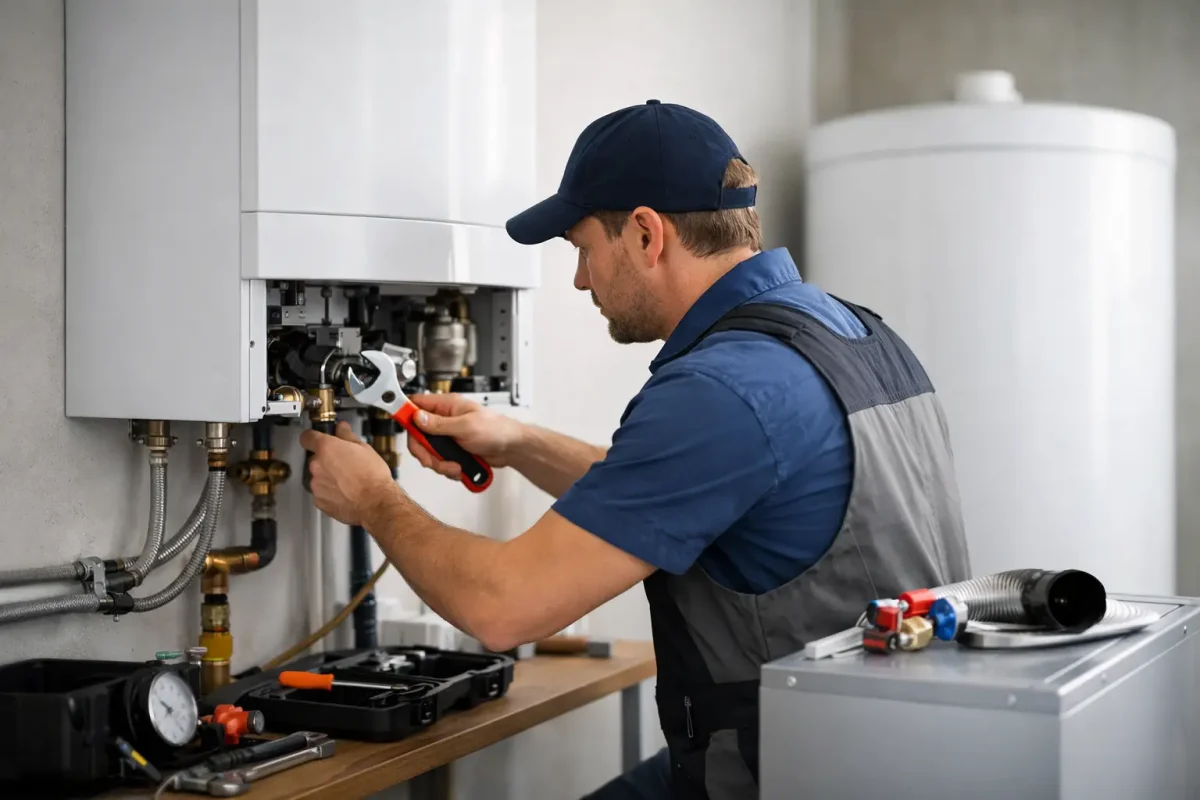
On installation day, the old boiler is safely isolated and removed. The new appliance is then fitted in line with current regulations and manufacturer requirements. Depending on the scope of work, the engineer may need to upgrade controls, improve condensate discharge arrangements, adjust pipework, or fit system protection such as a magnetic filter.

Once installed, the system should be filled, tested, and commissioned correctly. Gas rate, pressure, combustion, and safety checks all need to be carried out by a Gas Safe registered engineer. The final stage includes setting up the controls, checking radiator performance, and making sure the customer understands basic operation.

A quality installation is about more than getting heat back on quickly. It is about doing the work safely, neatly, and in a way that protects long-term performance.

Why system condition matters as much as the boiler

One of the most common issues in heating systems is contamination. Sludge, rust particles, and limescale build-up restrict circulation, create cold spots, increase strain on pumps and heat exchangers, and reduce efficiency throughout the property. It is one reason some new boilers disappoint owners after installation – the appliance is new, but the system around it is still underperforming.

That is why experienced heating specialists often recommend power flushing or targeted system cleaning before or during boiler replacement. Done correctly, this removes harmful debris and helps the new boiler operate in cleaner water conditions. In practical terms, that can mean faster heat-up times, more even radiator performance, lower wear on components, and better protection for the investment you have just made.

For older systems, this step is especially valuable. It can also highlight weak points before the new boiler goes live, which is far better than discovering them afterwards.

What affects boiler replacement cost?

Customers often want a single fixed number, but boiler replacement cost depends on the job. The type and brand of boiler matter, but so do the installation conditions. A straightforward like-for-like swap is generally less involved than moving the boiler to a new location or converting from a regular boiler to a combi.

Cost is also affected by system condition. If the pipework needs alteration, controls need updating, the flue route changes, or a power flush is required, the quotation will reflect that. None of this should be hidden. Transparent pricing matters because customers need to know exactly what they are paying for and why.

The cheapest quotation is not always the best value. Poor installation, skipped system cleaning, weak commissioning, or lack of aftercare can create bigger costs later. A properly specified installation by an experienced, Gas Safe registered specialist gives you a clearer route to reliable performance.

Why professional installation matters

Boilers are gas appliances, and there is no room for shortcuts. Safety, compliance, and performance all depend on competent installation. That means using a qualified Gas Safe registered engineer who understands not only the appliance but the heating system as a whole.

This is particularly important in London properties, where space constraints, older pipework, hard water conditions, and varied property layouts can complicate what first appears to be a simple swap. Experience matters in these situations. So does responsiveness. When heating and hot water are down, customers need clear advice, prompt attendance, and work carried out with minimum disruption.

At The Power Flush Company, that specialist approach is central to the service. Boiler work is not treated in isolation. It is assessed alongside circulation, sludge build-up, radiator performance, and the wider health of the system, helping customers get a result that lasts rather than a temporary fix.

Getting better results from a new boiler

A new boiler should not be the end of the conversation. Servicing, water treatment, clean system conditions, and properly set controls all help protect efficiency and reliability over time. Even a high-quality installation will lose ground if the system is neglected afterwards.

For landlords and commercial operators, planned maintenance reduces surprises and makes budgeting easier. For homeowners, it gives peace of mind and helps keep energy use under control. Small adjustments, such as balancing radiators or updating heating controls, can make a noticeable difference to comfort.

If your current boiler is unreliable, inefficient, or showing signs of age, the best next step is not guesswork. It is a professional assessment from engineers who understand both boiler installation and the heating system it depends on. Done properly, replacement is not just about fitting a new unit. It is about restoring dependable heating, hot water, and confidence in the property.

Categories power flushing

How to Power Flush Central Heating System DIY

How to Power Flush Central Heating System DIY

If your radiators are hot at the top and cold at the bottom, your boiler is making more noise than usual, or certain rooms never seem to warm up properly, sludge is often the culprit. Many people search for how to power flush central heating system DIY when they want a cheaper fix, but this is one job where the difference between a quick improvement and an expensive mistake matters.

A proper power flush is designed to clear iron oxide, debris and scale from your heating circuit using specialist equipment, chemicals and controlled water flow. It can restore circulation, improve radiator output and reduce strain on the boiler. The question is not only whether you can do it yourself, but whether your system is suitable and whether the result will be worth the risk.

How to power flush central heating system DIY – what it really involves

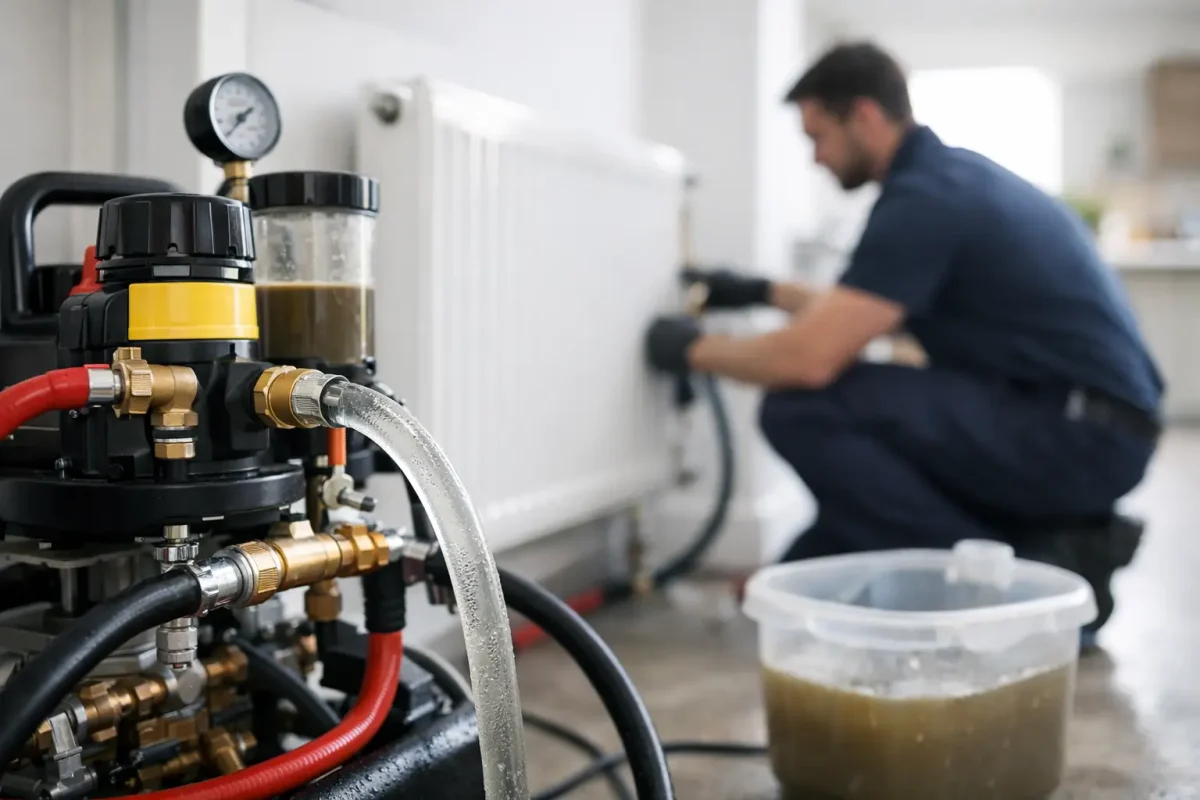
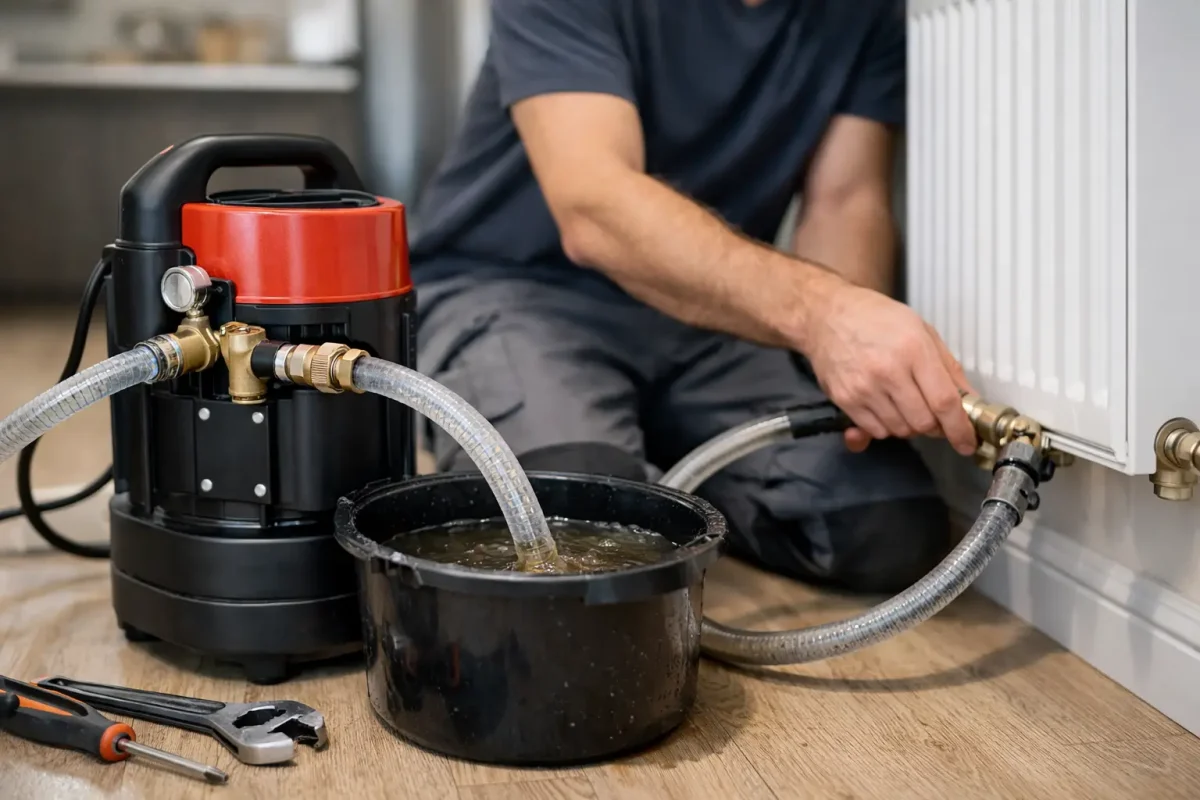
DIY power flushing is often misunderstood. A true power flush is not the same as draining the system, bleeding radiators or tipping a bottle of cleaner into the feed and expansion tank. It uses a dedicated flushing pump connected into the heating system, usually with cleansing chemicals, and each radiator is isolated and worked through in turn to shift built-up sludge.

That matters because a heavily contaminated system rarely clears with a basic drain-down. Sludge settles in low-flow areas, compacts inside radiator panels and can circulate back into the boiler if it is not removed properly. On older systems, especially in London properties with ageing pipework or a history of poor maintenance, the job can become more complicated very quickly.

For a competent DIYer, a light chemical clean and flush may be possible. A full power flush is more specialised. If the boiler is under warranty, if there are signs of pump issues, or if the system has recurring cold spots, it is usually better handled by an experienced heating engineer.

When a DIY flush might be enough

There are cases where a simpler approach can help. If the system is only mildly dirty, the radiators still heat reasonably evenly, and the boiler is not locking out or kettling, you may get some benefit from adding a recognised cleanser, running the heating for the recommended period, then draining and refilling the system with inhibitor.

This is not the same as a commercial-grade power flush, but it can improve circulation in lightly affected systems. It is often the practical limit of what a homeowner should attempt without specialist flushing equipment.

If, however, several radiators are cold, the water drained from the system is black, there is repeated air build-up, or the boiler has fault codes linked to circulation, you are beyond a casual DIY clean. At that stage, guessing can cost more than booking the right engineer from the outset.

Tools and equipment you would need

If you are determined to attempt a DIY version, you need more than a hosepipe and a bucket. At minimum, you are looking at a central heating cleanser, fresh inhibitor, basic hand tools, radiator bleed key, hose connections, plenty of old towels and containers for dirty water. Some people hire a flushing pump, but hiring the machine is only part of the job. Knowing where to connect it, how to protect the boiler and how to isolate radiators correctly is what prevents damage.

You also need to understand your system type. A sealed system, a vented system and a combi setup all have different considerations. Pressure management matters. So does safe discharge of dirty water. And if any part of the work involves opening the boiler case or interfering with petrol components, that stops being DIY immediately.

How to flush a central heating system yourself

Start by turning off the heating and allowing the system to cool fully. You then isolate the water supply where appropriate, attach a hose to the drain-off point and empty the system. Expect the first discharge to be dark if sludge is present.

If you are using a chemical cleanser, it is usually introduced via a radiator or other suitable access point, then circulated through the system for the time specified by the manufacturer. During this stage, each radiator should be checked and bled where needed. On a simple DIY clean, some homeowners remove individual radiators and flush them through outdoors with a hose until the water runs clearer. It is messy, time-consuming and not always enough, but it can help on badly affected units.

After circulation, the system is drained again and refilled until the water runs cleaner. On sealed systems, pressure must then be restored correctly. Once flushing is complete, inhibitor should be added to help slow future corrosion. Skip that step and the problem can start building up again far sooner than expected.

This process sounds straightforward on paper. In practice, seized valves, old radiator tails, hidden leaks and poor drain-off points can turn it into a long day very quickly.

The main risks of a DIY power flush

The biggest risk is assuming all poor heating performance comes down to sludge. Sometimes the real fault is a failing pump, a stuck motorised valve, air ingress, incorrect balancing, a blocked heat exchanger or boiler-related circulation issues. Flushing the system will not solve those problems.

There is also the risk of disturbing weak points in an old system. Sludge can partly seal tiny holes in corroded radiators or pipework. Once it is removed, leaks may appear. That does not mean the flush caused the damage, but it often reveals existing deterioration.

Improper chemical use is another issue. Too strong, left in too long, or not thoroughly flushed out, and you can create more problems than you solve. The same goes for poor refilling. If inhibitor is not added or system pressure is not set correctly, heating performance and long-term protection both suffer.

Then there is the boiler itself. Modern boilers are sensitive to dirty water and poor circulation. If debris is pushed towards the heat exchanger during an amateur flush, the repair bill can easily wipe out any saving.

When professional power flushing is the better option

If you have a modern boiler, repeated boiler faults, multiple cold radiators, or a large property with several heating zones, professional power flushing is usually the sensible route. A specialist can test circulation properly, identify whether sludge is the real issue, and flush the system with the right equipment rather than hoping a basic drain-down does the trick.

That is particularly relevant for landlords and property managers. A half-done job in an occupied property can mean complaints, no heating, water damage and call-backs. Paying for the job once is normally cheaper than paying for it twice.

A proper engineer will also spot the things a DIY guide cannot. Magnetite levels, system design flaws, failing components, undersized pipework, or whether the boiler should be protected during the flush. For many households, that diagnosis is where the real value lies.

Signs your heating system needs more than a flush

If radiators stay unevenly hot after cleaning, if the pump is noisy, if pressure keeps dropping, or if the boiler cycles on and off without heating properly, the issue may sit elsewhere. Likewise, if the system is very old and has never been maintained, a flush may help but not fully restore performance.

This is where an honest assessment matters. Not every struggling system needs a full replacement, but not every tired system will be rescued by flushing either. The right answer depends on age, condition, contamination level and the state of the boiler.

Is DIY power flushing worth it?

For a light clean on a straightforward system, DIY can be worthwhile if you are confident, methodical and realistic about the limits. You might improve radiator performance and buy the system some time, especially if you finish the job properly with clean water and inhibitor.

If you are expecting the result of a professional power flush, though, that is a different standard. Specialist equipment, experience and fault diagnosis are what make the difference. That is why many homeowners who start with a DIY attempt end up calling in a heating engineer after losing a weekend and still having cold radiators.

At The Power Flush Company, we see that pattern regularly across London properties – especially where sludge has been building for years and the boiler is already under strain. A proper assessment saves guesswork.

If you are weighing up how to power flush central heating system DIY, be honest about the condition of your system and your own skill level. A careful DIY clean can help in some cases, but when heating reliability matters, the smarter decision is often the one that gets the job fixed properly first time.

Categories power flushing

How Long Does It Take to Power Flush?

How Long Does It Take to Power Flush?

If your radiators are cold at the bottom, your boiler is making more noise than it should, or certain rooms never seem to warm up properly, the question is usually not whether your system needs attention but how quickly it can be sorted. A common question we hear is how long does it take to power flush a central heating system, and the honest answer is that most domestic jobs take between half a day and a full day, but the exact timing depends on the size of the system, the level of sludge, and how accessible everything is.

Power flushing is not a cosmetic service. It is a practical cleaning process that removes sludge, rust, debris and scale from the pipework, radiators and boiler circuit. Done properly, it can restore circulation, improve heat output and reduce strain on key components. Done badly or rushed, it leaves contamination behind and the underlying problem remains.

How long does it take to power flush a central heating system?

For an average home with around 8 to 10 radiators, a standard power flush usually takes 4 to 8 hours. In many cases, that means one engineer can complete the job within a working day. Smaller systems can sometimes be completed more quickly, especially if the contamination is light and the system is responding well during the clean.

Larger properties, older heating systems, or systems with severe sludge build-up may take longer. If there are 12 or more radiators, repeated blockages, poor circulation throughout the property or a history of boiler faults linked to dirty system water, it can take a full day or more. Some commercial or multi-zone systems may require staged work across a longer period.

That is why any honest answer has to include a site-specific assessment. A proper engineer will not promise a fixed timescale without seeing the system or asking the right questions first.

What affects power flush times?

The biggest factor is system condition. A relatively modern heating system that has had some level of maintenance will usually flush faster than an older neglected one. If the water in the system is heavily discoloured, several radiators are partially blocked, or the pump and valves are struggling, the process takes longer because more contamination has to be broken down and removed.

The number of radiators also matters. More radiators means more sections to isolate, test and clean through. A small flat may be straightforward. A larger house with multiple floors and extra heating zones is naturally more time-consuming.

Access can add time as well. If pipework is awkward to reach, radiator valves are seized, or there are existing faults that need to be dealt with before flushing starts, the engineer has to work carefully. That is not wasted time. It is part of doing the job safely and properly.

Boiler type can also make a difference. Some systems are easier to connect equipment to than others, and older installations may need a more cautious approach. Where a magnetic filter is being fitted after the flush, or damaged parts need replacing, that extends the visit but can add long-term value.

What happens during a power flush?

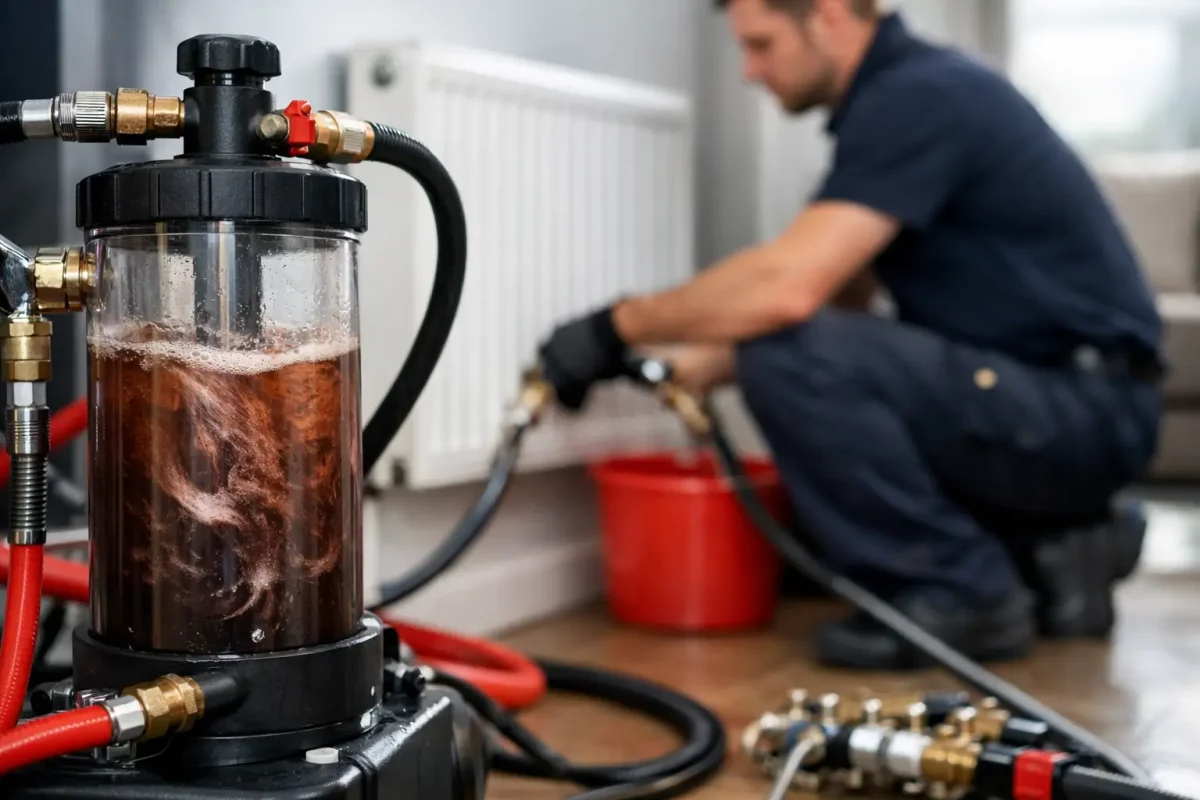
A power flush uses specialist equipment to circulate cleaning chemicals through the heating system at high velocity. The aim is to dislodge sludge, iron oxide and debris, then remove it from the system before it can settle again. Clean water is passed through until the discharge runs clear, and inhibitor is then added to help protect the system from future corrosion.

This is not simply a case of draining and refilling the system. A drain-down alone will not remove compacted sludge from the bottom of radiators or debris trapped in circulation points. The reason power flushing takes several hours is that each radiator and section of the system needs proper attention.

An experienced engineer will monitor the condition of the water, check heat distribution, and work through the system methodically. In some cases, individual radiators may need separate treatment if they are especially blocked. The final stage is just as important as the first, because the system needs to be left balanced, protected and operating correctly.

When a power flush takes longer than expected

There are times when a job that looks routine at first takes longer once work begins. That usually happens because the contamination is worse than expected or because an existing fault becomes obvious once circulation improves.

For example, a heavily sludged radiator may not clear immediately and might need repeated flushing. A valve that was already weak may start leaking once disturbed. In some systems, poor performance is not just down to sludge but also to failed pumps, stuck motorised valves or damaged components. A good engineer will identify that rather than masking it.

This is one reason price and timescale should never be judged on speed alone. If someone claims they can flush a large dirty system in a couple of hours, you should ask what exactly is being done and what is being left behind.

How do you know if your system is likely to need a full day?

There are some clear warning signs. If several radiators stay cold even after bleeding, if the boiler keeps cutting out, if banging or kettling noises are coming from the system, or if the water from a radiator is dark brown or black, expect a more involved flush.

Landlords and property managers often run into this issue in older rented properties where routine heating maintenance has been delayed. The system may still be running, but not efficiently. In those cases, allowing enough time for a proper clean is the better decision than trying to squeeze the work into the shortest slot possible.

The same applies before a boiler replacement. If a new boiler is being fitted onto a dirty central heating system, flushing becomes even more important. Manufacturers do not want new appliances connected to contaminated water for good reason. Sludge can reduce efficiency, affect circulation and shorten component life.

Is the property left without heating all day?

During the flush itself, the heating system will be worked on and normal operation will be interrupted. In most homes, that means you should expect heating and hot water disruption while the engineer carries out the clean. How noticeable that is depends on the type of system and the season, but it is sensible to plan for a temporary loss of heating for the duration of the visit.

A professional engineer will aim to complete the work efficiently and get the system back online as soon as possible. If additional faults are found, you should be told clearly what they are, whether they affect recommissioning, and what your options are.

Is a quicker chemical flush the same thing?

No. A chemical flush and a power flush are not the same service, and the difference matters. A basic chemical clean may be suitable in some limited situations, particularly on a newer system with minor contamination. But where circulation is poor, sludge is established and radiators are not heating properly, a full power flush is usually the more effective solution.

The shorter service may sound attractive if you are focused on time alone, but a partial clean often means the root cause remains in the system. That can lead to repeated call-outs, ongoing cold spots and unnecessary stress on the boiler. For most homeowners and landlords, that is a false economy.

Why the engineer you choose affects the timing

Power flushing is specialist work. The equipment matters, but experience matters more. An engineer who understands central heating diagnostics can tell the difference between contamination, trapped air, circulation faults and component failure. That means less guesswork and a cleaner result.

At The Power Flush Company, this is exactly the kind of work we handle every day across London and Greater London. As Petrol Safe registered specialists, we take a practical approach – assess the system properly, explain what is needed, and carry out the work to a standard that improves performance rather than simply ticking a box.

For homeowners, landlords and commercial clients, that matters because time onsite should produce a measurable result. Better radiator heat-up, quieter operation, improved circulation and cleaner system water are the signs the job has been done properly.

So what should you expect on the day?

In most domestic properties, allow 4 to 8 hours. If your system is large, old or heavily contaminated, allow a full day and be prepared for the possibility of extra time if faults are uncovered. A shorter job is possible on a small clean system, but the dirtier and more complex the heating circuit, the longer a proper flush will take.

That is not bad news. It is simply the reality of restoring a heating system properly. If your radiators are underperforming or your boiler is showing signs of stress, giving the work enough time is often the difference between a temporary improvement and a lasting fix.

If you are unsure whether your system needs a power flush or want a realistic timeframe before booking, the best next step is a professional assessment. A clear answer at the start usually saves time, cost and heating problems later.

Categories power flushing

How Often Should You Power Flush Central Heating?

How Often Should You Power Flush Central Heating?

One radiator stays cold at the bottom, the boiler starts making more noise than it used to, and rooms take longer to warm up. That is usually when people ask how often should you power flush central heating – not because they are planning routine maintenance, but because the system is already showing signs of sludge, magnetite, and poor circulation.

The short answer is this: most central heating systems do not need power flushing every year. In a well-maintained system, a professional power flush is often only needed every 5 to 10 years, or when there are clear signs of contamination and restricted flow. That said, the right timing depends on the age of the system, the quality of previous installation work, whether inhibitor has been used properly, and how the heating is performing now.

If you own a home, manage rental property, or run a small commercial premises in London, the better question is not just how often, but whether your system actually needs one now.

How often should you power flush central heating in practice?

There is no single calendar rule that suits every property. A newer sealed system with clean water, correct inhibitor levels, and a good magnetic filter may go many years without needing a flush. An older system with ongoing cold spots, repeated boiler faults, and black water in the radiators may need attention much sooner.

As a practical guide, power flushing is commonly recommended in a few situations. It often makes sense before fitting a new boiler onto an older heating circuit, after major radiator or pipework contamination has been identified, or when repeated performance issues suggest sludge is affecting circulation. It can also be necessary if a manufacturer requires system cleaning to protect a new boiler warranty.

What it should not be treated as is an automatic annual service item. Your yearly boiler service checks safety and performance. A power flush is corrective system cleaning. Those are not the same job.

Signs your heating system may need a power flush

A central heating system usually gives warnings before it reaches the point of serious breakdown. The trouble is that many property owners live with those warnings for months, sometimes years, assuming the system is simply old or that a radiator “has always been like that”.

If several radiators are cold at the bottom but warm at the top, that is a classic sign of sludge settlement. If some rooms heat up properly while others stay lukewarm, poor circulation may be the issue. If the boiler is noisy, regularly locking out, or struggling to maintain temperature, debris inside the system may be putting strain on key components.

Other red flags include dirty water when a radiator is bled, frequent pump or valve issues, and heating that takes far too long to respond. In commercial settings or larger properties, uneven heat across zones is another common indicator.

These symptoms do not always mean a power flush is the only answer. Sometimes a smaller repair, balancing work, or targeted cleaning is enough. That is why proper diagnosis matters.

Why power flushing too often is not the goal

There is a common assumption that if power flushing is good, more frequent flushing must be better. In reality, that is not how a healthy heating system should be managed.

A professional power flush is a strong remedial process designed to remove built-up sludge, rust particles, and scale from radiators, pipes, and the boiler circuit. If a system is repeatedly getting contaminated every couple of years, the underlying issue may be elsewhere. It could be poor water treatment, oxygen ingress, a failed component, incorrect installation practice, or old pipework deteriorating from within.

In other words, needing repeated power flushes in a short timeframe is usually a sign that the cause has not been properly dealt with. The aim should be long-term cleanliness and protection, not frequent reactive flushing.

When a power flush is strongly recommended

The clearest time to consider a flush is before a boiler replacement is completed on an older or dirty system. Installing a new boiler onto contaminated pipework can push sludge straight into a clean heat exchanger. That creates avoidable faults, poor efficiency, and possible warranty problems.

It is also strongly recommended when radiators have persistent cold spots, circulation is poor across the property, and previous bleeding or balancing has not solved the problem. If black magnetite is present in the water, that points to corrosion deposits moving around the system.

Landlords and property managers should take this seriously when tenants report uneven heating or recurring boiler issues. What looks like a minor comfort complaint can turn into a more expensive repair if pumps, valves, and heat exchangers keep working against dirty water.

How often should you power flush central heating after a new boiler?

If a new boiler has been installed correctly onto a cleaned and protected system, you should not expect to need another power flush in the near future. In many cases, proper inhibitor treatment, a magnetic filter, and routine servicing are enough to keep the system in good condition for years.

What matters after installation is prevention. If the installer has flushed or cleaned the system thoroughly, added inhibitor, checked circulation, and fitted suitable protection, the system should remain stable. If corners were cut, contamination can return quickly.

That is why experienced heating engineers look beyond the boiler itself. A new appliance cannot compensate for neglected radiators and pipework.

Factors that affect how often power flushing is needed

System age is one factor, but not the only one. Older systems tend to have more corrosion by-products and internal build-up, especially if inhibitor has not been maintained. Hard water areas can also contribute to scale-related issues in certain parts of the system.

The quality of the original installation matters as well. Poorly designed pipe runs, low flow rates, mixed metals, and lack of proper cleaning at commissioning can all shorten the period before contamination starts causing problems.

Usage patterns make a difference too. A heavily used heating system in a large house, block-managed property, or commercial premises may reveal circulation issues more quickly than a lightly used domestic setup. Properties left empty for periods can also develop issues that are only noticed once full heating demand returns.

Finally, maintenance standards matter. Regular boiler servicing is essential, but water quality protection is often overlooked. That is where many long-term performance problems begin.

Power flush or chemical flush?

Not every dirty system needs a full power flush. In some cases, a chemical flush or targeted system clean may be suitable, especially where contamination is lighter and the system is otherwise functioning reasonably well.

A power flush is typically the better choice when sludge is severe, circulation is poor, multiple radiators are affected, or there is evidence of significant debris in the system. It uses specialist equipment to move cleansing chemicals through the heating circuit at high flow, helping to dislodge and remove stubborn deposits.

The right method depends on the condition of the system. A responsible specialist should assess that first rather than recommend the most expensive option by default.

Why professional diagnosis matters

Heating issues can overlap. A noisy boiler might be suffering from sludge, but it could also involve pump wear, air ingress, pressure problems, or faulty controls. Cold radiators may be contaminated, but they may also be poorly balanced or partially blocked in only one section.

That is why a proper site assessment saves time and money. An experienced engineer can inspect water quality, identify circulation faults, and tell you whether power flushing is the right solution, whether another repair is needed first, or whether the system condition makes replacement the smarter option.

For homeowners and landlords, this is where specialist support counts. A company focused on heating system performance, not just boiler swaps, is far more likely to give you the right answer.

The cost of waiting too long

A heating system rarely repairs itself. When sludge and debris are left in circulation, efficiency drops and components work harder. That can mean higher energy bills, slower heat-up times, increased wear on the pump, stuck valves, and more stress on the boiler heat exchanger.

For landlords, delayed action can lead to tenant complaints, call-backs, and emergency repair costs. For commercial operators, poor heating can affect staff comfort, customer experience, and operating hours. What starts as one cold radiator can develop into a system-wide problem.

At that stage, the question is no longer how often should you power flush central heating. It becomes how much longer the system can keep running efficiently without corrective work.

If your radiators are slow to heat, the boiler is making unusual noise, or your system has never been properly cleaned, get it checked before the next fault forces the decision. A well-timed professional assessment can restore performance, protect your boiler, and help your heating system do the job it was meant to do.

Categories power flushing

What Is Power Flushing a Central Heating System?

What Is Power Flushing a Central Heating System?

A heating system rarely fails all at once. More often, you notice small warning signs first – a radiator that stays cold at the bottom, a boiler that keeps making noise, or rooms that take far too long to warm up. If you are asking what is power flushing central heating system maintenance, the simple answer is this: it is a specialist cleaning process that removes sludge, rust, scale and other debris from your pipework, radiators and boiler so the whole system can circulate properly again.

For homeowners, landlords and property managers, power flushing is not about gimmicks or unnecessary add-ons. It is a practical way to restore heating performance when contamination inside the system is causing poor circulation, higher running costs and ongoing faults. In many properties across London and Greater London, especially older homes or buildings with ageing pipework, sludge build-up is one of the most common causes of central heating inefficiency.

What is power flushing a central heating system?

Power flushing a central heating system means connecting specialist equipment to the heating circuit and pumping water through the system at a controlled high flow rate. That flow is combined with professional cleaning chemicals designed to break down sludge, iron oxide, corrosion deposits and other build-up that standard draining simply will not remove.

The process cleans internally. That is the key point. You are not just emptying dirty water out of the boiler and radiators. You are actively shifting compacted debris that has settled in radiators, valves, bends in pipework and heat exchangers. Once those deposits are removed, water can circulate more freely, radiators heat more evenly and the boiler does not have to work as hard to push heat around the property.

A proper power flush is usually followed by fresh inhibitor being added to help protect the system against future corrosion. Depending on the condition of the heating system, magnetic filtration may also be checked or recommended to reduce repeat contamination.

Why central heating systems get clogged up

Most central heating systems contain metal components. Over time, water and metal can react inside the system, leading to corrosion. That corrosion creates magnetite sludge, which is a black iron oxide deposit. Once it starts circulating, it settles in low-flow areas, especially along the bottom of radiators.

In hard water areas, scale can also become a factor. Older systems are particularly vulnerable, but newer systems are not immune if they have not been properly protected with inhibitor or if installation standards were poor. If the system has had repeated top-ups, leaks, or repairs without chemical protection being reinstated, contamination can build up faster.

That build-up does not just sit there harmlessly. It restricts circulation, creates cold spots, puts strain on pumps and valves, and can contribute to boiler overheating or lockouts. Left too long, it can shorten the life of expensive heating components.

Signs you may need a power flush

Not every heating issue means the system needs power flushing, but there are clear symptoms that often point in that direction. Radiators cold at the bottom and hot at the top are one of the biggest indicators. So is slow warm-up across the property, even when the boiler appears to be firing correctly.

You may also notice discoloured water when bleeding radiators, banging or gurgling noises from the boiler or pipework, repeated pump or valve issues, or radiators that need frequent bleeding. Some systems suffer from uneven heating, where one room becomes hot quickly while another never quite gets there.

Landlords and commercial operators often spot the problem through complaints about unreliable heating rather than obvious breakdowns. If tenants or occupants keep reporting poor heat output, and the thermostat and boiler settings seem normal, internal system contamination should be considered.

How the process works in practice

A professional engineer will first assess the system condition. That matters because not every property needs the same level of treatment. Some systems are heavily sludged and need a full power flush with targeted work on individual radiators. Others may need a different cleaning approach depending on age, design and overall condition.

During a power flush, specialist equipment is connected to the heating circuit. Cleaning chemicals are circulated through the system while each radiator is worked through methodically to loosen and remove debris. In more stubborn cases, engineers may use vibration tools or flow reversal to help dislodge compacted sludge.

The contaminated water is then flushed out and replaced until it runs clean. Once the engineer is satisfied that circulation has improved and the system is clear, inhibitor is added for ongoing protection. The exact time involved depends on the size of the property, the number of radiators and how badly contaminated the system is.

This is why a proper quotation matters. A two-bedroom flat and a large commercial unit are not comparable jobs, and honest pricing should reflect the actual system size and condition.

What are the benefits of power flushing?

The biggest benefit is better circulation, but that is only part of the story. Once sludge and debris are removed, radiators usually heat more evenly and reach temperature faster. That can improve comfort across the property and reduce the strain on the boiler.

In many cases, customers also notice lower energy waste. If your boiler has been overworking to push water through partially blocked radiators and pipework, cleaning the system can improve efficiency. It will not turn an old boiler into a new one, but it can help the existing system perform closer to how it should.

There is also a preventative side to it. Power flushing can help protect pumps, valves and heat exchangers from damage caused by contaminated water. For newer boilers, especially where a manufacturer expects a clean heating system at installation, proper flushing can be an important part of protecting the investment.

Is power flushing always the right answer?

No, and any reliable heating specialist should say so. Sometimes a system is too badly deteriorated, with severe corrosion or persistent leaks, and a flush alone will not provide a lasting fix. In other cases, the real problem may be a faulty pump, stuck motorised valve, air lock, incorrectly balanced system or failing boiler component.

That is where experience matters. A good engineer does not recommend power flushing just because the water looks dirty. They diagnose the heating system properly and explain whether flushing is likely to solve the issue, improve it partly, or whether repair or replacement work is the better route.

This is especially important for older systems in London properties, where pipework alterations, ageing radiators and previous quick-fix repairs can all complicate the diagnosis. The right approach depends on the system, not a one-size-fits-all sales pitch.

Power flushing before a new boiler installation

One of the most common times to consider a flush is before fitting a new boiler. If a new appliance is connected to a dirty heating system, sludge from the old pipework and radiators can quickly circulate into the new boiler and affect performance. That can lead to faults, reduced efficiency and, in some cases, warranty issues.

For that reason, system cleaning is often recommended or required as part of boiler replacement work. It helps ensure the new boiler is not being asked to operate with contaminated water from day one. If the existing radiators and pipework are staying in place, cleaning them properly becomes even more important.

Choosing the right contractor

Power flushing should be carried out by a company that understands the full heating system, not just the flushing machine. Boilers, pumps, controls, radiators and valves all interact, so the engineer needs to know what they are looking at before, during and after the clean.

For domestic and commercial customers, Gas Safe registration, strong plumbing expertise, transparent quotations and real fault-finding experience all matter. If a contractor cannot explain why your system needs flushing, what condition it is in, and what result you can realistically expect, that is a warning sign.

At The Power Flush Company, this is exactly why specialist knowledge matters. When you are dealing with inefficient heating, boiler issues or recurring sludge problems, you need more than a basic clean – you need an experienced heating and plumbing team that can identify the cause, carry out the work properly and advise on what comes next.

If your radiators are cold, your boiler is noisy or your heating bills are climbing without good reason, it is worth getting the system checked before a minor circulation problem becomes a major repair job.