
 NEO
NEOIf your radiators are cold at the bottom, your boiler is making more noise than it should, or certain rooms never seem to warm up properly, the question is usually not whether your system needs attention but how quickly it can be sorted. A common question we hear is how long does it take to power flush a central heating system, and the honest answer is that most domestic jobs take between half a day and a full day, but the exact timing depends on the size of the system, the level of sludge, and how accessible everything is.
Power flushing is not a cosmetic service. It is a practical cleaning process that removes sludge, rust, debris and scale from the pipework, radiators and boiler circuit. Done properly, it can restore circulation, improve heat output and reduce strain on key components. Done badly or rushed, it leaves contamination behind and the underlying problem remains.
How long does it take to power flush a central heating system?
For an average home with around 8 to 10 radiators, a standard power flush usually takes 4 to 8 hours. In many cases, that means one engineer can complete the job within a working day. Smaller systems can sometimes be completed more quickly, especially if the contamination is light and the system is responding well during the clean.
Larger properties, older heating systems, or systems with severe sludge build-up may take longer. If there are 12 or more radiators, repeated blockages, poor circulation throughout the property or a history of boiler faults linked to dirty system water, it can take a full day or more. Some commercial or multi-zone systems may require staged work across a longer period.
That is why any honest answer has to include a site-specific assessment. A proper engineer will not promise a fixed timescale without seeing the system or asking the right questions first.
What affects power flush times?
The biggest factor is system condition. A relatively modern heating system that has had some level of maintenance will usually flush faster than an older neglected one. If the water in the system is heavily discoloured, several radiators are partially blocked, or the pump and valves are struggling, the process takes longer because more contamination has to be broken down and removed.
The number of radiators also matters. More radiators means more sections to isolate, test and clean through. A small flat may be straightforward. A larger house with multiple floors and extra heating zones is naturally more time-consuming.
Access can add time as well. If pipework is awkward to reach, radiator valves are seized, or there are existing faults that need to be dealt with before flushing starts, the engineer has to work carefully. That is not wasted time. It is part of doing the job safely and properly.
Boiler type can also make a difference. Some systems are easier to connect equipment to than others, and older installations may need a more cautious approach. Where a magnetic filter is being fitted after the flush, or damaged parts need replacing, that extends the visit but can add long-term value.
What happens during a power flush?
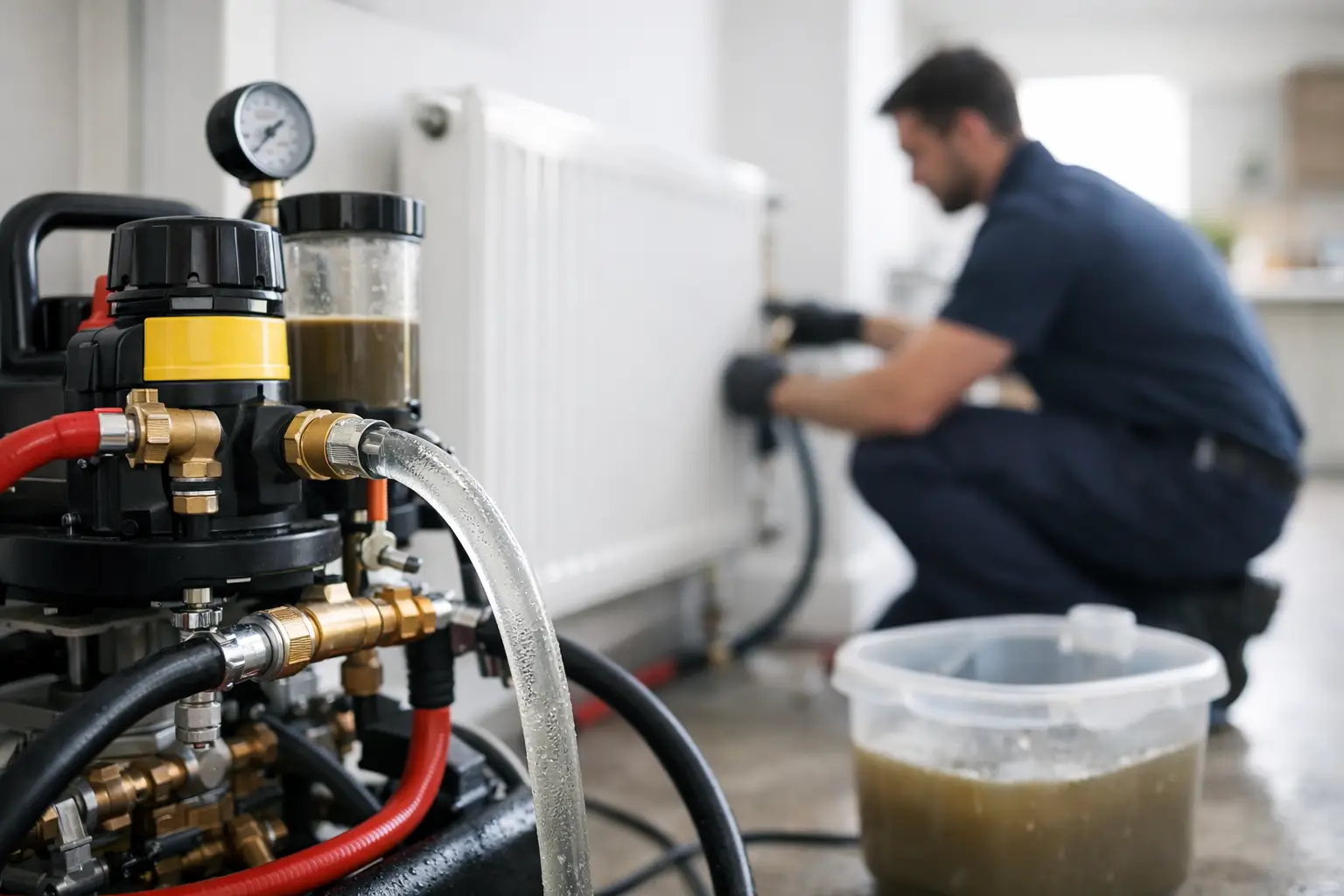
A power flush uses specialist equipment to circulate cleaning chemicals through the heating system at high velocity. The aim is to dislodge sludge, iron oxide and debris, then remove it from the system before it can settle again. Clean water is passed through until the discharge runs clear, and inhibitor is then added to help protect the system from future corrosion.
This is not simply a case of draining and refilling the system. A drain-down alone will not remove compacted sludge from the bottom of radiators or debris trapped in circulation points. The reason power flushing takes several hours is that each radiator and section of the system needs proper attention.
An experienced engineer will monitor the condition of the water, check heat distribution, and work through the system methodically. In some cases, individual radiators may need separate treatment if they are especially blocked. The final stage is just as important as the first, because the system needs to be left balanced, protected and operating correctly.
When a power flush takes longer than expected
There are times when a job that looks routine at first takes longer once work begins. That usually happens because the contamination is worse than expected or because an existing fault becomes obvious once circulation improves.
For example, a heavily sludged radiator may not clear immediately and might need repeated flushing. A valve that was already weak may start leaking once disturbed. In some systems, poor performance is not just down to sludge but also to failed pumps, stuck motorised valves or damaged components. A good engineer will identify that rather than masking it.
This is one reason price and timescale should never be judged on speed alone. If someone claims they can flush a large dirty system in a couple of hours, you should ask what exactly is being done and what is being left behind.
How do you know if your system is likely to need a full day?
There are some clear warning signs. If several radiators stay cold even after bleeding, if the boiler keeps cutting out, if banging or kettling noises are coming from the system, or if the water from a radiator is dark brown or black, expect a more involved flush.
Landlords and property managers often run into this issue in older rented properties where routine heating maintenance has been delayed. The system may still be running, but not efficiently. In those cases, allowing enough time for a proper clean is the better decision than trying to squeeze the work into the shortest slot possible.
The same applies before a boiler replacement. If a new boiler is being fitted onto a dirty central heating system, flushing becomes even more important. Manufacturers do not want new appliances connected to contaminated water for good reason. Sludge can reduce efficiency, affect circulation and shorten component life.
Is the property left without heating all day?
During the flush itself, the heating system will be worked on and normal operation will be interrupted. In most homes, that means you should expect heating and hot water disruption while the engineer carries out the clean. How noticeable that is depends on the type of system and the season, but it is sensible to plan for a temporary loss of heating for the duration of the visit.
A professional engineer will aim to complete the work efficiently and get the system back online as soon as possible. If additional faults are found, you should be told clearly what they are, whether they affect recommissioning, and what your options are.
Is a quicker chemical flush the same thing?
No. A chemical flush and a power flush are not the same service, and the difference matters. A basic chemical clean may be suitable in some limited situations, particularly on a newer system with minor contamination. But where circulation is poor, sludge is established and radiators are not heating properly, a full power flush is usually the more effective solution.
The shorter service may sound attractive if you are focused on time alone, but a partial clean often means the root cause remains in the system. That can lead to repeated call-outs, ongoing cold spots and unnecessary stress on the boiler. For most homeowners and landlords, that is a false economy.
Why the engineer you choose affects the timing
Power flushing is specialist work. The equipment matters, but experience matters more. An engineer who understands central heating diagnostics can tell the difference between contamination, trapped air, circulation faults and component failure. That means less guesswork and a cleaner result.
At The Power Flush Company, this is exactly the kind of work we handle every day across London and Greater London. As Petrol Safe registered specialists, we take a practical approach – assess the system properly, explain what is needed, and carry out the work to a standard that improves performance rather than simply ticking a box.
For homeowners, landlords and commercial clients, that matters because time onsite should produce a measurable result. Better radiator heat-up, quieter operation, improved circulation and cleaner system water are the signs the job has been done properly.
So what should you expect on the day?
In most domestic properties, allow 4 to 8 hours. If your system is large, old or heavily contaminated, allow a full day and be prepared for the possibility of extra time if faults are uncovered. A shorter job is possible on a small clean system, but the dirtier and more complex the heating circuit, the longer a proper flush will take.
That is not bad news. It is simply the reality of restoring a heating system properly. If your radiators are underperforming or your boiler is showing signs of stress, giving the work enough time is often the difference between a temporary improvement and a lasting fix.
If you are unsure whether your system needs a power flush or want a realistic timeframe before booking, the best next step is a professional assessment. A clear answer at the start usually saves time, cost and heating problems later.
Comments
No comments yet. Be the first to comment.