Categories power flushing

Powerflushing Services in London Explained

Powerflushing Services in London Explained

A boiler that keeps cutting out in January, radiators that stay cold at the bottom, or brown water when you bleed the system usually points to one problem – sludge and debris circulating where clean water should be. That is exactly why powerflushing services in London are in demand across homes, rental properties, offices, shops, and managed buildings. In a city full of ageing heating systems, hard water areas, and busy properties that cannot afford heating downtime, a proper system clean is often the difference between ongoing faults and reliable performance.

Power flushing is not a cosmetic extra. It is a specialist cleaning process that removes sludge, rust, iron oxide, and other built-up deposits from your central heating system. Over time, that contamination restricts water flow, reduces radiator output, puts extra strain on pumps and valves, and forces the boiler to work harder than it should. The result is poor heat distribution, rising energy use, and a greater risk of breakdowns.

Why powerflushing services in London matter

London properties present a mixed picture. Some have older pipework and radiators that have seen years of neglect. Others have newer boilers connected to systems that were never properly cleaned before installation. In both cases, contamination can build quietly until the signs become hard to ignore.

If one or two radiators are slow to warm up, people often assume the issue is minor. If several radiators have cold spots, the boiler is making unusual noises, or heating takes far longer than it used to, the problem is usually deeper in the system. Sludge settles in low points, blocks circulation, and creates uneven performance from room to room.

For landlords and property managers, that means complaints, call-backs, and avoidable wear on expensive equipment. For homeowners, it means wasted money and a house that never feels properly warm. For small commercial sites, it can mean disruption for staff, tenants, or customers. In each case, the practical goal is the same – restore clean circulation and get the heating system working as it should.

What a power flush actually does

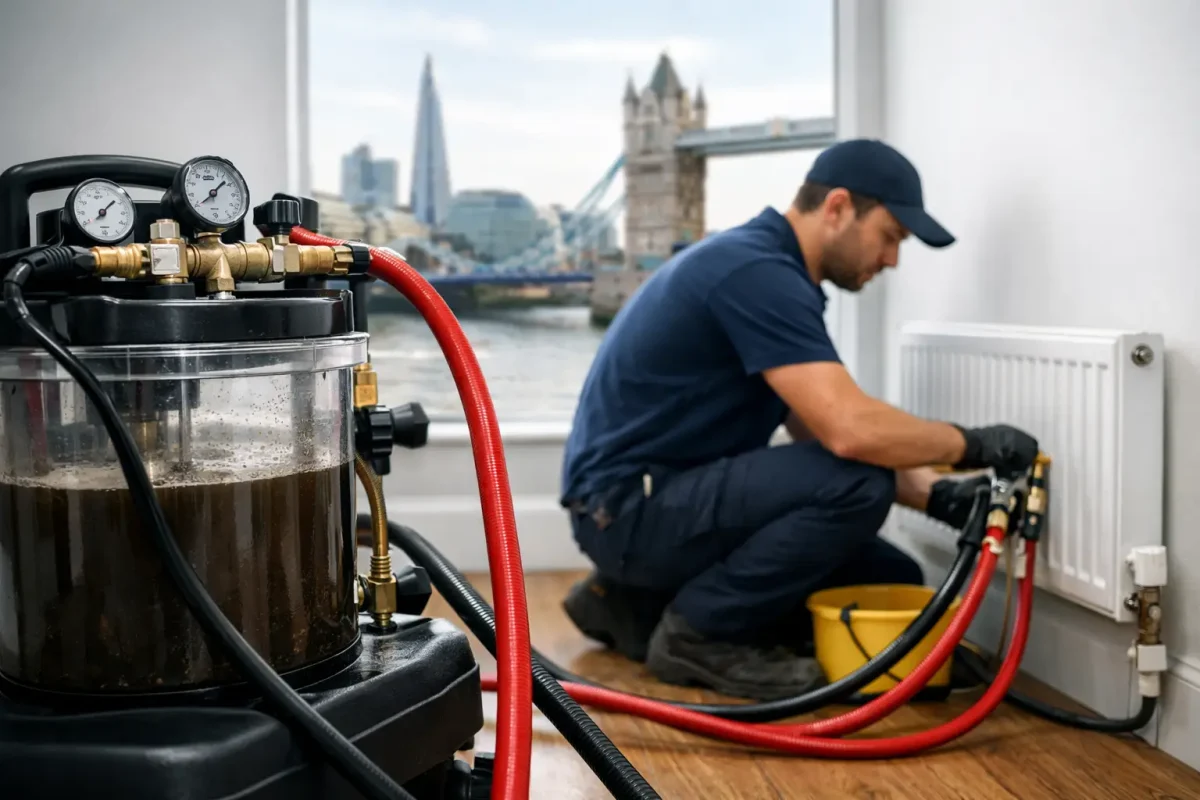
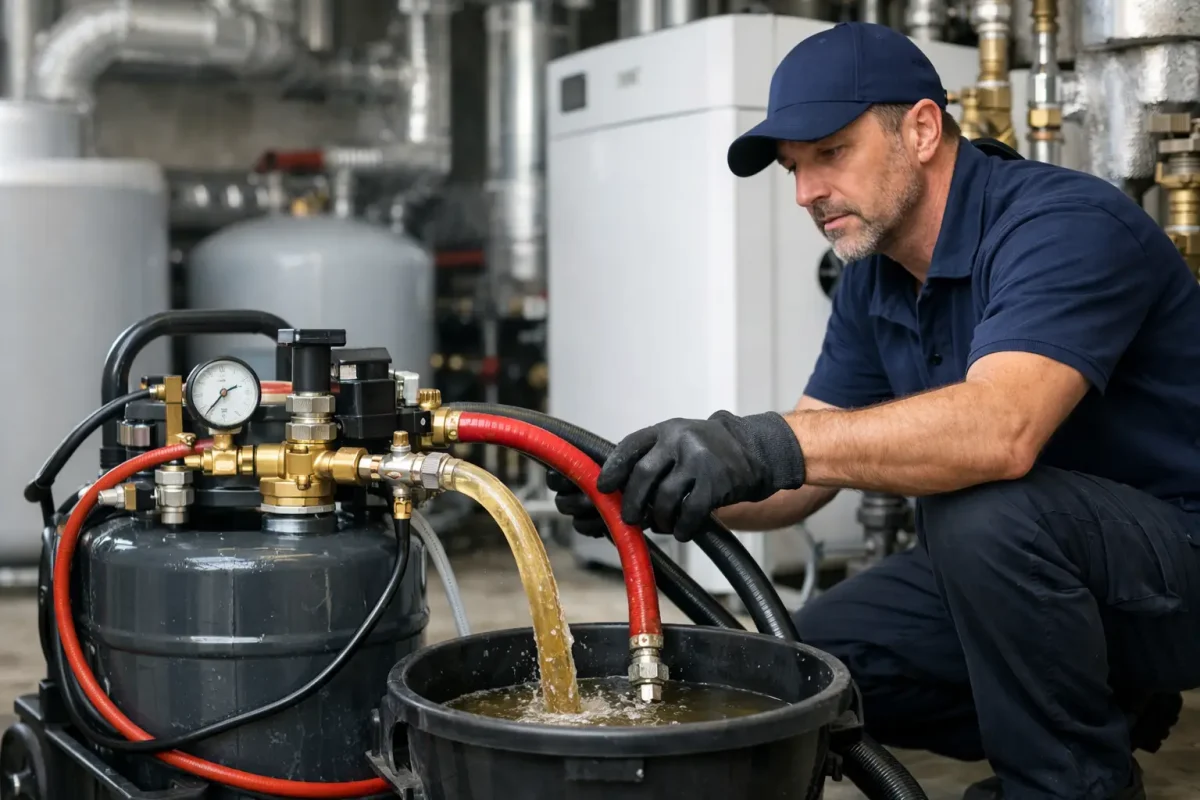
A professional power flush uses specialist equipment to move cleaning chemicals and water through the heating system at speed. That process dislodges magnetite, sludge, corrosion deposits, and other debris from the radiators, pipework, and boiler circuit. Each radiator can be treated individually to clear stubborn blockages, and the waste is removed safely from the system rather than left to settle elsewhere.

Once the system is cleaned, it is refilled with fresh water and the correct inhibitor to help reduce future corrosion. In some cases, fitting or checking a magnetic filter also makes sense, especially where repeat contamination has been an issue.

This is where specialist experience matters. A proper flush is not just about connecting a machine and hoping for the best. The engineer needs to assess the system condition, identify likely restrictions, understand whether there are damaged components already under stress, and decide whether the system is suitable for flushing in the first place. In neglected systems, there can be trade-offs. Cleaning may expose underlying weaknesses in old valves or radiators that were already close to failure. That does not mean the flush caused the problem – it means the contamination had been masking it.

Signs you may need powerflushing services in London

The warning signs are usually obvious once you know what to look for. Radiators cold at the bottom are one of the clearest. So is discoloured water when bleeding radiators. Boiler kettling, noisy pipes, slow warm-up times, recurring pump issues, and radiators needing frequent balancing can also point to system contamination.

Another common sign is when a new boiler has been fitted but heating performance still feels poor. A new appliance connected to a dirty system will not deliver the full benefit it should, and in some cases contamination can shorten the life of the new boiler. That is why system cleaning is often recommended before or during boiler installation.

For commercial premises and larger managed properties, uneven heat across different zones is another clue. If one area overheats while another struggles, poor circulation may be part of the problem. A full heating assessment will usually confirm whether flushing is the right remedy or whether a component fault is also involved.

When power flushing is the right fix – and when it is not

A good engineer should be honest about this. Power flushing is highly effective when sludge, rust, and scale are restricting circulation, but it is not a magic answer to every heating fault. If a motorised valve has failed, a pump has seized, controls are misfiring, or a heat exchanger is damaged, those faults still need direct repair.

Sometimes the system needs a combination of services. A flush may restore circulation, while worn valves, faulty thermostats, or damaged radiators are replaced at the same time. In more serious cases, especially with very old systems, partial upgrades or a full boiler replacement may offer better value than repeated short-term fixes.

That is why proper diagnosis matters. Customers do not need guesswork. They need a heating specialist who can tell the difference between a dirty system, a failing component, and a boiler that has reached the end of its serviceable life.

Choosing a specialist for powerflushing services in London

Not all plumbing firms approach heating system cleaning with the same level of technical focus. Some offer it as an add-on. Others specialise in it and understand what to look for before work begins, during the flush, and after the system is recommissioned.

For London customers, that matters. The right provider should be experienced with domestic and commercial systems, clear about pricing, and able to explain the expected outcome in practical terms. If gas appliances, boiler work, or system alterations are involved, Gas Safe registration is essential. That gives customers one qualified provider for diagnosis, flushing, repair, and any follow-on heating work that may be required.

Availability matters too. Heating problems rarely arrive at a convenient time, and landlords or businesses often need fast attendance to limit disruption. A company that can respond quickly, inspect the system properly, and give a clear recommendation without sales waffle is usually the safest choice.

This is where a specialist service stands out. The Power Flush Company focuses on measurable heating results, not vague promises. That means dealing with sludge and circulation issues properly, identifying wider faults where needed, and helping customers across London get more life and better performance from their central heating systems.

What results should you expect?

A successful power flush should improve heat distribution, reduce cold spots, and help radiators warm more evenly and more quickly. It can also reduce noise, ease strain on the boiler and pump, and support better system efficiency. In many properties, the improvement is noticeable the same day.

That said, results depend on the starting condition of the system. A moderately contaminated heating system with sound components often responds very well. A badly neglected system may improve significantly, but it may still reveal failing valves, leaking radiators, or circulation issues that need separate attention. Honest contractors explain that upfront.

Customers also ask whether power flushing will lower energy bills. It can help, because a cleaner system circulates hot water more effectively and allows the boiler to operate with less wasted effort. But the size of the saving depends on the condition of the system, the boiler age, insulation levels, and how the property is used. It is best seen as part of smarter heating maintenance rather than a miracle cure.

Why acting early usually saves money

Heating systems rarely go from perfect to failed overnight. They decline in stages. A bit of sludge becomes several blocked radiators. A boiler starts making noise, then begins locking out. A weak pump struggles harder and eventually gives up. Leaving contamination in place tends to increase repair costs over time.

Early intervention is usually cheaper than reactive work after a breakdown. That is especially true before winter, before letting a property, or before installing a new boiler. Cleaning the system, protecting it with inhibitor, and checking key components puts the heating in a stronger position when demand rises.

For landlords, that can mean fewer tenant complaints and fewer emergency call-outs. For homeowners, it means better comfort and less risk of being left without heating when engineers are busiest. For commercial operators, it supports continuity and avoids needless disruption.

If your radiators are underperforming, your boiler sounds wrong, or your heating has become slow and unreliable, waiting rarely improves anything. A proper inspection from a specialist can tell you quickly whether power flushing is the right next step – and if it is, getting it done now is often the most practical way to protect the whole system before a small issue turns into a costly one.

Categories power flushing

Commercial Power Flush for Better Heating

Commercial Power Flush for Better Heating

When a commercial heating system starts falling behind, the signs usually show up fast – cold spots on radiators, noisy pipework, rising energy bills, or tenants and staff complaining that some rooms never warm up properly. A commercial power flush is often the most effective way to deal with those underlying problems without rushing straight to major replacement works.

In commercial buildings, heating systems work harder for longer. Whether you manage a small office, a block of flats, a retail unit, a school, or a mixed-use property, circulation problems caused by sludge, rust and scale can build up gradually and then start affecting day-to-day operations. What looks like a boiler issue is often a system issue.

What a commercial power flush actually does

A commercial power flush is a deep clean of the central heating system using specialist equipment, water at high velocity, and cleaning chemicals designed to break down sludge, iron oxide and other debris inside the pipework, radiators and heat exchangers. The goal is to restore proper water circulation through the system.

Over time, contaminated system water starts reducing performance. Radiators can become partially blocked. Pumps work harder than they should. Boilers cycle inefficiently or trip on faults caused by poor flow. In older systems, the build-up can be substantial enough to leave whole sections of a property underheated.

A proper flush is not just a case of draining and refilling. It involves targeted cleaning, careful monitoring and, where needed, working through individual problem areas to remove stubborn deposits. In commercial settings, that experience matters because systems are often larger, more complex and more heavily used than domestic ones.

Why commercial systems get blocked faster

Commercial premises tend to expose heating systems to more demanding conditions. Longer operating hours, larger pipe runs, multiple heating zones and older infrastructure all increase the chance of debris settling in the system. If maintenance has been inconsistent, that process speeds up.

In London and Greater London, hard water can add another layer of trouble. Scale inside components reduces heat transfer and puts extra strain on the boiler. If sludge and scale are both present, efficiency drops further and breakdown risk rises.

This is why a commercial power flush is often recommended before installing a new boiler onto an older system. If contaminated water is left circulating, it can compromise the performance and lifespan of new components from the start. Cleaning the system first protects the investment.

Signs you may need a commercial power flush

Some warning signs are obvious, while others are easier to miss until the system becomes unreliable. If radiators are slow to heat, cold at the bottom, or uneven across the building, circulation problems are likely. If the boiler is making unusual noises or repeatedly locking out, dirty system water may be part of the cause.

Property managers also notice indirect signs. Occupants start reporting inconsistent room temperatures. Heating takes longer to respond. Energy bills climb without a clear reason. Maintenance callouts become more frequent. These are practical indicators that the system is not working efficiently.

It is worth saying that not every heating problem means a full flush is required. Sometimes the issue is a failing pump, a faulty valve, air in the system, poor balancing, or boiler-specific wear. That is why proper diagnosis comes first. A competent specialist should tell you when a power flush is justified and when another repair is the better option.

The value of a specialist approach

Commercial work is not the place for guesswork. Heating systems in occupied properties need careful handling, clear communication and engineers who understand both cleaning and wider system performance. A power flush should improve circulation and efficiency, but it should also fit into a broader maintenance strategy.

That is where a specialist heating and plumbing contractor adds value. If the system needs flushing, chemical treatment, pump attention, radiator valve replacement, fault finding or boiler work, it makes sense to deal with one experienced team rather than several disconnected trades. For landlords and commercial operators, that saves time and usually avoids repeat visits caused by partial diagnosis.

The Power Flush Company works in that specialist space, combining power flushing expertise with Gas Safe registered heating and plumbing support. That matters when a dirty system is only one part of a wider commercial heating problem.

What to expect during a commercial power flush

The exact process depends on the size, age and layout of the heating system, but the principle stays the same. The engineer connects professional flushing equipment to the system, circulates cleaning chemicals, agitates and dislodges debris, and removes contaminated water safely. Radiators and circuit sections may be treated individually where blockages are heavier.

In some cases, extra attention is needed for particularly stubborn areas or older systems with a long history of poor maintenance. Magnetite sludge can be dense and persistent. Scale can also restrict internal waterways in ways that affect overall performance. A proper job takes time.

After cleaning, the system is refilled and dosed with inhibitor to help reduce future corrosion and build-up. This final stage is important. A flush without inhibitor leaves the system more vulnerable to the same problem returning sooner than it should.

For commercial clients, planning also matters. The work may need to be scheduled around occupants, opening hours or access restrictions. An experienced contractor will explain likely downtime, protect surrounding areas and carry out the work with minimal disruption where possible.

Benefits of commercial power flush work

The immediate benefit is usually better heat distribution. Radiators warm more evenly, circulation improves and the boiler is less likely to struggle against restricted flow. That can make a noticeable difference in comfort levels across the property.

There is also a strong efficiency case. When sludge and scale are removed, the system does not need to work as hard to deliver heat. That can reduce wasted energy and lower operating costs, especially in properties where the heating runs daily for long periods.

Reliability tends to improve as well. Pumps, valves and boiler components all perform better in cleaner system water. While a power flush is not a cure for every worn-out part, it can reduce strain and help prevent avoidable faults linked to contamination.

The long-term benefit is protection. If you have already invested in a boiler, pumps or controls, keeping the system clean helps those components operate under better conditions. If you are preparing for a new boiler installation, flushing the system first can be essential rather than optional.

When a power flush may not be the whole answer

There are situations where a flush helps, but does not solve everything. If the boiler is at the end of its service life, if pipework is badly deteriorated, or if controls are outdated, cleaning the system may improve performance only up to a point. In those cases, the right advice is to explain the trade-off honestly.

The same applies to very neglected systems. A commercial power flush can deliver major improvement, but expectations should be realistic where a building has had years of corrosion, recurring leaks or undersized heating design. The result may be better performance rather than perfect performance.

That is why transparent assessment matters. A reliable contractor should explain what the flush is likely to achieve, what risks or limitations exist, and whether any follow-on work is sensible.

Choosing the right contractor for commercial heating work

Commercial clients need more than a basic plumbing visit. You need a company that understands system cleaning, boiler performance, safe working practices and the realities of occupied buildings. Certification matters. Experience matters. So does the ability to respond quickly when heating problems are affecting tenants, staff or trading hours.

Look for a specialist that offers clear quotations, practical recommendations and a direct route to diagnosis. If they only talk about flushing without considering the rest of the system, that is a warning sign. Good commercial heating support starts with identifying the real cause, then carrying out the work properly.

For property managers and business owners, speed is often critical, but speed without competence just leads to repeat problems. The better route is fast assessment backed by proper technical knowledge.

If your heating system is underperforming, noisy, slow to warm up or costing more to run than it should, getting it checked now can prevent a bigger and more expensive failure later. A well-timed commercial power flush can restore circulation, improve efficiency and take pressure off the entire system – and that is often the difference between ongoing disruption and a heating system you can rely on.

Categories power flushing

Why Is Boiler Installation So Expensive?

Why Is Boiler Installation So Expensive?

Sticker shock is common when you first price a new boiler. Many customers ask the same question: why is boiler installation so expensive when the boiler itself can look straightforward enough online? The short answer is that you are not just buying a box on the wall. You are paying for safe gas work, correct sizing, system checks, compliance, skilled labour and a heating setup that should run properly for years rather than fail after a rushed fitting.

For homeowners, landlords and property managers in London, the price can feel even steeper because labour rates, access issues and property layouts often add time to the job. The real cost sits in the work around the appliance, not just the appliance itself.

Why is boiler installation so expensive in practice?

A proper boiler installation is a technical job with legal, safety and performance requirements built into it. Any Gas Safe registered engineer fitting a boiler has to make sure the appliance is suitable for the property, the gas supply is adequate, the flue route complies with regulations, the condensate is handled correctly and the full heating system is safe to run.

That is before you get into the condition of the existing pipework, radiators and controls. If the old system is full of sludge, scale or magnetite, fitting a brand-new boiler onto it without cleaning the system is a false economy. It can reduce efficiency, cause blockages and shorten the life of the new unit. This is one reason specialist heating engineers often recommend system cleaning or a power flush before or alongside installation.

The cheapest quote is not always the cheapest job. If key steps are skipped, problems usually show up later as poor circulation, noise, uneven heating, warranty issues or repeat call-outs.

The boiler itself is only part of the bill

People often compare the internet price of a boiler with an installation quote and assume the margin is excessive. In reality, the boiler unit can be only one part of the total.

There are also components such as filters, flue extensions, valves, magnetic protection, chemical inhibitor, controls and fittings. In some homes, the installer may need to upgrade the gas pipe size to meet the boiler manufacturer’s requirements. In others, relocating the boiler means new flow and return pipework, condensate routing and alterations to the flue position.

Even a like-for-like swap is not always simple. Older systems can hide faults that only become clear once work starts. A corroded valve, weak pump, damaged isolation point or poorly installed old flue can all add time and materials.

Labour costs reflect skill, time and responsibility

Boiler fitting is not general handyman work. It must be carried out by a qualified Gas Safe registered engineer with the right competence for the appliance and system involved. That expertise matters because a boiler is connected to gas, water, electrics and combustion products. If any part is wrong, the risk is serious.

You are also paying for experience. A skilled installer does more than connect pipes. They assess heat demand, spot faults in the wider heating system, commission the boiler properly, test combustion, set up controls and make sure the system is operating as it should.

In London and Greater London, labour rates are naturally higher than in many other parts of the UK. Parking, congestion, property access and travel time all affect operational costs. That does not mean every high quote is justified, but it does explain why local installation prices can be well above what you might see in a national average.

Safety and compliance add real cost

One of the biggest reasons why boiler installation is so expensive is that there is no shortcut around safety. Gas appliances must be installed in line with current regulations and manufacturer instructions. The engineer must carry out checks on gas tightness, ventilation where relevant, flue integrity, combustion performance and system pressure.

There is paperwork too. Commissioning records, benchmark documentation and registration requirements all form part of a compliant installation. These are not admin extras. They support warranty validity, confirm the boiler has been installed correctly and create a record for future servicing and property compliance.

Landlords have even more reason to take this seriously. A badly installed boiler is not just an inconvenience. It can create legal exposure, tenant complaints, property damage and emergency repair costs.

The condition of the heating system changes the price

No two installations are quite the same because no two systems are in the same condition. One property may have clean water, sound radiators and modern controls. Another may have heavy sludge, partial blockages, cold spots and old components close to failure.

If the system is contaminated, engineers may recommend a power flush or chemical clean before the new boiler is commissioned. That is not upselling for the sake of it. A dirty system can send debris straight into the new heat exchanger and pump. On modern high-efficiency boilers, that can cause trouble quickly.

This is especially relevant in older London properties where pipework may have been altered over decades. Mixed metals, ageing radiators and historic leaks can all affect installation time and system performance.

Hidden upgrades that often catch customers out

Many quote differences come down to the extra work required to bring the full system up to standard. Common examples include upgrading the gas supply pipe, fitting a magnetic filter, replacing faulty valves, improving condensate discharge or installing new controls.

Some jobs also need remedial work around the flue. If the current flue position no longer meets regulations or the new boiler model needs a different arrangement, that can add both labour and materials. In flats, extensions or tight utility spaces, this can be more involved than customers expect.

Boiler type and location matter more than most people think

A straightforward combi-to-combi replacement in the same location is usually the most cost-effective option. Once you move into conversions, prices rise. Changing from a regular boiler to a combi, or from a system boiler to another layout, often means reworking tanks, cylinder connections, controls and pipe routes.

Relocating a boiler also adds cost. Moving it from a kitchen to a loft, garage or airing cupboard can mean longer pipe runs, electrical alterations, new flue routes and extra commissioning time. It may be the right long-term decision, but it rarely comes cheap.

Boiler output matters too. Larger properties, higher hot water demand and commercial settings may need more powerful or more specialised appliances. The equipment cost rises, and so does the complexity of the installation.

Cheap installation can be expensive later

There is always pressure to keep costs down, especially for landlords managing several properties or homeowners already dealing with an unexpected breakdown. But a cut-price installation can cost far more over time if it is poorly executed.

Common problems after bad fitting include low pressure faults, repeated lockouts, noisy operation, unbalanced heating, incorrect controls setup and invalidated warranties. In the worst cases, unsafe work can require full remedial correction by another engineer.

A proper installation should improve reliability, heating performance and running efficiency. That only happens if the boiler is matched to the property, the system is cleaned where needed and the commissioning is done thoroughly.

How to judge whether a quote is fair

The better question is often not why is boiler installation so expensive, but what exactly is included in the price. A fair quote should make clear whether it covers removal of the old boiler, system cleaning, filter installation, controls, flue parts, chemical treatment, commissioning and registration.

Ask whether the price is for a like-for-like swap or whether upgrades are expected. Check that the installer is Gas Safe registered and experienced with the type of boiler and property involved. If one quote is dramatically lower than the others, find out what has been left out.

Transparent pricing usually signals a professional contractor. So does a willingness to explain system condition, likely risks and whether any parts of the job may change once the old boiler is removed. Honest installers do not promise that every job is simple, because many are not.

For customers who want a long-lasting result, specialist heating firms such as The Power Flush Company bring an advantage. When boiler installation is combined with proper system diagnostics and cleaning expertise, you are less likely to end up fitting an efficient new boiler onto an inefficient old system.

Paying for the right job, not just the new boiler

A boiler installation is expensive because it is part appliance, part skilled engineering, part compliance work and part system restoration. The final figure reflects safety, labour, materials, system condition and the standard of workmanship behind the job.

If your quote feels high, it is worth slowing down and looking at the detail rather than the headline number. A well-installed boiler with the right protection and setup usually costs less to live with than a cheaper install that leaves faults behind.

Categories power flushing

What Is Involved in Installing a New Boiler?

What Is Involved in Installing a New Boiler?

A boiler installation is not just a case of swapping one box for another. If you are asking what is involved in installing a new boiler, the real answer is planning, correct sizing, safe gas work, system checks, and making sure the rest of the heating circuit can support the new appliance properly. Done well, a new boiler should heat your property efficiently, run reliably, and avoid the repeat faults that often follow rushed or poor-quality installations.

For homeowners, landlords, and property managers, that matters. A boiler sits at the centre of your hot water and heating system, so every decision around the installation affects comfort, running costs, and long-term reliability. In London properties especially, where systems vary from older gravity-fed layouts to modern combi setups, the installation process often depends on the age of the building, the condition of the pipework, and how well the existing system has been maintained.

What is involved in installing a new boiler before any work starts?

The first stage is the survey. A proper installer does not price a boiler replacement purely from a photo or a quick phone call unless it is a very like-for-like change and the details are clear. They need to assess your current boiler type, fuel supply, flue route, water pressure, heating demand, and the condition of the wider system.

This is where many customers are surprised. The boiler itself is only part of the job. An installer also needs to consider whether your radiators are suitable, whether the pump and controls are working as they should, whether there is sludge in the system, and whether the existing pipework meets current standards. If any of those parts are weak, fitting a brand new boiler without addressing them can lead to poor circulation, noise, cold spots, and breakdowns.

Sizing is another key point. Bigger is not automatically better. An oversized boiler can cycle on and off too often, which wastes energy and puts extra strain on components. An undersized unit may struggle to keep up with demand. The right output depends on the number of radiators, bathrooms, occupancy levels, and whether you need strong hot water performance at more than one outlet at the same time.

Choosing the right boiler and system type

In many properties, the decision comes down to combi, system, or regular boiler. A combi boiler is often the preferred option where space is limited and hot water demand is moderate. It removes the need for stored hot water cylinders and tanks, which suits many flats and smaller houses.

A system boiler can make more sense in larger homes with multiple bathrooms, where stored hot water is useful. A regular boiler may still be the right fit in older properties with traditional heating layouts. There is no single best choice for every building. The right option depends on the property, the existing setup, and how the occupants use hot water day to day.

A good installer will also look at efficiency, warranty terms, parts availability, and serviceability. Some boilers are easier to maintain than others, and some brands offer stronger support. That matters over the life of the appliance, not just on installation day.

The physical work involved in installing a new boiler

Once the specification is agreed, the installation itself can begin. If it is a straightforward boiler swap in the same location, the work is usually quicker and less disruptive. If the boiler is being relocated, or if the system is being converted from one type to another, the work becomes more involved.

The old boiler needs to be isolated, drained down, disconnected, and removed safely. After that, the installer prepares the area for the new unit. This may include upgrading the pipework, adjusting water and gas connections, fitting new valves, and ensuring the wall or mounting surface is suitable.

The flue is a major part of the installation. It must be positioned correctly and comply with current regulations for safe discharge of combustion gases. That can affect where the boiler can be installed, particularly in tight spaces or properties with awkward layouts. If the old flue position is not compliant, a new route may be needed.

Condensate pipework also needs attention on modern condensing boilers. It must be installed properly to reduce the risk of freezing and drainage problems. This is one of those details that can be overlooked by poor installers and then causes avoidable winter call-outs.

Electrical connections are also part of the job. The boiler controls, fused spur, thermostat, and any smart heating controls need to be wired correctly and tested. Modern controls can make a noticeable difference to efficiency, but only if they are set up properly and matched to how the property is actually used.

Why system cleaning matters

One of the biggest issues with new boiler installations is what is left inside the existing heating system. If the radiators and pipework are full of sludge, magnetite, limescale, or general debris, that contamination does not disappear just because the boiler is new. It circulates straight into the new appliance and can damage key components such as the heat exchanger and pump.

That is why system cleaning is often part of a proper installation. Depending on the condition of the system, this may involve a chemical cleanse or a full power flush. The aim is to remove build-up that restricts circulation and reduces efficiency. In older systems, this stage can make a major difference to radiator performance and help protect the new boiler from early failure.

A magnetic filter is also commonly fitted during installation. This helps capture iron oxide and circulating debris before it reaches sensitive parts of the boiler. It is a simple addition, but it can extend system life and support cleaner operation.

For many properties, especially where there have been cold radiators, repeated boiler faults, or dirty water in the system, cleaning is not an optional extra. It is part of doing the installation properly.

Safety checks, commissioning and legal sign-off

Gas boiler installation is controlled work and must be carried out by a Gas Safe registered engineer. That is non-negotiable. Safety comes first, and the installation needs to comply with current regulations covering gas, flues, ventilation, and appliance setup.

After the boiler is fitted, the engineer carries out commissioning. This means filling the system, venting air, checking pressure, testing gas rates, verifying burner performance, and making sure the controls operate correctly. They also test for leaks, confirm safe flue operation, and check that the boiler is running within the manufacturer’s specifications.

At this stage, inhibitor is added to the system water to help prevent future corrosion and scale build-up. The benchmark paperwork and warranty documents should also be completed correctly. If the boiler is not commissioned and registered properly, the manufacturer warranty may be affected.

Building Regulations notification is another part of the process. The installation must be recorded so there is formal evidence that the work was carried out by a qualified engineer and meets legal requirements.

How long does a new boiler installation take?

It depends on the job. A straightforward like-for-like replacement may be completed in a day. If the boiler is being moved, the system is heavily contaminated, or a conversion is involved, the work may take two or more days.

Older London properties can throw up complications. Restricted access, dated pipework, poor previous workmanship, and hidden system faults can all extend the timescale. A reliable installer will explain that upfront rather than promise an unrealistically quick turnaround.

What affects the final cost?

The biggest factors are the boiler model, the complexity of the installation, whether controls are being upgraded, and whether system cleaning or pipework alterations are needed. Moving a boiler to a different room will usually cost more than replacing one in the same position. Converting from a regular boiler to a combi can also increase labour and materials.

The cheapest quote is not always the best value. If a price excludes flushing, filter installation, control upgrades, or proper commissioning, you may simply be paying less now to deal with faults later. Good installation work protects the boiler, improves efficiency, and reduces the chance of return visits.

What you should expect from your installer

You should expect a clear quotation, a realistic explanation of the work, and honest advice about whether your existing system is suitable for a straight replacement. You should also expect Gas Safe credentials, tidy working practices, proper testing, and full handover once the installation is complete.

At The Power Flush Company, this is where specialist heating knowledge makes a real difference. When boiler installation is backed by system cleaning expertise and practical fault-finding experience, the result is not just a new appliance on the wall – it is a heating system set up to perform properly.

If you are planning a boiler replacement, focus on more than the badge on the front of the unit. The quality of the survey, the condition of the system, and the standard of the installation will do just as much to decide how well your new boiler performs over the years ahead.

Categories power flushing

How Much Does It Cost to Install a Replacement Boiler?

How Much Does It Cost to Install a Replacement Boiler?

A failed boiler rarely picks a convenient time. It usually happens when the weather turns, tenants start calling, or your hot water suddenly gives up halfway through the week. If you are asking how much does it cost to install a replacement boiler, the honest answer is that most jobs fall into a broad range, and the final figure depends on the boiler, the property, and the condition of the heating system it is being fitted into.

For a straightforward like-for-like replacement in London, many homeowners can expect to pay somewhere between £2,000 and £4,500 including supply and installation. More complex jobs, premium boiler models, system upgrades, relocations, or commercial work can push the price higher. The right quote should reflect the actual work required, not just the boiler box itself.

How much does it cost to install a replacement boiler in the UK?

The cost of replacing a boiler is usually made up of two parts – the appliance and the labour. A basic combi boiler replacement in the same location is normally the most affordable option. A higher output boiler, a system boiler with unvented cylinder work, or a full conversion from one boiler type to another will usually cost more because there is more pipework, more testing, and more time on site.

As a rough guide, a standard combi-to-combi replacement often starts from around £2,000 and can rise to £3,500 or more depending on brand, warranty length, controls, and system condition. A system boiler replacement may sit between £2,200 and £4,000. A conventional or heat-only boiler replacement can also vary widely, especially where tanks, cylinders, zone valves, or ageing controls need attention.

If you are converting from a regular boiler to a combi, or moving the boiler to a new position, costs can climb to £3,500 to £5,500 or beyond. That is because the installer may need to alter petrol pipe sizing, reroute flow and return pipework, cap old feeds, change the flue position, and upgrade the condensate discharge.

What affects replacement boiler installation cost?

The biggest factor is usually the type of boiler being installed. Combi boilers are popular in many London homes because they save space and deliver hot water on demand, but they are not right for every property. Larger homes with multiple bathrooms may be better suited to a system boiler. Choosing the wrong type can create performance issues later, so the cheapest option is not always the best value.

Boiler output also matters. A small flat with one bathroom does not need the same output as a larger family home. Oversizing can be inefficient, while undersizing leads to poor hot water performance and heating complaints. A proper survey should match the boiler to the property, not just replace like for like without checking demand.

The condition of the existing central heating system has a major effect on cost too. If the system is full of sludge, iron oxide, or limescale, fitting a new boiler without cleaning the pipework can be a false economy. Manufacturers often require the system to be properly cleansed and protected. In many cases, a power flush or chemical flush is strongly recommended before or during installation to protect the new heat exchanger and improve circulation.

Controls can also change the final price. If your existing programmer, room thermostat, or thermostatic radiator valves are outdated, it may make sense to upgrade them at the same time. Better controls improve efficiency and help reduce running costs, but they do add to the installation bill.

Labour, access, and hidden extras

Not all boiler replacements are equal from a labour point of view. A modern, accessible boiler in a straightforward cupboard is much easier to replace than an ageing unit in a tight loft space or awkward kitchen corner. If floorboards need lifting, boxing needs opening, or flue access is difficult, installation time increases.

In London and Greater London, labour rates are often higher than in other parts of the UK. Parking restrictions, congestion, property access, and tighter working spaces all affect job planning. That is one reason online boiler price calculators can be misleading. They rarely account for the realities of the property.

There can also be extra works that are only obvious during a proper site visit. These may include upgrading the petrol supply pipe, replacing old valves, fitting a magnetic filter, making good around a new flue position, or bringing parts of the installation into line with current regulations. None of these are unnecessary add-ons when they are genuinely required. They are part of making sure the new boiler is safe, compliant, and built to last.

Why a cheap boiler quote can cost more later

A low headline price can look attractive, especially if the boiler has already failed and you need heat back quickly. But a replacement boiler should not be treated as a quick swap with no checks. If the installer does not assess water quality, radiator performance, petrol pressure, flue route, condensate disposal, and overall system health, problems can follow.

We often see cases where a new boiler has been fitted onto a dirty system and starts showing faults long before it should. Poor circulation, blocked plate heat exchangers, noisy operation, and uneven radiator heating are all common where system cleaning has been skipped. In those situations, the customer ends up paying twice – once for the cheap installation and again to correct the underlying heating issues.

A proper installation should include commissioning, system checks, registration, and clear advice on aftercare. That matters just as much as the boiler brand on the front panel.

Should you replace the boiler only, or improve the whole heating system?

This depends on the condition of the existing setup. If the radiators heat evenly, the pipework is sound, the controls are modern, and the old boiler has simply reached the end of its life, a straight replacement may be all you need. If the system has cold spots, noisy pipework, black water, repeated pressure problems, or poor circulation, then replacing the boiler alone may only deal with one part of the problem.

For many properties, especially older homes and rental stock, combining boiler replacement with a system clean, filter installation, and control upgrade delivers better long-term value. The upfront cost is higher, but so is the chance of getting reliable heating performance and lower fuel waste.

That is why a specialist heating engineer should look at the full system before pricing the work. The boiler is the heart of the system, but it can only perform as well as the water and pipework around it.

How to get an accurate boiler replacement quote

If you want a realistic answer to how much does it cost to install a replacement boiler, avoid any company that prices the job properly without understanding the property. A genuine quote should take into account the boiler type, size, location, flue route, petrol supply, controls, and condition of the heating system.

Ask whether the quote includes removal of the old boiler, filter installation, chemical inhibitor, commissioning, registration, and thermostat or control upgrades. Also ask whether system cleaning has been allowed for if the water quality is poor. A detailed quotation is easier to compare than a vague one, and it protects you from surprise costs later.

You should also make sure the installer is Petrol Safe registered and experienced in boiler replacements, not simply offering them as an add-on service. Where the heating system shows signs of sludge or circulation issues, it makes sense to use a company that understands both boiler installation and remedial system cleaning. That joined-up approach usually gives better results than treating each issue separately.

What is a sensible budget?

For most homeowners and landlords, a sensible budget for a replacement boiler in London is around £2,500 to £4,000 for a standard domestic installation, with room above that for conversions, premium equipment, or wider heating system works. That is not a small spend, but it is better to budget for a correct installation than chase the lowest number and inherit more faults.

A good boiler fitted properly should give you dependable heating, stronger hot water performance, and better efficiency than an ageing unit. If it is matched to the property and installed onto a clean, protected system, it should also be far less likely to suffer avoidable breakdowns.

At The Power Flush Company, we always recommend looking at the full picture before replacing a boiler. Sometimes the answer is a straightforward change. Sometimes the real issue includes sludge, poor circulation, or failing controls. The right solution is the one that restores reliable heating and keeps future costs under control.

If your boiler is nearing the end, the best next step is not guessing from an online price table. It is getting a proper assessment from a qualified heating specialist who can price the job clearly and tell you exactly what your system needs.