Categories power flushing

Radiator Sludge Symptoms to Watch For

Radiator Sludge Symptoms to Watch For

You notice it when one room never quite warms up, even though the heating is on and the boiler sounds busy. Those radiator sludge symptoms often start quietly – a cold patch at the bottom of a radiator, odd boiler noises, or heating that takes far too long to get going. Left alone, sludge does more than make your home uncomfortable. It can reduce efficiency, increase running costs and put extra strain on key parts of your central heating system.

For homeowners, landlords and property managers, the main issue is not just poor performance. It is avoidable damage. Sludge is usually a build-up of rust, debris and magnetite circulating through the system. Once it settles in radiators, pipework and the boiler, water flow is restricted and heat cannot move around the property properly. That is when small heating complaints can become repair call-outs.

What are radiator sludge symptoms?

The most common radiator sludge symptoms show up as uneven heat. A radiator may be hot at the top but cold at the bottom, or one side may stay lukewarm while the rest struggles to heat. That happens because sludge settles in the lower sections, blocking the normal flow of hot water.

You may also find that some radiators need bleeding again and again, yet the problem keeps returning. Bleeding can help with trapped air, but it will not remove sludge. If the real issue is contamination inside the system, the radiator may still perform badly even after air has been released.

Another clear sign is noise. Gurgling, banging or rumbling from radiators, pipework or the boiler can point to poor circulation and debris inside the system. In some cases, the boiler starts short cycling, switching on and off more often because heat is not moving away as it should.

Higher energy bills can also be a symptom, even if everything still appears to be working. If the boiler has to run longer to bring rooms up to temperature, efficiency drops. You use more fuel for less heat, which is a familiar pattern in systems affected by sludge.

Why sludge builds up in a heating system

Most central heating systems contain metal components. Over time, water and metal create corrosion, especially if system water is untreated or inhibitor levels are poor. The result is magnetite, a black iron oxide sludge that circulates with the heating water before settling in low-flow areas such as radiators.

Older systems are usually more vulnerable, but age is not the only factor. If a system has had poor maintenance, repeated drain-downs, small leaks, or parts replaced without proper cleaning and treatment, sludge can build up faster. Even newer boilers can suffer if they are connected to dirty existing pipework and radiators.

This is where people often get caught out. They replace a faulty boiler and expect the whole system to improve, but the contaminated water remains. Without cleaning the system properly, the new appliance is working with old sludge from day one.

The warning signs beyond the radiators

Radiator sludge symptoms do not always stay confined to the radiators themselves. Sometimes the first complaint is a boiler fault, hot water delay or circulation issue. If the pump is struggling to move dirty water, or the heat exchanger is affected by debris, the entire heating system can become unreliable.

You might notice frequent boiler lockouts, inconsistent room temperatures, or radiators upstairs heating differently from those downstairs. In larger homes and commercial premises, some zones may perform reasonably well while others fall behind. That unevenness usually means the system is no longer circulating water cleanly and evenly.

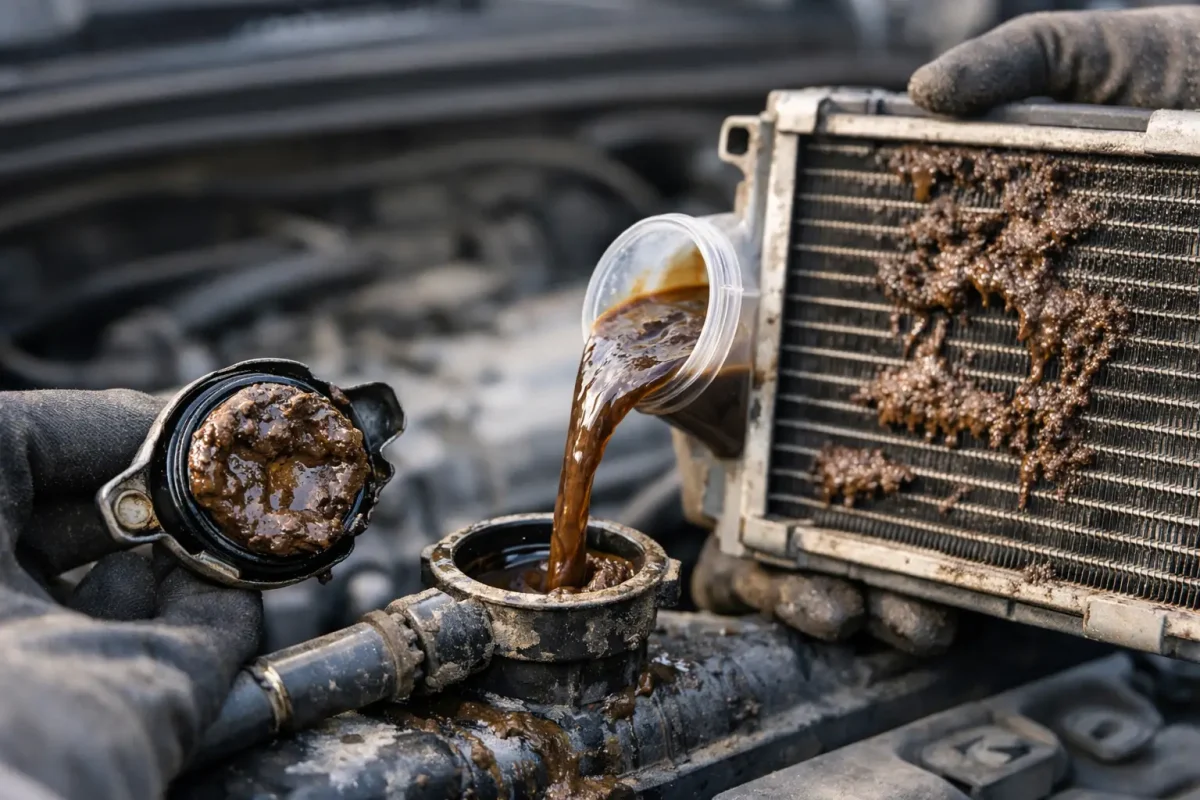
Discoloured water is another sign. If you bleed a radiator and the water comes out dark brown, black or dirty, contamination is present. Clean system water should not look like that. Dirty bleed water is one of the clearest indicators that sludge is already in circulation.

Why ignoring sludge gets expensive

The trade-off with waiting is simple. You may avoid a maintenance visit now, but you increase the risk of bigger repair costs later. Sludge can damage pumps, valves and heat exchangers. It can also leave radiators partly blocked, meaning rooms stay cold no matter how high you turn the thermostat.

For landlords and property managers, this often turns into repeat tenant complaints and avoidable downtime. For homeowners, it usually means higher gas use and a heating system that never feels quite right. In commercial properties, poor circulation can affect comfort for staff, tenants or customers, especially during colder months when reliable heating matters most.

There is also the issue of boiler lifespan. Modern boilers are efficient, but they are less forgiving when connected to dirty water. A system full of sludge can shorten the life of parts that should otherwise last much longer with correct care.

How the problem is diagnosed properly

A proper diagnosis goes beyond touching the front of a radiator and guessing. An experienced heating engineer will look at heat distribution, system water condition, circulation performance and boiler behaviour. They may check for cold spots across multiple radiators, inspect bleed water, assess pump operation and review whether the system has been treated with inhibitor.

In some properties, the issue is localised to one or two radiators. In others, sludge is spread through the whole system. That difference matters. A single cold radiator may respond to targeted cleaning or removal and flushing. A heavily contaminated heating system usually needs a full professional clean to restore proper flow and protect the boiler.

This is why a quick fix is not always the right fix. Replacing one part without dealing with the contaminated water can leave the underlying problem untouched.

The best fix for radiator sludge symptoms

If sludge build-up is confirmed, the right solution depends on severity. Minor contamination may be manageable with partial system cleaning and chemical treatment. More advanced build-up usually calls for a professional power flush or high-velocity system cleanse, depending on the condition and design of the heating system.

A proper clean removes sludge, magnetite and debris from radiators, pipes and the boiler circuit. Once the system is cleared, water can circulate more freely, radiators heat more evenly and the boiler works under less strain. The result is usually faster warm-up times, better comfort and improved efficiency.

It is also standard good practice to add inhibitor afterwards and, where appropriate, fit or check a magnetic filter. Cleaning without protecting the system afterwards is only half a job. The goal is not just to remove existing sludge but to slow down future contamination.

For older systems, expectations need to be realistic. Cleaning can deliver a major improvement, but it cannot reverse every issue if components are already badly worn or internally damaged. That said, a properly cleaned and treated system gives any boiler or radiator network a far better chance of performing as it should.

When to act

If your radiators are cold at the bottom, the boiler is getting noisy, or heating performance has dropped without a clear reason, it is worth getting the system checked sooner rather than later. The longer sludge stays in circulation, the more opportunity it has to block waterways and damage components.

This is especially relevant before winter, when heating demand rises and small faults quickly become urgent ones. For landlords, it makes sense between tenancies or at the first sign of repeated heating complaints. For commercial sites, preventative attention can avoid disruption during working hours.

A specialist heating company with power flushing experience can tell the difference between trapped air, balancing issues, pump faults and genuine sludge contamination. That matters because the right diagnosis saves time and avoids unnecessary parts replacement.

At The Power Flush Company, this is exactly the type of issue we deal with every day across London and Greater London – identifying what is slowing a heating system down, clearing contamination properly and helping customers get reliable heat back without guesswork.

Preventing sludge from coming back

Prevention is usually more cost-effective than repair. After cleaning, the system should be refilled correctly, treated with inhibitor and checked for any ongoing issues such as small leaks, poor circulation or failing components. If fresh water is constantly entering the system because of a hidden leak or pressure problem, corrosion can continue.

Regular boiler servicing also helps pick up early warning signs before performance drops badly. It will not replace a full system clean where sludge is already present, but it can highlight issues such as dirty water, circulation faults and unusual boiler operation.

If you have recently moved into a property and know little about the heating history, pay attention to how the radiators behave. Uneven warmth, repeated bleeding and dirty water are not things to ignore. They are often the first clues that the system needs attention.

A heating system should warm the property evenly, run quietly and respond without fuss. If it is doing the opposite, sludge is one of the first things worth checking – because catching it early is usually the difference between a straightforward fix and a much more expensive problem.


Categories power flushing

Choosing a Gas Safe Boiler Installer

Choosing a Gas Safe Boiler Installer

A boiler installation is not the job to hand to whoever can come round cheapest tomorrow. When you are choosing a gas safe boiler installer, you are choosing the person responsible for safety, compliance, efficiency and the long-term performance of your heating system. Get that decision right and your boiler should run properly for years. Get it wrong and the problems usually start early – poor pressure, noisy operation, uneven heating, wasted energy or, worse, unsafe gas work.

In London and Greater London, where properties range from modern flats to older houses with tired pipework and ageing radiators, boiler installation is rarely just about swapping one box for another. The boiler matters, but so does the condition of the wider system. A proper installer looks at the full picture before giving advice.

What a gas safe boiler installer actually does

A gas safe boiler installer is legally qualified to work on gas appliances and must be registered to carry out that work. That is the baseline, not the selling point on its own. The real difference comes from experience, fault-finding ability and whether the installer approaches the job as a full heating system specialist rather than a basic fit-and-go contractor.

A competent installer will assess your property, hot water demand, existing pipework, flue position, controls, radiators and system condition before recommending a boiler. They should also check whether your current issues are being caused by sludge, limescale, poor circulation or undersized equipment. In many homes, especially those with cold spots on radiators or recurring boiler lockouts, the system needs cleaning or upgrading as part of the installation process.

That is where specialist heating companies stand apart. If an engineer understands power flushing, boiler repair and system performance as well as installation, the advice is usually more accurate. Instead of treating the boiler in isolation, they can spot the underlying problems that shorten boiler life and push up bills.

Why Gas Safe registration is only the starting point

Plenty of customers assume that if someone is registered, the rest takes care of itself. It does not. Gas Safe registration is essential, but it does not guarantee the same level of care, diagnostic skill or installation standard across every contractor.

The better question is how that installer works day to day. Do they size the boiler correctly, or simply replace like for like? Do they inspect the system water quality? Do they explain whether a power flush, magnetic filter or controls upgrade is worth doing? Do they provide a clear quotation instead of vague allowances and extras that appear later?

A boiler that is too large can cycle inefficiently. One that is too small may struggle in peak demand. A new appliance connected to a dirty heating system can start suffering almost immediately. This is why experienced installers do not rush the survey stage. Good advice at the start usually saves money and disruption later.

Signs you need more than a basic boiler swap

Many properties need a broader heating solution, not just a new unit on the wall. If your radiators take ages to warm up, some stay cold at the bottom, the boiler is making kettling noises, or you have repeated pump and valve faults, there is a fair chance the system water is contaminated.

In those cases, installing a new boiler without addressing sludge or debris is a false economy. The new appliance may be more efficient on paper, but the rest of the system can drag performance down. Dirty water reduces circulation, creates hot spots and puts strain on components. For landlords and commercial operators, that can mean more callouts, more tenant complaints and more downtime than expected after installation.

An installer with proper heating system knowledge will tell you when a power flush is sensible and when it is not necessary. That balance matters. Not every system needs the same level of intervention, but every system does need honest assessment.

How to judge a gas safe boiler installer

The practical checks are straightforward. First, confirm Gas Safe registration and make sure the engineer is qualified for the specific type of work being carried out. Then look at whether the company deals regularly with boiler installations as part of wider heating work, not just occasional replacements.

Experience with domestic and commercial systems is valuable because it usually means stronger fault diagnosis and a better grasp of system design. Transparent quotations matter too. You should know what is included, whether controls are being upgraded, what happens to condensate and flue arrangements, whether system cleaning is part of the job, and what commissioning and handover involve.

Responsiveness also tells you a lot. If communication is poor before the work starts, it rarely improves afterwards. A dependable installer should be able to explain the job clearly, outline realistic timescales and answer direct questions without hiding behind jargon.

What to expect from a proper installation

A proper installation starts with a site survey, not a guess over the phone. The engineer should assess your heating and hot water needs, inspect the current system and discuss any known issues. In some properties, a combi boiler is the right move. In others, especially larger homes or buildings with higher demand, a system or regular boiler may make more sense. The answer depends on the property, the usage and the existing setup.

On installation day, safe removal of the old boiler is only one part of the work. Pipework may need adjustment. Controls may need updating to improve efficiency and usability. The system should be cleaned or protected where necessary, and the final commissioning should be done properly so the boiler operates within manufacturer requirements.

You should also expect a clear handover. That means showing you how to use the controls, explaining pressure levels, outlining servicing needs and confirming the paperwork. If the installer rushes off without doing that, the job is not really finished.

Why the cheapest quote often costs more

Boiler installation quotes can vary widely, and there is usually a reason. A low price may exclude system cleaning, upgraded controls, filter installation, flue adjustments or disposal of old equipment. It may also reflect less time spent surveying the job properly.

That does not mean the highest quote is always best. It does mean you should compare what is actually being delivered. A slightly higher price for a complete, well-planned installation can be better value than a low headline figure followed by poor performance and repeated repair bills.

For homeowners, the real cost shows up in comfort and running costs. For landlords and property managers, it shows up in tenant satisfaction, compliance and fewer avoidable callouts. A good installer protects all three.

London properties need practical experience

Heating work in London often comes with complications that do not show up in standard sales pitches. Older properties may have outdated pipe layouts or long-standing sludge problems. Flats may have flue route limitations or tight access. Commercial premises may need minimal disruption and fast turnaround to keep operations moving.

This is why local experience matters. An installer used to working across London and Greater London is more likely to spot practical issues early, manage them efficiently and recommend solutions that fit the property rather than forcing a generic approach.

For customers who want one specialist to handle boiler installation, system cleaning, fault diagnosis and ongoing maintenance, that joined-up service has obvious advantages. It saves time, avoids blame being passed between contractors and usually leads to better heating performance overall. That is exactly why many customers come to The Power Flush Company in the first place.

The result you should be paying for

A new boiler should give you more than a new appliance. You should notice reliable heating, better hot water performance, quieter operation, stronger efficiency and confidence that the installation has been completed safely and correctly. If the rest of the system has been assessed properly, you should also see fewer recurring faults and better long-term value from the investment.

That is the standard worth expecting from a gas safe boiler installer. Not just legal compliance, but competent advice, careful workmanship and a system that performs as it should in real day-to-day use.

If you are replacing an ageing boiler or dealing with heating problems that keep coming back, slow down long enough to choose the right installer. The best outcome is not simply getting the boiler fitted quickly. It is getting the whole job done properly, by specialists who know what to look for before small heating issues become expensive ones.

Categories power flushing

Power Flush Before Boiler Replacement?

Power Flush Before Boiler Replacement?

A new boiler can fail to deliver the results you expect if it is connected to a dirty heating system. That is why the question of a power flush before boiler replacement matters. If sludge, rust and debris are still circulating through old pipework and radiators, that contamination does not stay in the old system. It moves straight into the new boiler and starts causing problems from day one.

For homeowners, landlords and property managers, this is usually the point where money gets wasted. You pay for a modern, efficient boiler, but the system around it is still working against it. Poor circulation, noisy radiators, cold spots and recurring faults often come down to water quality rather than the boiler itself.

Why a power flush before boiler replacement is often recommended

Modern boilers are more efficient than older models, but they are also less forgiving when system water is dirty. Narrow waterways inside the heat exchanger can become restricted more easily, and that can affect performance, increase wear and trigger breakdowns.

A power flush removes built-up sludge, iron oxide, debris and scale from the central heating system. It is designed to clean radiators, pipework and other components so that contaminated water is not pushed into the new appliance. In practical terms, that helps protect the boiler, improve heat distribution and support better fuel efficiency.

This is not just about getting cleaner radiators. It is about giving the new boiler a fair chance to perform properly. If the existing system is heavily contaminated, skipping the clean can shorten the life of the new installation and leave underlying circulation problems unresolved.

What happens if you replace a boiler without cleaning the system?

Sometimes a boiler can be replaced without a full power flush, but that depends on the condition of the system. If the water is black, radiators are partially cold, pumps have been straining, or there is a history of repeated faults, installing a new boiler straight onto that system is a risk.

The most common problem is that sludge already sitting in the radiators and pipework gets disturbed once the new boiler starts operating at full efficiency. That debris then travels through the system and can block the plate heat exchanger, damage the pump, affect valves and reduce circulation. The result is often poor heating performance, hot water issues or avoidable repair work not long after installation.

Manufacturers also expect the heating system to be properly cleaned and treated. If that basic standard has not been met, warranty issues can arise later. For property owners, that is the kind of avoidable complication no one wants.

When is a power flush before boiler replacement the right option?

It is usually the right option where there are clear signs of system contamination or poor circulation. If some radiators never get fully hot, if the boiler or pipes are making banging or kettling noises, if radiator bleed water is dark, or if the heating takes too long to warm up, the system is telling you it needs attention.

Older systems are especially likely to benefit. Homes with ageing radiators, original pipework, repeated cold spots or a long history of patch repairs often contain a lot of internal build-up. In London and Greater London, hard water can add another layer of trouble through scale formation, particularly around the boiler and heat exchanger.

Landlords and commercial operators should also take this seriously between tenancies, refurbishments or heating upgrades. A boiler replacement is the right time to deal with the wider system, not just swap one appliance for another and hope for the best.

When a full power flush may not be necessary

There are cases where a power flush is not the most suitable approach. A relatively clean, well-maintained system may only need a chemical flush or a targeted clean, especially if the pipework and radiators are in good order and the water quality tests well.

Equally, some old systems in very poor condition need careful assessment first. If radiators are extremely corroded or pipework is already weak, aggressive cleaning without proper judgement can expose leaks that were already waiting to happen. That does not mean cleaning is the problem. It means the system needs an experienced engineer to assess the safest and most effective route.

This is where proper diagnosis matters. A trustworthy heating specialist should not recommend a power flush as an automatic extra on every job. The right recommendation depends on the age, condition and contamination level of the system.

What a proper system assessment should include

Before any boiler replacement, the existing heating system should be checked properly. That means more than a quick glance at the boiler cupboard. The engineer should look at radiator performance, pump condition, system water quality, signs of sludge, scale or corrosion, and any history of breakdowns or circulation faults.

If there are concerns, testing and inspection can show whether the issue is localised or spread across the full system. In some properties, one or two badly affected radiators are the main issue. In others, the contamination is widespread and a full flush is the sensible route.

At The Power Flush Company, this sort of decision is based on system condition, not guesswork. That matters when you are spending money on a new boiler and want the installation done properly the first time.

The benefits go beyond protecting the new boiler

The most obvious reason for cleaning the system is to protect the new appliance, but the benefits usually extend further than that. Once sludge and debris are removed, the heating system can circulate more effectively. Radiators heat more evenly, warm-up times improve and the boiler does not have to work as hard to reach temperature.

That often means better comfort across the property and less wasted energy. In practical terms, homeowners may notice fewer cold rooms and lower running costs. For landlords and property managers, it can reduce call-backs and tenant complaints after the installation.

A cleaner system also makes inhibitor treatment more effective. Once fresh inhibitor is added after flushing, it can help prevent future corrosion and protect the entire heating circuit. Combined with correct boiler installation and magnetic filtration, that creates a much stronger setup for long-term reliability.

Is a power flush always done before the boiler is fitted?

Not always. In some cases, the flush is completed before installation. In others, depending on the job and system layout, the engineer may carry out system cleaning during the replacement process or immediately after certain components are fitted. The sequence depends on the property, the equipment being installed and the condition of the system.

What matters is not the label attached to the process, but whether the system has been cleaned thoroughly and treated correctly as part of the boiler replacement. A rushed installation that skips this stage can look cheaper at first, but it often costs more later.

Choosing the right contractor matters

A boiler installer who does not specialise in system cleaning may not spot the warning signs early enough. Equally, a flushing company without proper boiler expertise may not be the right choice for a full replacement project. The best results come from engineers who understand both boiler installation and central heating system condition.

That is particularly important in older London properties where heating systems have often been altered over time. Mixed pipework, ageing radiators, hard water and inherited faults are common. A proper assessment by Gas Safe registered professionals can save a great deal of time, money and disruption.

If you are planning a boiler replacement, ask direct questions. Is the system water clean? Are there signs of sludge? Will the new boiler be protected with inhibitor and filtration? Is a full power flush genuinely needed, or would a lighter clean be enough? Straight answers at this stage can prevent expensive problems later.

The real question is not whether it is optional

The real question is whether your current heating system is clean enough to support a new boiler. Sometimes the answer is yes. Quite often, it is no. Treating a power flush before boiler replacement as an optional add-on misses the point. If the system is contaminated, cleaning it is part of doing the job properly.

A new boiler should give you reliable heating, better efficiency and fewer faults, not inherit years of sludge and circulation problems from the old one. If you want the replacement to last and perform as it should, make sure the condition of the whole system is part of the conversation from the start.

Categories power flushing

Power Flush Companies: What to Look For

Power Flush Companies: What to Look For

When radiators stay cold at the bottom, the boiler starts making odd noises, or one room never seems to warm up properly, most people are not thinking about chemistry inside the pipework. They are thinking about getting the heating sorted quickly. That is where power flush companies come in, but not all of them offer the same level of skill, diagnosis, or follow-through.

A proper power flush is not just a machine connected to your system for a few hours. It is a specialist job that depends on knowing how central heating systems behave, how sludge and magnetite build up, and when a flush will genuinely solve the problem rather than cover up a bigger fault. If you are a homeowner, landlord, or property manager in London, choosing the right contractor can make the difference between a heating system that runs cleanly and one that keeps costing you money.

Why power flush companies vary so much

The phrase gets used widely, but the standard of service behind it can differ quite a lot. Some firms treat power flushing as an add-on. Others specialise in heating systems and understand how to diagnose circulation issues, blocked radiators, boiler strain, pump faults, and contamination properly.

That matters because a power flush is only worthwhile when it is carried out for the right reasons and in the right way. If a system is heavily sludged, a thorough flush can restore heat output, improve water circulation, reduce boiler noise, and help protect components from avoidable wear. If the issue is actually a failing pump, damaged valve, incorrect system design, or a boiler fault, a flush on its own may not be enough.

This is why experienced engineers do not jump straight to treatment. They assess the condition of the system first, explain what they are seeing, and recommend the most sensible route based on the age, layout, and symptoms of the heating.

What good power flush companies should offer

The first thing to look for is proven heating and plumbing expertise, not just a promise of a quick fix. On domestic and commercial systems alike, the engineer should understand boilers, radiators, pumps, controls, valves, and water quality. If gas appliances are involved, Gas Safe registration is non-negotiable.

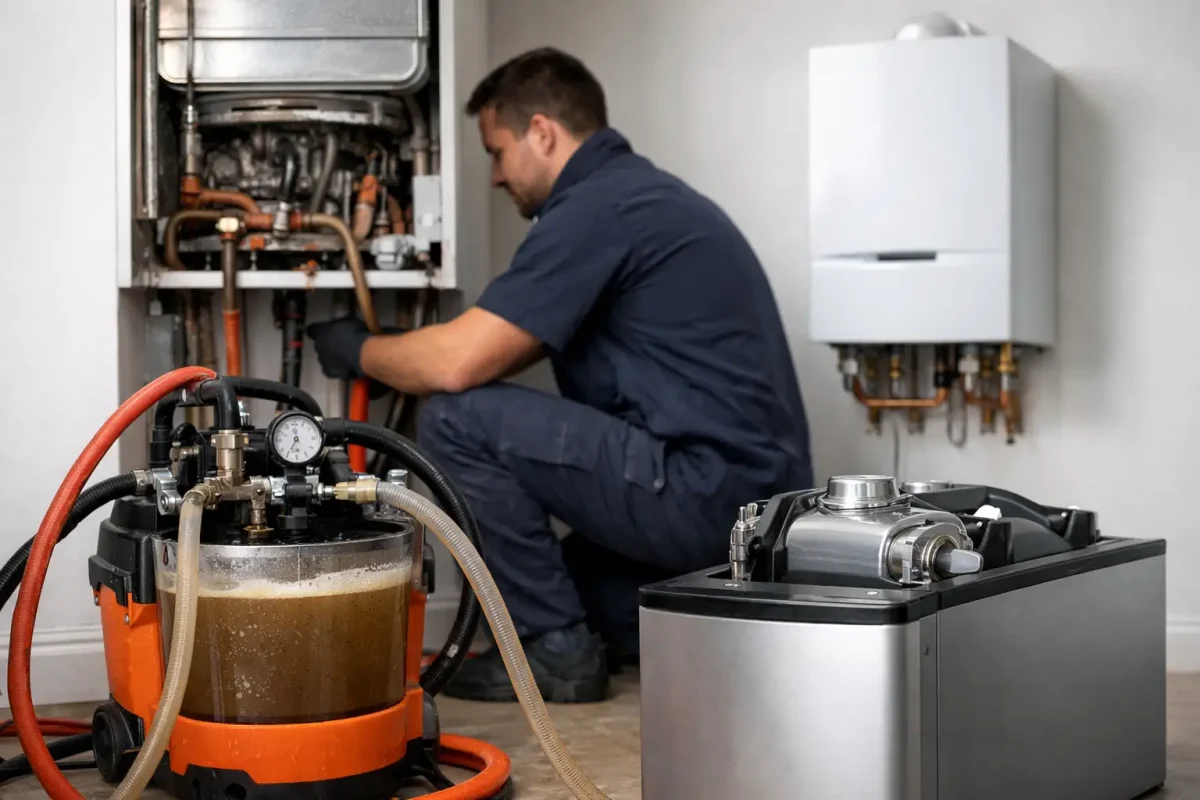
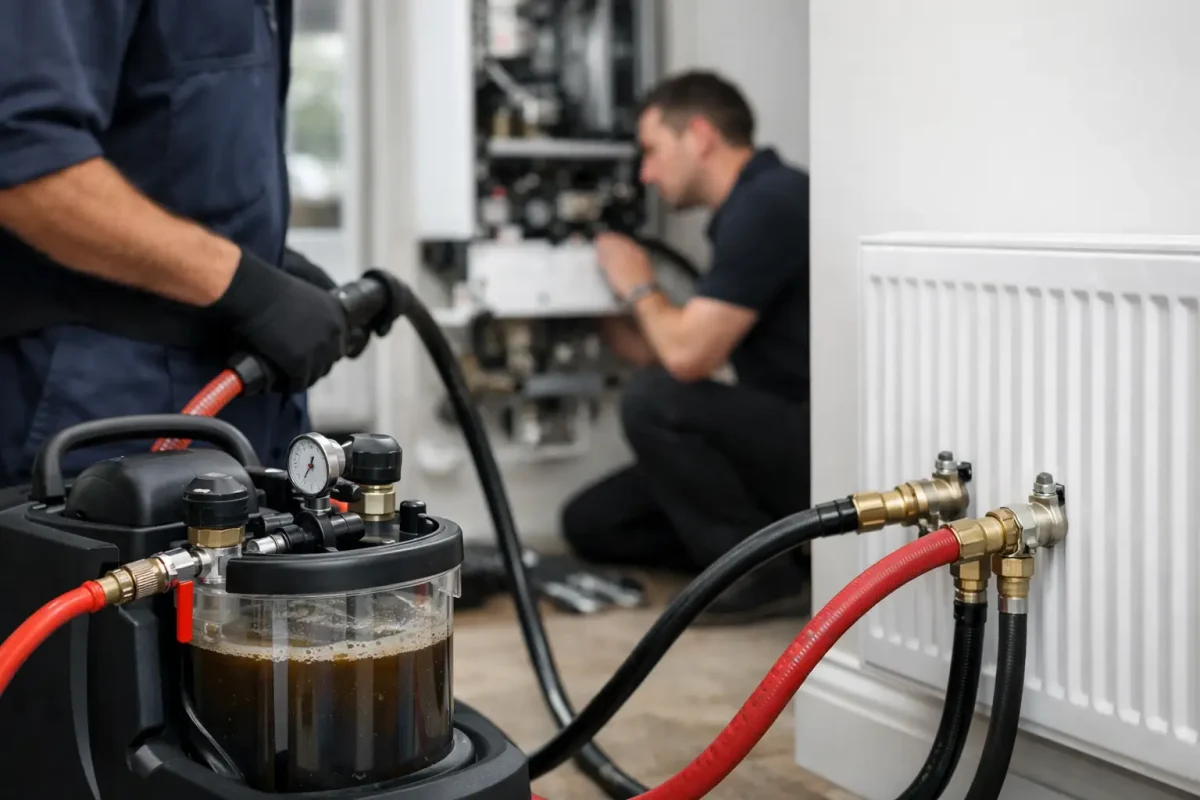
You should also expect a clear explanation of what the work includes. A professional service normally involves testing radiator performance, identifying sludge or flow restrictions, connecting specialist flushing equipment, circulating cleaning chemicals through the system, agitating radiators where needed, and removing contaminated water safely. In many cases, fresh water and an inhibitor are then added to help protect the system after the clean.

Transparent pricing matters as well. Some jobs are straightforward. Others take longer because the system is larger, older, or more heavily contaminated. A reliable company should explain how the quotation is built and whether any extra work may be needed if faults are uncovered during the process.

Response time is another practical point that often gets overlooked. For landlords, managing agents, and commercial sites, delays can quickly become expensive. If the property has no reliable heating or hot water, you need a company that can attend promptly and make decisions on site rather than dragging the problem out.

How to tell if a company is diagnosing properly

A good engineer will ask sensible questions before giving firm advice. Are some radiators cold while others heat up? Is the boiler kettling? Has the pump been noisy? Has the system needed repeated bleeding? Has there been a recent boiler replacement on an old heating circuit? These details help build a picture.

There should also be some honesty about what a power flush can and cannot do. It can remove sludge, scale, and corrosion debris that are restricting performance. It cannot repair a split heat exchanger, fix a damaged valve body, or correct every long-standing installation problem. When a contractor speaks as if power flushing is the answer to every heating issue, that is usually a sign to be careful.

The better power flush companies are usually the ones that can handle the next step too. If a flush reveals a failed pump, sticking motorised valve, leaking radiator valve, or a boiler issue, it helps to have one qualified provider who can carry out the repair rather than leaving you to start again with someone else.

Power flush companies and boiler protection

One of the most common reasons customers enquire about power flushing is after being told they need a new boiler, or shortly before fitting one. This is an area where experience really counts.

Installing a new boiler onto a dirty heating system is asking for trouble. Sludge and iron oxide already sitting in the radiators and pipework do not disappear because the appliance is new. They continue circulating, and that contamination can affect efficiency, reduce lifespan, and in some cases contribute to breakdowns. Many manufacturers expect the system to be properly cleaned as part of a compliant installation.

That does not automatically mean every system needs a full power flush before replacement. Sometimes a chemical flush or alternative cleaning method is more appropriate, depending on the boiler type and the state of the pipework. The right company will recommend the method that suits the system rather than selling the most expensive option by default.

What landlords and property managers should pay attention to

If you manage rented properties, recurring heating complaints usually come down to one issue: unresolved system condition. Tenants report cold spots, poor hot water, banging pipes, or radiators that only partly heat. A temporary repair may reduce complaints for a while, but if sludge remains in the system, the same call-backs often return.

This is where specialist power flush companies can add real value. A proper clean can improve circulation throughout the property and reduce strain on the boiler and pump. It can also help support planned maintenance, especially in older homes and converted properties where heating systems have been altered over time.

For landlords, the key is not just getting the job done, but having confidence in safety, competence, and documentation. You need engineers who are used to working in occupied properties, can communicate clearly with tenants, and can identify whether the issue is maintenance-related or a larger repair requirement.

Why local experience matters in London

London properties are rarely uniform. Victorian houses split into flats, newer developments with complex communal arrangements, small retail units, mixed-use buildings, and older pipework layouts all create different heating challenges. A contractor working across London and Greater London should be used to those variations.

Local experience also helps with access, scheduling, parking constraints, and the reality of urgent attendance in busy areas. If a company routinely handles both domestic and commercial heating across the capital, it is more likely to have the practical systems in place to respond efficiently.

That is one reason many customers prefer a specialist provider such as The Power Flush Company. When a business focuses on power flushing, boiler work, and wider heating maintenance rather than general plumbing alone, the advice tends to be sharper and the outcomes more measurable.

Questions worth asking before you book

You do not need to become a heating expert to choose well, but a few direct questions can save time and money. Ask whether the engineer is Gas Safe registered if boiler work may be involved. Ask what signs suggest your system needs a power flush rather than another type of cleaning or repair. Ask whether inhibitor is included afterwards, and what happens if they find a separate fault during the job.

It is also reasonable to ask about expected results. No honest company should guarantee miracles on a badly neglected system, especially if components are already failing. What they should do is explain the likely improvement, the limits of the process, and whether any radiators or parts may still need replacing.

Choosing value, not just the lowest quote

Cheap quotes can be tempting, especially when heating costs are already high. But with power flushing, the lowest price is not always the best value. If the process is rushed, if radiators are not properly cleared, or if the system is left without suitable protection afterwards, you may end up paying again for repairs that could have been avoided.

The better option is usually a company that combines specialist equipment with genuine heating knowledge, clear pricing, and the ability to deal with related boiler or plumbing issues at the same time. That gives you a more complete solution and far less guesswork.

If your heating system is slow, noisy, patchy, or showing signs of sludge build-up, it is worth speaking to a specialist before the problem becomes more expensive. The right contractor will not overcomplicate it. They will tell you what the system needs, carry out the work properly, and help you get dependable heat back where it belongs.

Categories power flushing

Heating Power Flush Near Me in London

Heating Power Flush Near Me in London

When you search for a heating power flush near me, it is usually because your system is already showing clear signs of trouble. Radiators stay cold at the bottom, the boiler starts making odd noises, hot water takes longer to arrive, or certain rooms never seem to warm up properly. These are not small irritations. They often point to sludge, rust and debris building up inside your central heating system, slowly reducing performance and putting extra strain on the boiler.

A proper power flush is designed to deal with that build-up at source. It clears circulating debris from the pipework, radiators and boiler so the system can move hot water freely again. For homeowners, landlords and property managers across London, that usually means faster warm-up times, more even heat, fewer boiler problems and less wasted energy.

Why search for a heating power flush near me?

Local response matters more than many people realise. Heating issues rarely arrive at a convenient time, and once circulation problems start affecting boiler performance, delays can make the job bigger and more expensive. Looking for a nearby specialist gives you a better chance of getting a fast inspection, an accurate diagnosis and a realistic quotation without waiting around.

It also helps when the engineer understands the heating systems commonly found in London and Greater London properties. Period homes, converted flats, rental properties and small commercial units all come with different pipework layouts, radiator conditions and boiler ages. A specialist who handles these systems every day is more likely to spot whether the problem is straightforward sludge build-up, a failing pump, a blocked radiator valve, poor system design or a combination of faults.

What a power flush actually fixes

Over time, central heating systems collect iron oxide sludge, limescale and other debris. This build-up settles in low-flow areas, especially at the bottom of radiators, and starts restricting circulation. Once that happens, the entire system works harder for worse results.

Common signs your system may need a power flush

If some radiators are hot at the top and cold at the bottom, that is one of the clearest signs. You may also notice radiators taking ages to heat up, discoloured water when bleeding them, repeated boiler lockouts, banging or gurgling sounds, or hot water and heating that feel inconsistent from one day to the next.

In rental and commercial properties, the warning signs are often complaints about uneven heating, rooms staying cold, or rising energy costs without any obvious reason. A system does not need to fail completely before it needs cleaning.

When a flush is the right solution and when it is not

A power flush is highly effective when sludge and internal contamination are the main causes of poor circulation. It can restore performance, protect boiler components and improve the efficiency of an older system that is still structurally sound.

That said, it is not a cure for everything. If a boiler has major component failure, pipework is badly damaged, or radiators are corroded beyond recovery, cleaning alone will not solve the problem. This is where an experienced heating engineer matters. You need the right diagnosis, not a one-size-fits-all answer.

Heating power flush near me – what to expect from the service

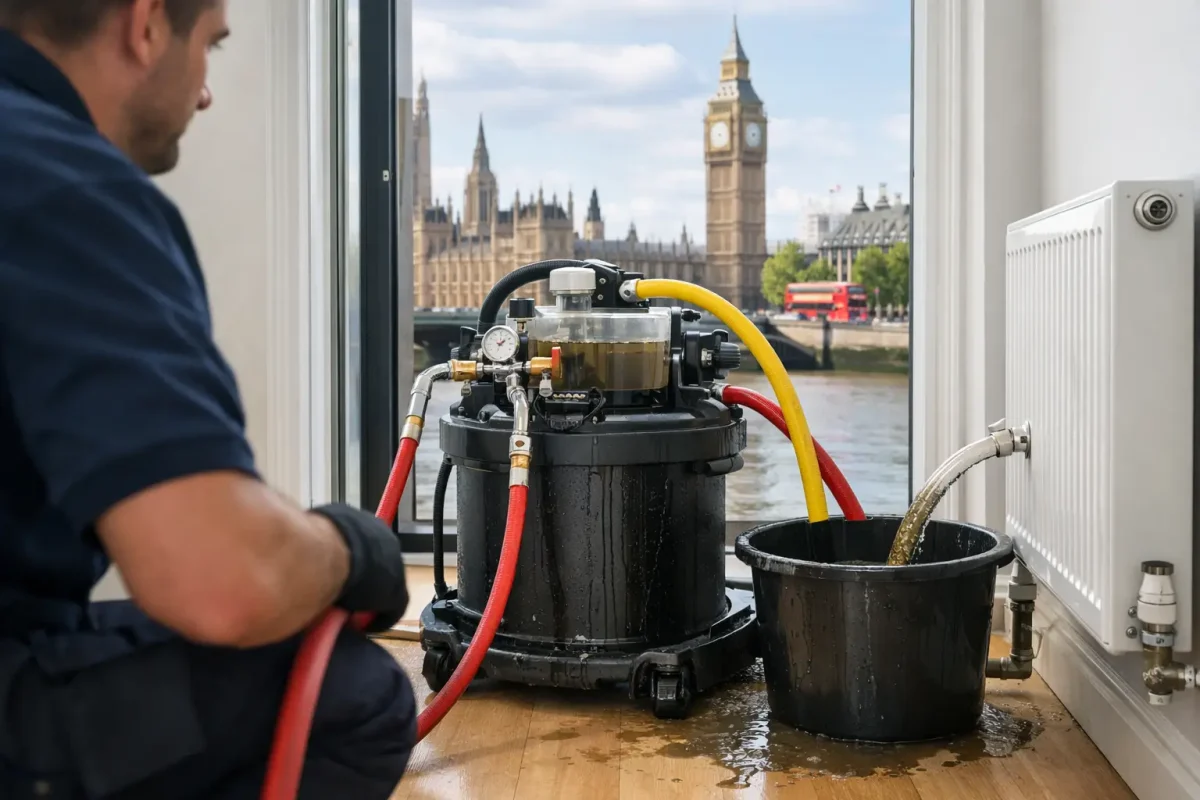
A professional power flush is more than simply draining and refilling the system. The engineer connects specialist equipment to force cleaning chemicals and fresh water through the heating circuit at high velocity. This breaks down and removes sludge, magnetite and debris from radiators, valves and pipework.

Each radiator is worked through methodically to dislodge stubborn deposits. System water is monitored during the process, and once the contamination has been removed, the system is flushed clean, refilled and treated with inhibitor to help prevent future corrosion.

On some jobs, further checks are sensible at the same time. If the pump is weak, the magnetic filter is missing, or controls are not operating properly, those issues can undermine the results of the flush. A proper heating specialist will tell you what is worth doing now and what can wait.

The benefits of getting it done properly

The biggest benefit is usually restored heating performance. Radiators heat more evenly, the boiler does not have to work as hard to achieve the same result, and circulation improves across the whole property.

There can also be a real cost benefit. When your system is heavily sludged, energy is being wasted every day because heat is not moving efficiently. A cleaned system can help reduce unnecessary fuel use, especially in larger homes and commercial premises where poor circulation has a wider impact.

There is also the question of boiler protection. Modern boilers are efficient, but they are not tolerant of dirty system water. Debris can damage heat exchangers, pumps and valves. If you are fitting a new boiler onto an old heating system, cleaning the system first is often essential rather than optional.

Why specialist experience matters in London properties

Not every plumbing company approaches power flushing with the same depth of knowledge. In many cases, it is treated as an add-on service rather than a specialist job. That can lead to rushed work, incomplete cleaning and missed faults.

A dedicated heating and power flushing specialist will assess the age of the system, the condition of the radiators, the likely level of contamination and whether the boiler is safe to keep operating during the process. Gas Safe registration also matters where boiler-related work is involved, because heating performance and boiler condition are closely linked.

For landlords and managing agents, this is particularly important. You need work carried out safely, clearly priced and properly documented by engineers who understand occupied properties, access requirements and time-sensitive repairs. The same goes for small businesses that cannot afford heating downtime during trading hours.

How to choose the right local company

If you are comparing providers after searching for a heating power flush near me, do not focus on price alone. A very cheap quote can mean corners are being cut, especially if the engineer is not allowing enough time to clean each part of the system thoroughly.

Look for a company that specialises in central heating maintenance rather than one that only offers general plumbing. Check that they have experience with both domestic and commercial systems, clear pricing, and the ability to diagnose related faults rather than simply carry out the flush and leave. If the company also handles boiler servicing, repairs and installations, that is often an advantage because it means they can deal with wider heating issues in one visit if required.

Fast availability also matters. Heating problems tend to get worse, not better, and a responsive local team can often stop a circulation issue becoming a boiler breakdown.

Is a power flush always worth the cost?

In many cases, yes, but it depends on the condition of the system. If your radiators are partially blocked, the boiler is struggling due to contaminated water, and the rest of the system is still serviceable, a power flush can be one of the most cost-effective ways to improve performance.

If the entire heating system is near the end of its life, the better investment may be a more targeted upgrade. That could mean replacing selected radiators, fitting a magnetic filter, upgrading controls, or installing a new boiler alongside proper system cleaning. Honest advice is important here. The right contractor will explain the likely return on the work instead of pushing the same service in every situation.

A practical next step if your heating is underperforming

If you have cold spots on radiators, dirty bleed water, boiler noise or rooms that never heat properly, it makes sense to get the system inspected before the problem escalates. In London, where properties vary widely and heating systems often work hard through colder months, early action usually saves time and money.

The Power Flush Company focuses on exactly this kind of work – diagnosing circulation problems, removing sludge and restoring heating efficiency with specialist equipment and experienced engineers. Whether the issue is in a home, rental property or small commercial building, the goal is the same: get the system working properly again without wasting time on guesswork.

A heating system should heat the property evenly, run quietly and support the boiler rather than fight against it. If yours is doing the opposite, getting a local specialist to assess it is a sensible move that can pay off long before the next cold spell arrives.

1 2 3 6