
 NEO
NEOA boiler that keeps cutting out in January, radiators that stay cold at the bottom, or brown water when you bleed the system usually points to one problem – sludge and debris circulating where clean water should be. That is exactly why powerflushing services in London are in demand across homes, rental properties, offices, shops, and managed buildings. In a city full of ageing heating systems, hard water areas, and busy properties that cannot afford heating downtime, a proper system clean is often the difference between ongoing faults and reliable performance.
Power flushing is not a cosmetic extra. It is a specialist cleaning process that removes sludge, rust, iron oxide, and other built-up deposits from your central heating system. Over time, that contamination restricts water flow, reduces radiator output, puts extra strain on pumps and valves, and forces the boiler to work harder than it should. The result is poor heat distribution, rising energy use, and a greater risk of breakdowns.
Why powerflushing services in London matter
London properties present a mixed picture. Some have older pipework and radiators that have seen years of neglect. Others have newer boilers connected to systems that were never properly cleaned before installation. In both cases, contamination can build quietly until the signs become hard to ignore.
If one or two radiators are slow to warm up, people often assume the issue is minor. If several radiators have cold spots, the boiler is making unusual noises, or heating takes far longer than it used to, the problem is usually deeper in the system. Sludge settles in low points, blocks circulation, and creates uneven performance from room to room.
For landlords and property managers, that means complaints, call-backs, and avoidable wear on expensive equipment. For homeowners, it means wasted money and a house that never feels properly warm. For small commercial sites, it can mean disruption for staff, tenants, or customers. In each case, the practical goal is the same – restore clean circulation and get the heating system working as it should.
What a power flush actually does
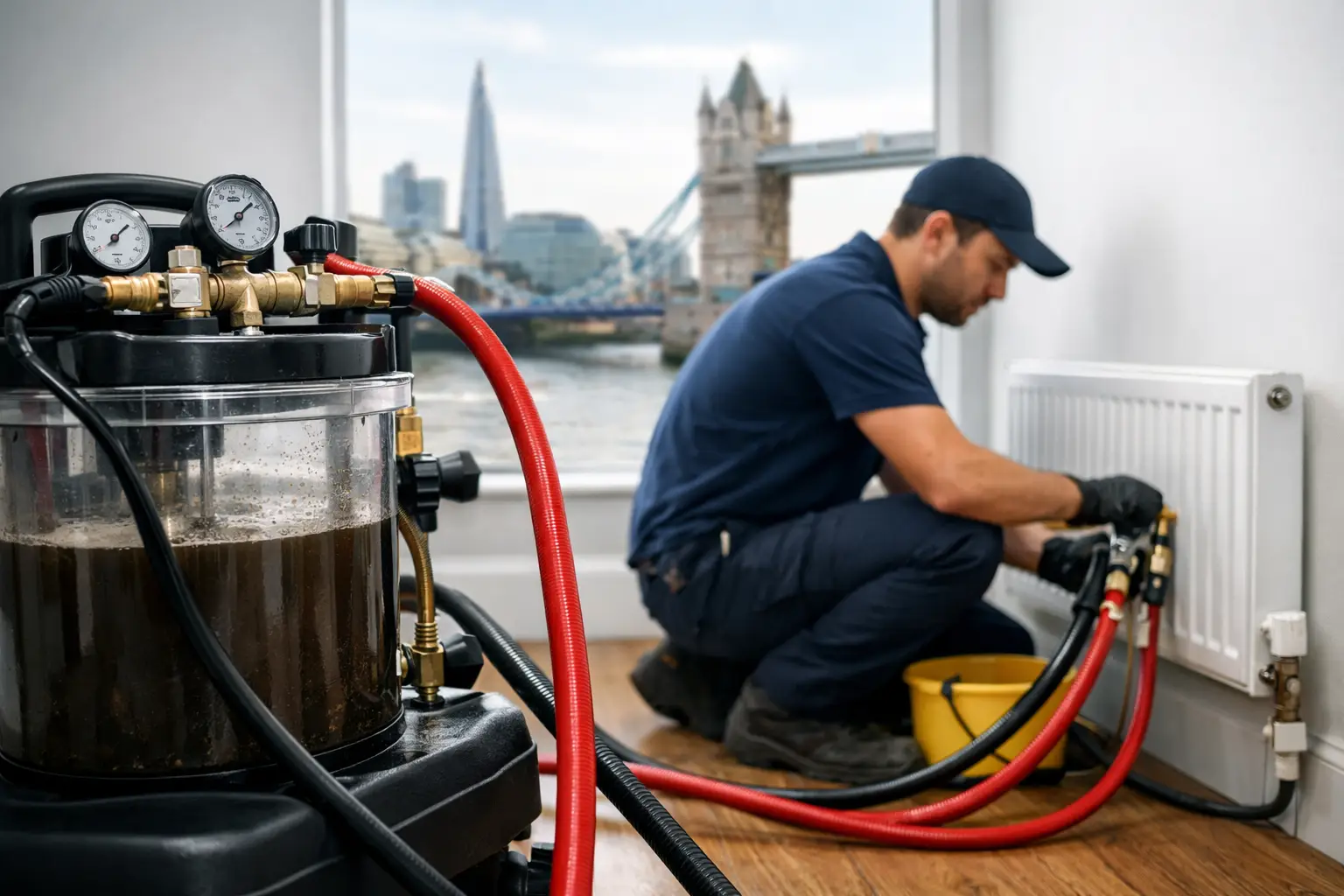
A professional power flush uses specialist equipment to move cleaning chemicals and water through the heating system at speed. That process dislodges magnetite, sludge, corrosion deposits, and other debris from the radiators, pipework, and boiler circuit. Each radiator can be treated individually to clear stubborn blockages, and the waste is removed safely from the system rather than left to settle elsewhere.
Once the system is cleaned, it is refilled with fresh water and the correct inhibitor to help reduce future corrosion. In some cases, fitting or checking a magnetic filter also makes sense, especially where repeat contamination has been an issue.
This is where specialist experience matters. A proper flush is not just about connecting a machine and hoping for the best. The engineer needs to assess the system condition, identify likely restrictions, understand whether there are damaged components already under stress, and decide whether the system is suitable for flushing in the first place. In neglected systems, there can be trade-offs. Cleaning may expose underlying weaknesses in old valves or radiators that were already close to failure. That does not mean the flush caused the problem – it means the contamination had been masking it.
Signs you may need powerflushing services in London
The warning signs are usually obvious once you know what to look for. Radiators cold at the bottom are one of the clearest. So is discoloured water when bleeding radiators. Boiler kettling, noisy pipes, slow warm-up times, recurring pump issues, and radiators needing frequent balancing can also point to system contamination.
Another common sign is when a new boiler has been fitted but heating performance still feels poor. A new appliance connected to a dirty system will not deliver the full benefit it should, and in some cases contamination can shorten the life of the new boiler. That is why system cleaning is often recommended before or during boiler installation.
For commercial premises and larger managed properties, uneven heat across different zones is another clue. If one area overheats while another struggles, poor circulation may be part of the problem. A full heating assessment will usually confirm whether flushing is the right remedy or whether a component fault is also involved.
When power flushing is the right fix – and when it is not
A good engineer should be honest about this. Power flushing is highly effective when sludge, rust, and scale are restricting circulation, but it is not a magic answer to every heating fault. If a motorised valve has failed, a pump has seized, controls are misfiring, or a heat exchanger is damaged, those faults still need direct repair.
Sometimes the system needs a combination of services. A flush may restore circulation, while worn valves, faulty thermostats, or damaged radiators are replaced at the same time. In more serious cases, especially with very old systems, partial upgrades or a full boiler replacement may offer better value than repeated short-term fixes.
That is why proper diagnosis matters. Customers do not need guesswork. They need a heating specialist who can tell the difference between a dirty system, a failing component, and a boiler that has reached the end of its serviceable life.
Choosing a specialist for powerflushing services in London
Not all plumbing firms approach heating system cleaning with the same level of technical focus. Some offer it as an add-on. Others specialise in it and understand what to look for before work begins, during the flush, and after the system is recommissioned.
For London customers, that matters. The right provider should be experienced with domestic and commercial systems, clear about pricing, and able to explain the expected outcome in practical terms. If gas appliances, boiler work, or system alterations are involved, Gas Safe registration is essential. That gives customers one qualified provider for diagnosis, flushing, repair, and any follow-on heating work that may be required.
Availability matters too. Heating problems rarely arrive at a convenient time, and landlords or businesses often need fast attendance to limit disruption. A company that can respond quickly, inspect the system properly, and give a clear recommendation without sales waffle is usually the safest choice.
This is where a specialist service stands out. The Power Flush Company focuses on measurable heating results, not vague promises. That means dealing with sludge and circulation issues properly, identifying wider faults where needed, and helping customers across London get more life and better performance from their central heating systems.
What results should you expect?
A successful power flush should improve heat distribution, reduce cold spots, and help radiators warm more evenly and more quickly. It can also reduce noise, ease strain on the boiler and pump, and support better system efficiency. In many properties, the improvement is noticeable the same day.
That said, results depend on the starting condition of the system. A moderately contaminated heating system with sound components often responds very well. A badly neglected system may improve significantly, but it may still reveal failing valves, leaking radiators, or circulation issues that need separate attention. Honest contractors explain that upfront.
Customers also ask whether power flushing will lower energy bills. It can help, because a cleaner system circulates hot water more effectively and allows the boiler to operate with less wasted effort. But the size of the saving depends on the condition of the system, the boiler age, insulation levels, and how the property is used. It is best seen as part of smarter heating maintenance rather than a miracle cure.
Why acting early usually saves money
Heating systems rarely go from perfect to failed overnight. They decline in stages. A bit of sludge becomes several blocked radiators. A boiler starts making noise, then begins locking out. A weak pump struggles harder and eventually gives up. Leaving contamination in place tends to increase repair costs over time.
Early intervention is usually cheaper than reactive work after a breakdown. That is especially true before winter, before letting a property, or before installing a new boiler. Cleaning the system, protecting it with inhibitor, and checking key components puts the heating in a stronger position when demand rises.
For landlords, that can mean fewer tenant complaints and fewer emergency call-outs. For homeowners, it means better comfort and less risk of being left without heating when engineers are busiest. For commercial operators, it supports continuity and avoids needless disruption.
If your radiators are underperforming, your boiler sounds wrong, or your heating has become slow and unreliable, waiting rarely improves anything. A proper inspection from a specialist can tell you quickly whether power flushing is the right next step – and if it is, getting it done now is often the most practical way to protect the whole system before a small issue turns into a costly one.
Comments
No comments yet. Be the first to comment.