
When a commercial heating system starts falling behind, the signs usually show up fast – cold spots on radiators, noisy pipework, rising energy bills, or tenants and staff complaining that some rooms never warm up properly. A commercial power flush is often the most effective way to deal with those underlying problems without rushing straight to major replacement works.
In commercial buildings, heating systems work harder for longer. Whether you manage a small office, a block of flats, a retail unit, a school, or a mixed-use property, circulation problems caused by sludge, rust and scale can build up gradually and then start affecting day-to-day operations. What looks like a boiler issue is often a system issue.
What a commercial power flush actually does
A commercial power flush is a deep clean of the central heating system using specialist equipment, water at high velocity, and cleaning chemicals designed to break down sludge, iron oxide and other debris inside the pipework, radiators and heat exchangers. The goal is to restore proper water circulation through the system.
Over time, contaminated system water starts reducing performance. Radiators can become partially blocked. Pumps work harder than they should. Boilers cycle inefficiently or trip on faults caused by poor flow. In older systems, the build-up can be substantial enough to leave whole sections of a property underheated.
A proper flush is not just a case of draining and refilling. It involves targeted cleaning, careful monitoring and, where needed, working through individual problem areas to remove stubborn deposits. In commercial settings, that experience matters because systems are often larger, more complex and more heavily used than domestic ones.
Why commercial systems get blocked faster
Commercial premises tend to expose heating systems to more demanding conditions. Longer operating hours, larger pipe runs, multiple heating zones and older infrastructure all increase the chance of debris settling in the system. If maintenance has been inconsistent, that process speeds up.
In London and Greater London, hard water can add another layer of trouble. Scale inside components reduces heat transfer and puts extra strain on the boiler. If sludge and scale are both present, efficiency drops further and breakdown risk rises.
This is why a commercial power flush is often recommended before installing a new boiler onto an older system. If contaminated water is left circulating, it can compromise the performance and lifespan of new components from the start. Cleaning the system first protects the investment.
Signs you may need a commercial power flush
Some warning signs are obvious, while others are easier to miss until the system becomes unreliable. If radiators are slow to heat, cold at the bottom, or uneven across the building, circulation problems are likely. If the boiler is making unusual noises or repeatedly locking out, dirty system water may be part of the cause.
Property managers also notice indirect signs. Occupants start reporting inconsistent room temperatures. Heating takes longer to respond. Energy bills climb without a clear reason. Maintenance callouts become more frequent. These are practical indicators that the system is not working efficiently.
It is worth saying that not every heating problem means a full flush is required. Sometimes the issue is a failing pump, a faulty valve, air in the system, poor balancing, or boiler-specific wear. That is why proper diagnosis comes first. A competent specialist should tell you when a power flush is justified and when another repair is the better option.
The value of a specialist approach
Commercial work is not the place for guesswork. Heating systems in occupied properties need careful handling, clear communication and engineers who understand both cleaning and wider system performance. A power flush should improve circulation and efficiency, but it should also fit into a broader maintenance strategy.
That is where a specialist heating and plumbing contractor adds value. If the system needs flushing, chemical treatment, pump attention, radiator valve replacement, fault finding or boiler work, it makes sense to deal with one experienced team rather than several disconnected trades. For landlords and commercial operators, that saves time and usually avoids repeat visits caused by partial diagnosis.
The Power Flush Company works in that specialist space, combining power flushing expertise with Gas Safe registered heating and plumbing support. That matters when a dirty system is only one part of a wider commercial heating problem.
What to expect during a commercial power flush
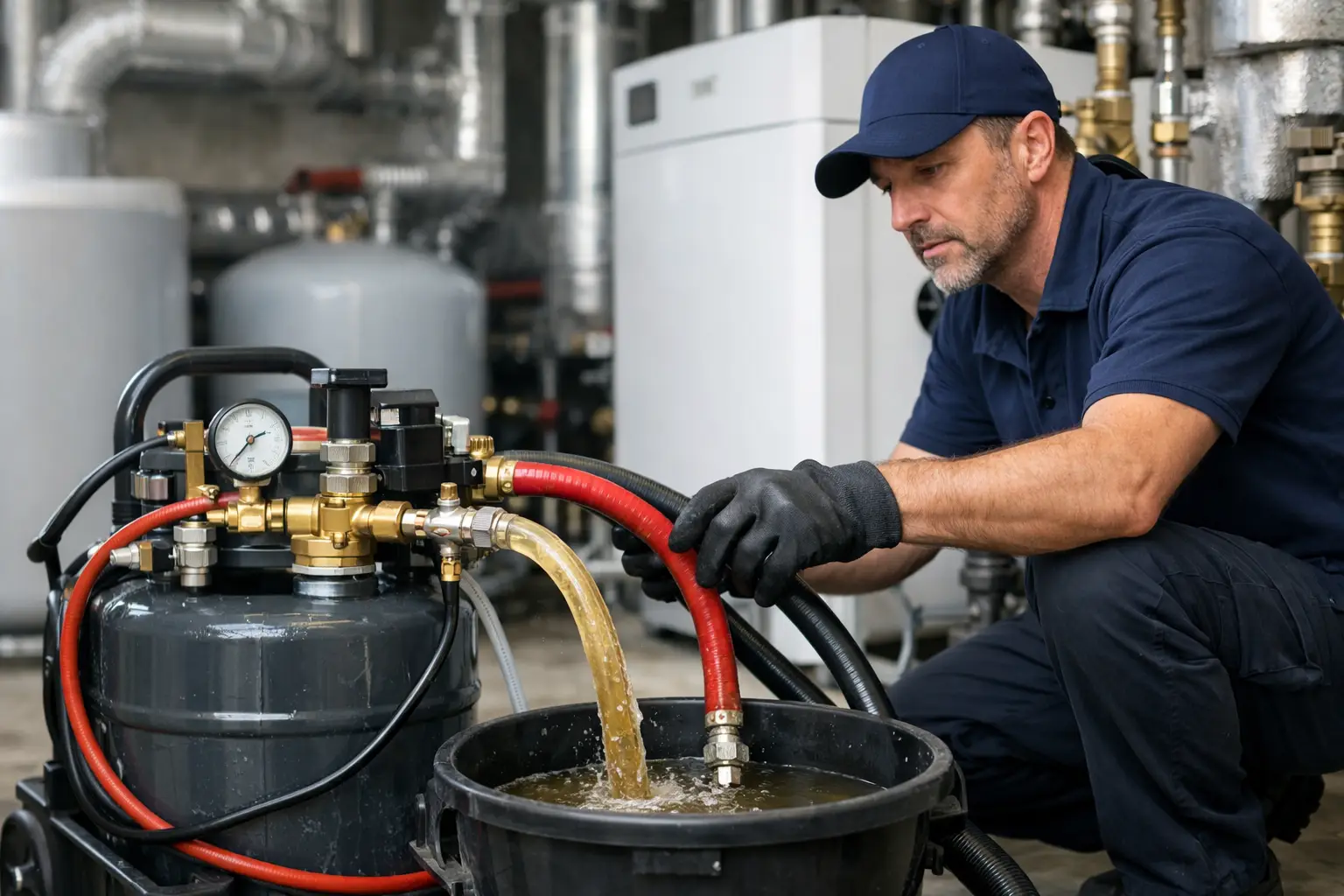
The exact process depends on the size, age and layout of the heating system, but the principle stays the same. The engineer connects professional flushing equipment to the system, circulates cleaning chemicals, agitates and dislodges debris, and removes contaminated water safely. Radiators and circuit sections may be treated individually where blockages are heavier.
In some cases, extra attention is needed for particularly stubborn areas or older systems with a long history of poor maintenance. Magnetite sludge can be dense and persistent. Scale can also restrict internal waterways in ways that affect overall performance. A proper job takes time.
After cleaning, the system is refilled and dosed with inhibitor to help reduce future corrosion and build-up. This final stage is important. A flush without inhibitor leaves the system more vulnerable to the same problem returning sooner than it should.
For commercial clients, planning also matters. The work may need to be scheduled around occupants, opening hours or access restrictions. An experienced contractor will explain likely downtime, protect surrounding areas and carry out the work with minimal disruption where possible.
Benefits of commercial power flush work
The immediate benefit is usually better heat distribution. Radiators warm more evenly, circulation improves and the boiler is less likely to struggle against restricted flow. That can make a noticeable difference in comfort levels across the property.
There is also a strong efficiency case. When sludge and scale are removed, the system does not need to work as hard to deliver heat. That can reduce wasted energy and lower operating costs, especially in properties where the heating runs daily for long periods.
Reliability tends to improve as well. Pumps, valves and boiler components all perform better in cleaner system water. While a power flush is not a cure for every worn-out part, it can reduce strain and help prevent avoidable faults linked to contamination.
The long-term benefit is protection. If you have already invested in a boiler, pumps or controls, keeping the system clean helps those components operate under better conditions. If you are preparing for a new boiler installation, flushing the system first can be essential rather than optional.
When a power flush may not be the whole answer
There are situations where a flush helps, but does not solve everything. If the boiler is at the end of its service life, if pipework is badly deteriorated, or if controls are outdated, cleaning the system may improve performance only up to a point. In those cases, the right advice is to explain the trade-off honestly.
The same applies to very neglected systems. A commercial power flush can deliver major improvement, but expectations should be realistic where a building has had years of corrosion, recurring leaks or undersized heating design. The result may be better performance rather than perfect performance.
That is why transparent assessment matters. A reliable contractor should explain what the flush is likely to achieve, what risks or limitations exist, and whether any follow-on work is sensible.
Choosing the right contractor for commercial heating work
Commercial clients need more than a basic plumbing visit. You need a company that understands system cleaning, boiler performance, safe working practices and the realities of occupied buildings. Certification matters. Experience matters. So does the ability to respond quickly when heating problems are affecting tenants, staff or trading hours.
Look for a specialist that offers clear quotations, practical recommendations and a direct route to diagnosis. If they only talk about flushing without considering the rest of the system, that is a warning sign. Good commercial heating support starts with identifying the real cause, then carrying out the work properly.
For property managers and business owners, speed is often critical, but speed without competence just leads to repeat problems. The better route is fast assessment backed by proper technical knowledge.
If your heating system is underperforming, noisy, slow to warm up or costing more to run than it should, getting it checked now can prevent a bigger and more expensive failure later. A well-timed commercial power flush can restore circulation, improve efficiency and take pressure off the entire system – and that is often the difference between ongoing disruption and a heating system you can rely on.