
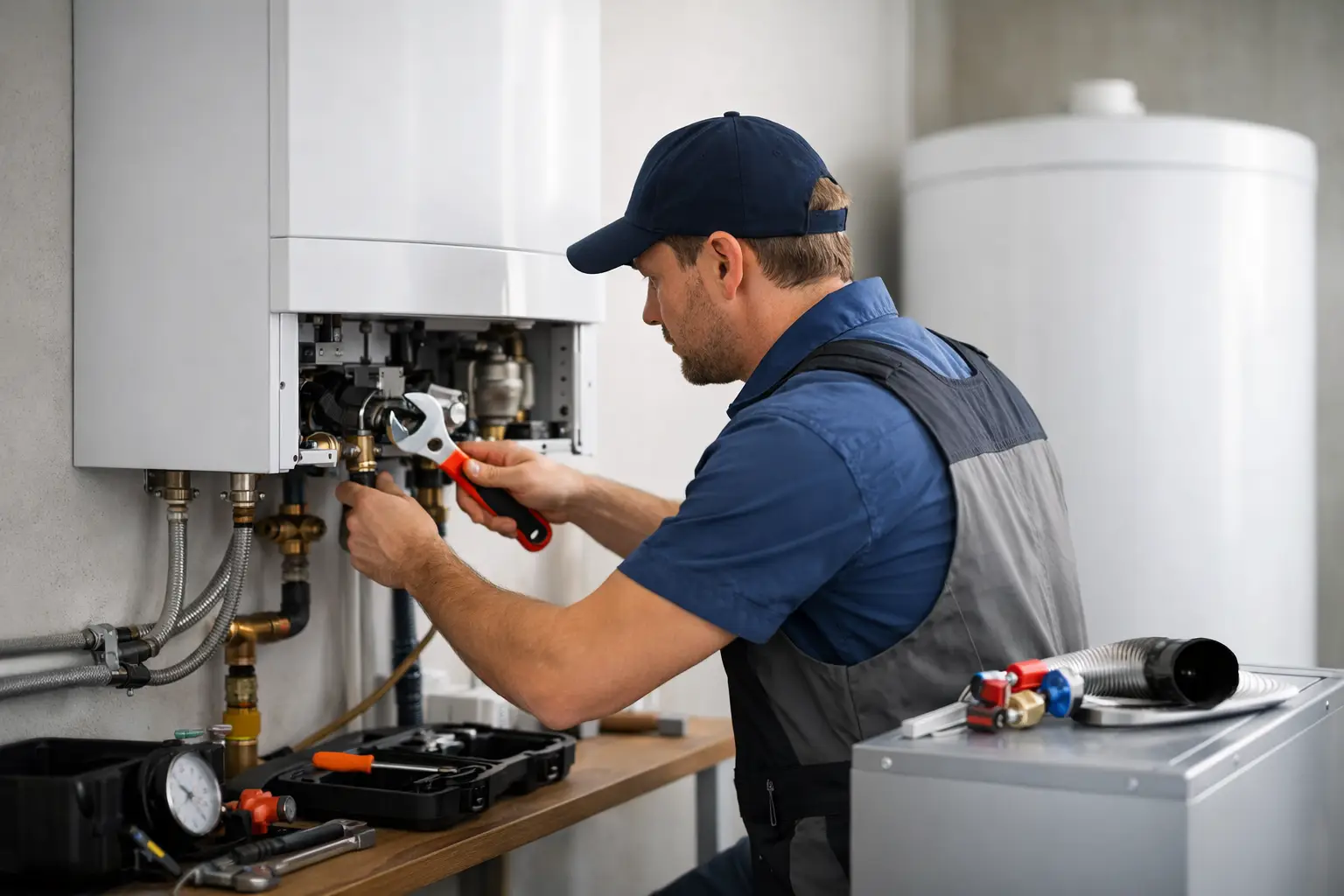

A boiler rarely fails at a convenient moment. It usually happens when the weather turns, tenants start calling, or a business needs heating and hot water without delay. That is why boiler installation and replacement should never be treated as a last-minute decision. The right boiler, fitted properly and matched to the system, will heat the property efficiently, cut avoidable energy waste, and reduce the risk of repeat breakdowns.
For homeowners, landlords, and commercial property managers, the main question is usually simple: repair the existing boiler or replace it? The honest answer is that it depends on age, reliability, parts availability, and the condition of the wider heating system. A quick fix can make sense on a newer appliance with a clear fault. On an older, inefficient boiler with a history of breakdowns, replacement is often the more cost-effective option.
When boiler installation and replacement makes sense
If your boiler is over 10 to 15 years old, losing pressure regularly, making unusual noises, or failing to heat radiators evenly, replacement deserves serious consideration. The same applies if spare parts are becoming harder to source or repair costs keep stacking up. One repair bill on its own may not justify a new boiler, but repeated callouts across a single winter usually point to a system that is costing more than it should.
Efficiency matters as well. Older boilers can waste a noticeable amount of energy compared with modern condensing models. That affects running costs, but it also affects comfort. A property with slow heat-up times, inconsistent hot water, or cold spots in the system is not performing as it should.
Landlords and property managers also need to consider reliability from a compliance and tenant-satisfaction point of view. Delayed heating and hot water quickly become urgent issues in occupied properties. Replacing an unreliable boiler before complete failure can be the practical choice, especially where access, scheduling, and resident disruption all need to be managed properly.
Repair or replacement: what should be checked first?
A proper diagnosis comes before any recommendation. There is no value in replacing a boiler when the real problem is a blocked system, air in the pipework, pump issues, faulty controls, or sludge restricting circulation. In many properties across London, central heating systems suffer from magnetite sludge, limescale, and iron oxide build-up. Those issues can make a boiler work harder than necessary and create symptoms that look like appliance failure.
This is why experienced engineers assess the boiler and the wider system together. If radiators are cold at the bottom, the boiler is kettling, or heating performance is poor even when the boiler fires up, the system may need cleaning or power flushing alongside any boiler work. Fitting a new boiler onto a contaminated system is a false economy. Dirt and debris can shorten the life of the new appliance and affect manufacturer warranty terms.
A reliable contractor should explain the reasoning clearly. If a repair is sensible, you should be told. If replacement is the better long-term option, that should be backed by condition, age, efficiency, and system findings rather than guesswork.
Choosing the right boiler for the property
Boiler installation and replacement is not only about taking out one unit and fitting another. The boiler must suit the size of the property, the hot water demand, and the condition of the heating system.
For smaller homes with one bathroom and modest demand, a combi boiler is often a strong option. It saves space and provides hot water on demand without a separate cylinder. For larger homes or properties with multiple bathrooms, a system or regular boiler may be more suitable, particularly where simultaneous hot water use is common.
Commercial premises and mixed-use buildings need even more careful planning. Output, usage pattern, pipework design, controls, and resilience all matter. Oversizing a boiler can be almost as problematic as undersizing it. An oversized appliance may cycle too frequently and run inefficiently, while an undersized one will struggle to meet demand.
This is where specialist advice matters. A proper heat and demand assessment helps avoid common mistakes and gives you a heating setup that performs reliably in day-to-day use, not just on paper.
What happens during boiler installation and replacement?
The process starts with a survey and quotation. That should cover the property type, current boiler, flue position, gas supply, controls, and the state of the existing system. It should also identify whether additional work is needed, such as pipe alterations, filter installation, system cleansing, thermostat upgrades, or conversion from one boiler type to another.
On installation day, the old boiler is safely isolated and removed. The new appliance is then fitted in line with current regulations and manufacturer requirements. Depending on the scope of work, the engineer may need to upgrade controls, improve condensate discharge arrangements, adjust pipework, or fit system protection such as a magnetic filter.
Once installed, the system should be filled, tested, and commissioned correctly. Gas rate, pressure, combustion, and safety checks all need to be carried out by a Gas Safe registered engineer. The final stage includes setting up the controls, checking radiator performance, and making sure the customer understands basic operation.
A quality installation is about more than getting heat back on quickly. It is about doing the work safely, neatly, and in a way that protects long-term performance.
Why system condition matters as much as the boiler
One of the most common issues in heating systems is contamination. Sludge, rust particles, and limescale build-up restrict circulation, create cold spots, increase strain on pumps and heat exchangers, and reduce efficiency throughout the property. It is one reason some new boilers disappoint owners after installation – the appliance is new, but the system around it is still underperforming.
That is why experienced heating specialists often recommend power flushing or targeted system cleaning before or during boiler replacement. Done correctly, this removes harmful debris and helps the new boiler operate in cleaner water conditions. In practical terms, that can mean faster heat-up times, more even radiator performance, lower wear on components, and better protection for the investment you have just made.
For older systems, this step is especially valuable. It can also highlight weak points before the new boiler goes live, which is far better than discovering them afterwards.
What affects boiler replacement cost?
Customers often want a single fixed number, but boiler replacement cost depends on the job. The type and brand of boiler matter, but so do the installation conditions. A straightforward like-for-like swap is generally less involved than moving the boiler to a new location or converting from a regular boiler to a combi.
Cost is also affected by system condition. If the pipework needs alteration, controls need updating, the flue route changes, or a power flush is required, the quotation will reflect that. None of this should be hidden. Transparent pricing matters because customers need to know exactly what they are paying for and why.
The cheapest quotation is not always the best value. Poor installation, skipped system cleaning, weak commissioning, or lack of aftercare can create bigger costs later. A properly specified installation by an experienced, Gas Safe registered specialist gives you a clearer route to reliable performance.
Why professional installation matters
Boilers are gas appliances, and there is no room for shortcuts. Safety, compliance, and performance all depend on competent installation. That means using a qualified Gas Safe registered engineer who understands not only the appliance but the heating system as a whole.
This is particularly important in London properties, where space constraints, older pipework, hard water conditions, and varied property layouts can complicate what first appears to be a simple swap. Experience matters in these situations. So does responsiveness. When heating and hot water are down, customers need clear advice, prompt attendance, and work carried out with minimum disruption.
At The Power Flush Company, that specialist approach is central to the service. Boiler work is not treated in isolation. It is assessed alongside circulation, sludge build-up, radiator performance, and the wider health of the system, helping customers get a result that lasts rather than a temporary fix.
Getting better results from a new boiler
A new boiler should not be the end of the conversation. Servicing, water treatment, clean system conditions, and properly set controls all help protect efficiency and reliability over time. Even a high-quality installation will lose ground if the system is neglected afterwards.
For landlords and commercial operators, planned maintenance reduces surprises and makes budgeting easier. For homeowners, it gives peace of mind and helps keep energy use under control. Small adjustments, such as balancing radiators or updating heating controls, can make a noticeable difference to comfort.
If your current boiler is unreliable, inefficient, or showing signs of age, the best next step is not guesswork. It is a professional assessment from engineers who understand both boiler installation and the heating system it depends on. Done properly, replacement is not just about fitting a new unit. It is about restoring dependable heating, hot water, and confidence in the property.