
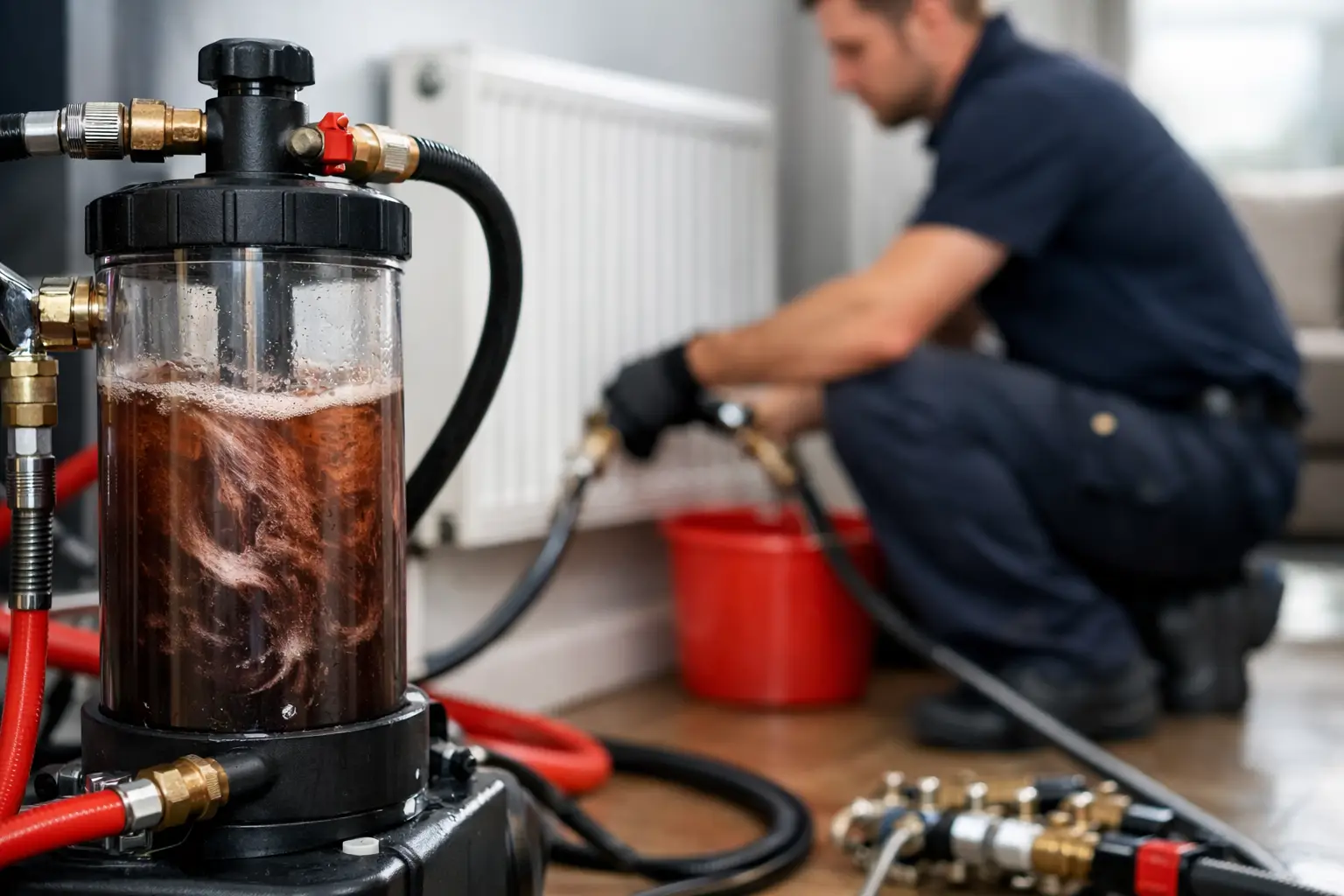

One radiator stays cold at the bottom, the boiler starts making more noise than it used to, and rooms take longer to warm up. That is usually when people ask how often should you power flush central heating – not because they are planning routine maintenance, but because the system is already showing signs of sludge, magnetite, and poor circulation.
The short answer is this: most central heating systems do not need power flushing every year. In a well-maintained system, a professional power flush is often only needed every 5 to 10 years, or when there are clear signs of contamination and restricted flow. That said, the right timing depends on the age of the system, the quality of previous installation work, whether inhibitor has been used properly, and how the heating is performing now.
If you own a home, manage rental property, or run a small commercial premises in London, the better question is not just how often, but whether your system actually needs one now.
How often should you power flush central heating in practice?
There is no single calendar rule that suits every property. A newer sealed system with clean water, correct inhibitor levels, and a good magnetic filter may go many years without needing a flush. An older system with ongoing cold spots, repeated boiler faults, and black water in the radiators may need attention much sooner.
As a practical guide, power flushing is commonly recommended in a few situations. It often makes sense before fitting a new boiler onto an older heating circuit, after major radiator or pipework contamination has been identified, or when repeated performance issues suggest sludge is affecting circulation. It can also be necessary if a manufacturer requires system cleaning to protect a new boiler warranty.
What it should not be treated as is an automatic annual service item. Your yearly boiler service checks safety and performance. A power flush is corrective system cleaning. Those are not the same job.
Signs your heating system may need a power flush
A central heating system usually gives warnings before it reaches the point of serious breakdown. The trouble is that many property owners live with those warnings for months, sometimes years, assuming the system is simply old or that a radiator “has always been like that”.
If several radiators are cold at the bottom but warm at the top, that is a classic sign of sludge settlement. If some rooms heat up properly while others stay lukewarm, poor circulation may be the issue. If the boiler is noisy, regularly locking out, or struggling to maintain temperature, debris inside the system may be putting strain on key components.
Other red flags include dirty water when a radiator is bled, frequent pump or valve issues, and heating that takes far too long to respond. In commercial settings or larger properties, uneven heat across zones is another common indicator.
These symptoms do not always mean a power flush is the only answer. Sometimes a smaller repair, balancing work, or targeted cleaning is enough. That is why proper diagnosis matters.
Why power flushing too often is not the goal
There is a common assumption that if power flushing is good, more frequent flushing must be better. In reality, that is not how a healthy heating system should be managed.
A professional power flush is a strong remedial process designed to remove built-up sludge, rust particles, and scale from radiators, pipes, and the boiler circuit. If a system is repeatedly getting contaminated every couple of years, the underlying issue may be elsewhere. It could be poor water treatment, oxygen ingress, a failed component, incorrect installation practice, or old pipework deteriorating from within.
In other words, needing repeated power flushes in a short timeframe is usually a sign that the cause has not been properly dealt with. The aim should be long-term cleanliness and protection, not frequent reactive flushing.
When a power flush is strongly recommended
The clearest time to consider a flush is before a boiler replacement is completed on an older or dirty system. Installing a new boiler onto contaminated pipework can push sludge straight into a clean heat exchanger. That creates avoidable faults, poor efficiency, and possible warranty problems.
It is also strongly recommended when radiators have persistent cold spots, circulation is poor across the property, and previous bleeding or balancing has not solved the problem. If black magnetite is present in the water, that points to corrosion deposits moving around the system.
Landlords and property managers should take this seriously when tenants report uneven heating or recurring boiler issues. What looks like a minor comfort complaint can turn into a more expensive repair if pumps, valves, and heat exchangers keep working against dirty water.
How often should you power flush central heating after a new boiler?
If a new boiler has been installed correctly onto a cleaned and protected system, you should not expect to need another power flush in the near future. In many cases, proper inhibitor treatment, a magnetic filter, and routine servicing are enough to keep the system in good condition for years.
What matters after installation is prevention. If the installer has flushed or cleaned the system thoroughly, added inhibitor, checked circulation, and fitted suitable protection, the system should remain stable. If corners were cut, contamination can return quickly.
That is why experienced heating engineers look beyond the boiler itself. A new appliance cannot compensate for neglected radiators and pipework.
Factors that affect how often power flushing is needed
System age is one factor, but not the only one. Older systems tend to have more corrosion by-products and internal build-up, especially if inhibitor has not been maintained. Hard water areas can also contribute to scale-related issues in certain parts of the system.
The quality of the original installation matters as well. Poorly designed pipe runs, low flow rates, mixed metals, and lack of proper cleaning at commissioning can all shorten the period before contamination starts causing problems.
Usage patterns make a difference too. A heavily used heating system in a large house, block-managed property, or commercial premises may reveal circulation issues more quickly than a lightly used domestic setup. Properties left empty for periods can also develop issues that are only noticed once full heating demand returns.
Finally, maintenance standards matter. Regular boiler servicing is essential, but water quality protection is often overlooked. That is where many long-term performance problems begin.
Power flush or chemical flush?
Not every dirty system needs a full power flush. In some cases, a chemical flush or targeted system clean may be suitable, especially where contamination is lighter and the system is otherwise functioning reasonably well.
A power flush is typically the better choice when sludge is severe, circulation is poor, multiple radiators are affected, or there is evidence of significant debris in the system. It uses specialist equipment to move cleansing chemicals through the heating circuit at high flow, helping to dislodge and remove stubborn deposits.
The right method depends on the condition of the system. A responsible specialist should assess that first rather than recommend the most expensive option by default.
Why professional diagnosis matters
Heating issues can overlap. A noisy boiler might be suffering from sludge, but it could also involve pump wear, air ingress, pressure problems, or faulty controls. Cold radiators may be contaminated, but they may also be poorly balanced or partially blocked in only one section.
That is why a proper site assessment saves time and money. An experienced engineer can inspect water quality, identify circulation faults, and tell you whether power flushing is the right solution, whether another repair is needed first, or whether the system condition makes replacement the smarter option.
For homeowners and landlords, this is where specialist support counts. A company focused on heating system performance, not just boiler swaps, is far more likely to give you the right answer.
The cost of waiting too long
A heating system rarely repairs itself. When sludge and debris are left in circulation, efficiency drops and components work harder. That can mean higher energy bills, slower heat-up times, increased wear on the pump, stuck valves, and more stress on the boiler heat exchanger.
For landlords, delayed action can lead to tenant complaints, call-backs, and emergency repair costs. For commercial operators, poor heating can affect staff comfort, customer experience, and operating hours. What starts as one cold radiator can develop into a system-wide problem.
At that stage, the question is no longer how often should you power flush central heating. It becomes how much longer the system can keep running efficiently without corrective work.
If your radiators are slow to heat, the boiler is making unusual noise, or your system has never been properly cleaned, get it checked before the next fault forces the decision. A well-timed professional assessment can restore performance, protect your boiler, and help your heating system do the job it was meant to do.