
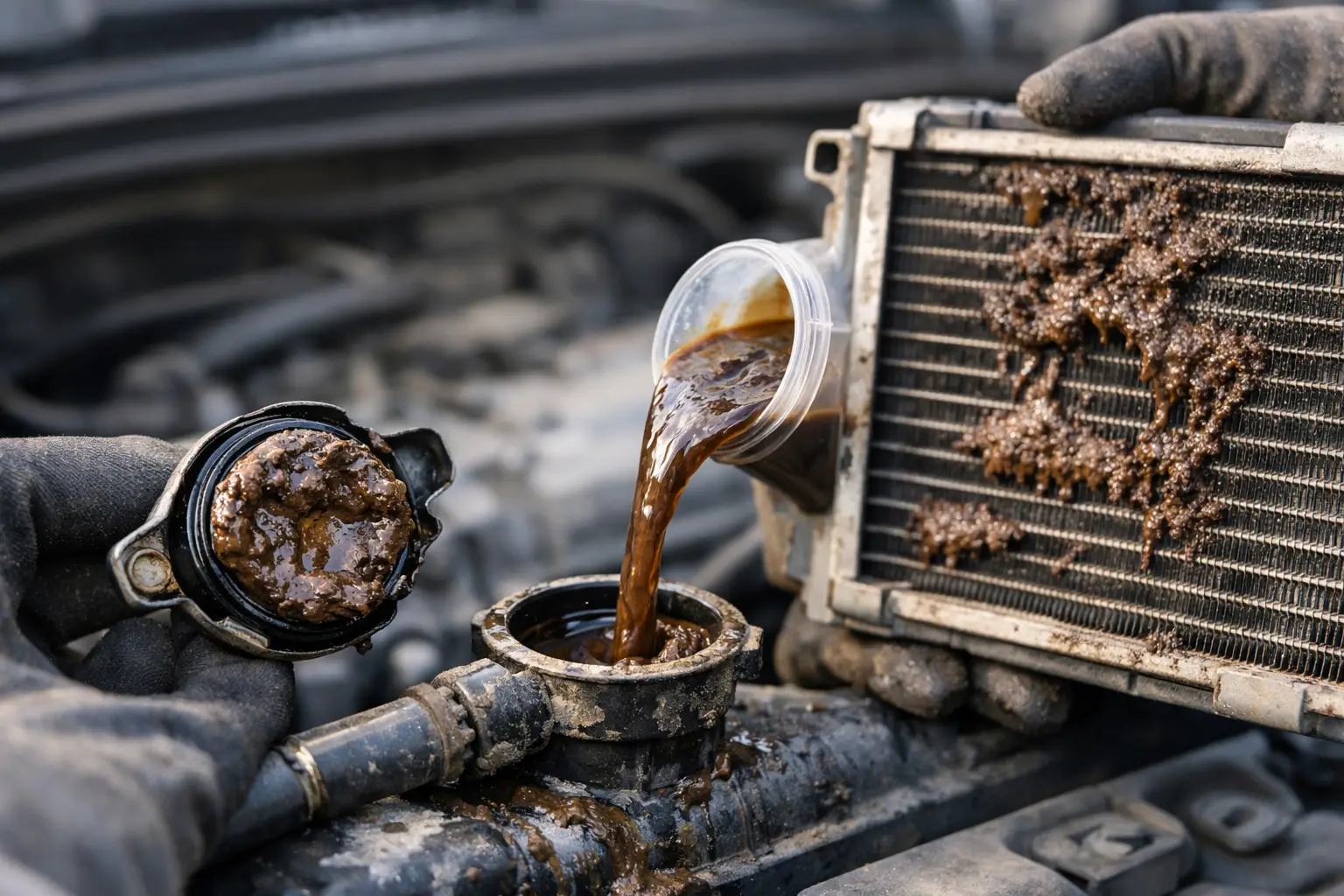

You notice it when one room never quite warms up, even though the heating is on and the boiler sounds busy. Those radiator sludge symptoms often start quietly – a cold patch at the bottom of a radiator, odd boiler noises, or heating that takes far too long to get going. Left alone, sludge does more than make your home uncomfortable. It can reduce efficiency, increase running costs and put extra strain on key parts of your central heating system.
For homeowners, landlords and property managers, the main issue is not just poor performance. It is avoidable damage. Sludge is usually a build-up of rust, debris and magnetite circulating through the system. Once it settles in radiators, pipework and the boiler, water flow is restricted and heat cannot move around the property properly. That is when small heating complaints can become repair call-outs.
What are radiator sludge symptoms?
The most common radiator sludge symptoms show up as uneven heat. A radiator may be hot at the top but cold at the bottom, or one side may stay lukewarm while the rest struggles to heat. That happens because sludge settles in the lower sections, blocking the normal flow of hot water.
You may also find that some radiators need bleeding again and again, yet the problem keeps returning. Bleeding can help with trapped air, but it will not remove sludge. If the real issue is contamination inside the system, the radiator may still perform badly even after air has been released.
Another clear sign is noise. Gurgling, banging or rumbling from radiators, pipework or the boiler can point to poor circulation and debris inside the system. In some cases, the boiler starts short cycling, switching on and off more often because heat is not moving away as it should.
Higher energy bills can also be a symptom, even if everything still appears to be working. If the boiler has to run longer to bring rooms up to temperature, efficiency drops. You use more fuel for less heat, which is a familiar pattern in systems affected by sludge.
Why sludge builds up in a heating system
Most central heating systems contain metal components. Over time, water and metal create corrosion, especially if system water is untreated or inhibitor levels are poor. The result is magnetite, a black iron oxide sludge that circulates with the heating water before settling in low-flow areas such as radiators.
Older systems are usually more vulnerable, but age is not the only factor. If a system has had poor maintenance, repeated drain-downs, small leaks, or parts replaced without proper cleaning and treatment, sludge can build up faster. Even newer boilers can suffer if they are connected to dirty existing pipework and radiators.
This is where people often get caught out. They replace a faulty boiler and expect the whole system to improve, but the contaminated water remains. Without cleaning the system properly, the new appliance is working with old sludge from day one.
The warning signs beyond the radiators
Radiator sludge symptoms do not always stay confined to the radiators themselves. Sometimes the first complaint is a boiler fault, hot water delay or circulation issue. If the pump is struggling to move dirty water, or the heat exchanger is affected by debris, the entire heating system can become unreliable.
You might notice frequent boiler lockouts, inconsistent room temperatures, or radiators upstairs heating differently from those downstairs. In larger homes and commercial premises, some zones may perform reasonably well while others fall behind. That unevenness usually means the system is no longer circulating water cleanly and evenly.
Discoloured water is another sign. If you bleed a radiator and the water comes out dark brown, black or dirty, contamination is present. Clean system water should not look like that. Dirty bleed water is one of the clearest indicators that sludge is already in circulation.
Why ignoring sludge gets expensive
The trade-off with waiting is simple. You may avoid a maintenance visit now, but you increase the risk of bigger repair costs later. Sludge can damage pumps, valves and heat exchangers. It can also leave radiators partly blocked, meaning rooms stay cold no matter how high you turn the thermostat.
For landlords and property managers, this often turns into repeat tenant complaints and avoidable downtime. For homeowners, it usually means higher gas use and a heating system that never feels quite right. In commercial properties, poor circulation can affect comfort for staff, tenants or customers, especially during colder months when reliable heating matters most.
There is also the issue of boiler lifespan. Modern boilers are efficient, but they are less forgiving when connected to dirty water. A system full of sludge can shorten the life of parts that should otherwise last much longer with correct care.
How the problem is diagnosed properly
A proper diagnosis goes beyond touching the front of a radiator and guessing. An experienced heating engineer will look at heat distribution, system water condition, circulation performance and boiler behaviour. They may check for cold spots across multiple radiators, inspect bleed water, assess pump operation and review whether the system has been treated with inhibitor.
In some properties, the issue is localised to one or two radiators. In others, sludge is spread through the whole system. That difference matters. A single cold radiator may respond to targeted cleaning or removal and flushing. A heavily contaminated heating system usually needs a full professional clean to restore proper flow and protect the boiler.
This is why a quick fix is not always the right fix. Replacing one part without dealing with the contaminated water can leave the underlying problem untouched.
The best fix for radiator sludge symptoms
If sludge build-up is confirmed, the right solution depends on severity. Minor contamination may be manageable with partial system cleaning and chemical treatment. More advanced build-up usually calls for a professional power flush or high-velocity system cleanse, depending on the condition and design of the heating system.
A proper clean removes sludge, magnetite and debris from radiators, pipes and the boiler circuit. Once the system is cleared, water can circulate more freely, radiators heat more evenly and the boiler works under less strain. The result is usually faster warm-up times, better comfort and improved efficiency.
It is also standard good practice to add inhibitor afterwards and, where appropriate, fit or check a magnetic filter. Cleaning without protecting the system afterwards is only half a job. The goal is not just to remove existing sludge but to slow down future contamination.
For older systems, expectations need to be realistic. Cleaning can deliver a major improvement, but it cannot reverse every issue if components are already badly worn or internally damaged. That said, a properly cleaned and treated system gives any boiler or radiator network a far better chance of performing as it should.
When to act
If your radiators are cold at the bottom, the boiler is getting noisy, or heating performance has dropped without a clear reason, it is worth getting the system checked sooner rather than later. The longer sludge stays in circulation, the more opportunity it has to block waterways and damage components.
This is especially relevant before winter, when heating demand rises and small faults quickly become urgent ones. For landlords, it makes sense between tenancies or at the first sign of repeated heating complaints. For commercial sites, preventative attention can avoid disruption during working hours.
A specialist heating company with power flushing experience can tell the difference between trapped air, balancing issues, pump faults and genuine sludge contamination. That matters because the right diagnosis saves time and avoids unnecessary parts replacement.
At The Power Flush Company, this is exactly the type of issue we deal with every day across London and Greater London – identifying what is slowing a heating system down, clearing contamination properly and helping customers get reliable heat back without guesswork.
Preventing sludge from coming back
Prevention is usually more cost-effective than repair. After cleaning, the system should be refilled correctly, treated with inhibitor and checked for any ongoing issues such as small leaks, poor circulation or failing components. If fresh water is constantly entering the system because of a hidden leak or pressure problem, corrosion can continue.
Regular boiler servicing also helps pick up early warning signs before performance drops badly. It will not replace a full system clean where sludge is already present, but it can highlight issues such as dirty water, circulation faults and unusual boiler operation.
If you have recently moved into a property and know little about the heating history, pay attention to how the radiators behave. Uneven warmth, repeated bleeding and dirty water are not things to ignore. They are often the first clues that the system needs attention.
A heating system should warm the property evenly, run quietly and respond without fuss. If it is doing the opposite, sludge is one of the first things worth checking – because catching it early is usually the difference between a straightforward fix and a much more expensive problem.