
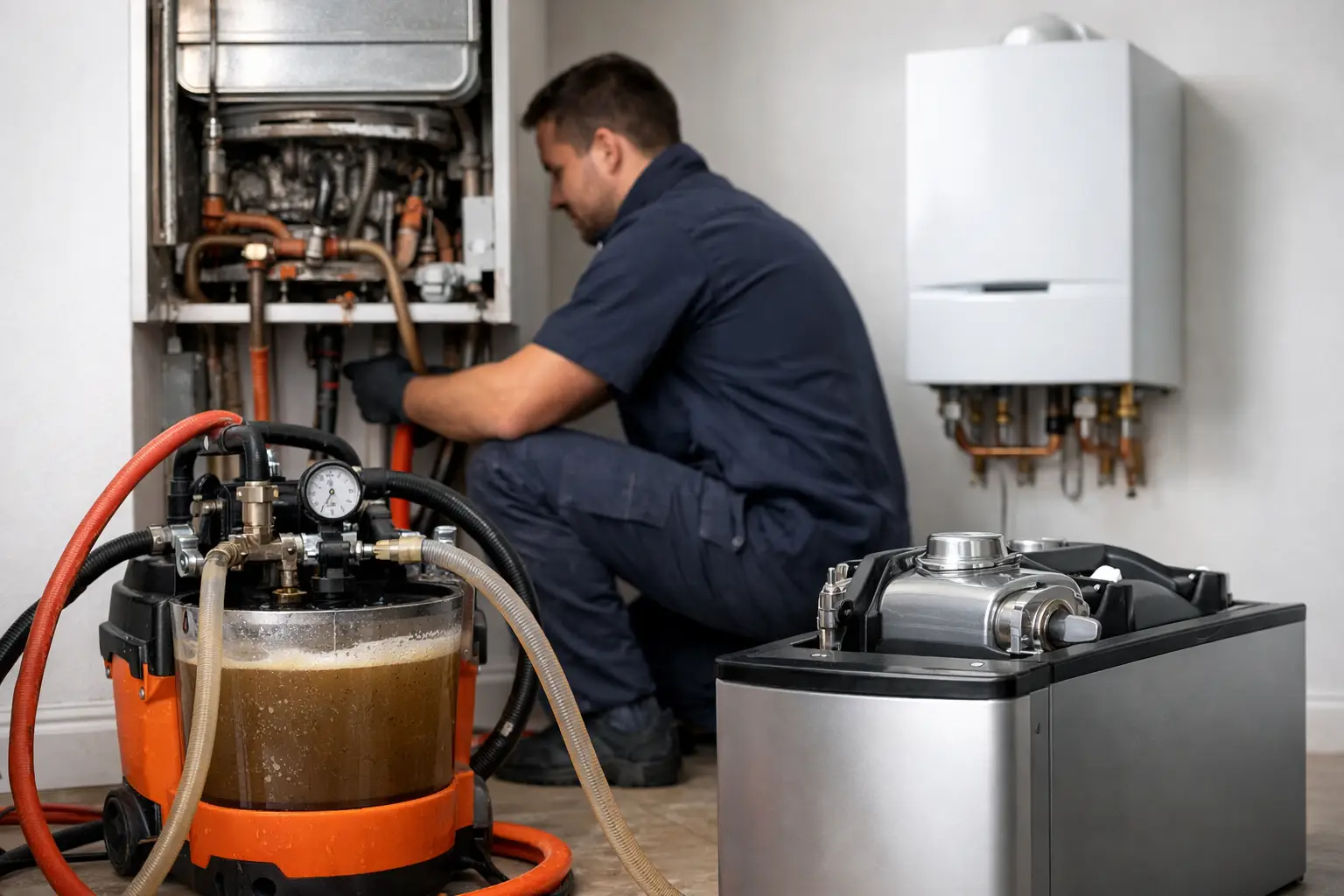

A new boiler can fail to deliver the results you expect if it is connected to a dirty heating system. That is why the question of a power flush before boiler replacement matters. If sludge, rust and debris are still circulating through old pipework and radiators, that contamination does not stay in the old system. It moves straight into the new boiler and starts causing problems from day one.
For homeowners, landlords and property managers, this is usually the point where money gets wasted. You pay for a modern, efficient boiler, but the system around it is still working against it. Poor circulation, noisy radiators, cold spots and recurring faults often come down to water quality rather than the boiler itself.
Why a power flush before boiler replacement is often recommended
Modern boilers are more efficient than older models, but they are also less forgiving when system water is dirty. Narrow waterways inside the heat exchanger can become restricted more easily, and that can affect performance, increase wear and trigger breakdowns.
A power flush removes built-up sludge, iron oxide, debris and scale from the central heating system. It is designed to clean radiators, pipework and other components so that contaminated water is not pushed into the new appliance. In practical terms, that helps protect the boiler, improve heat distribution and support better fuel efficiency.
This is not just about getting cleaner radiators. It is about giving the new boiler a fair chance to perform properly. If the existing system is heavily contaminated, skipping the clean can shorten the life of the new installation and leave underlying circulation problems unresolved.
What happens if you replace a boiler without cleaning the system?
Sometimes a boiler can be replaced without a full power flush, but that depends on the condition of the system. If the water is black, radiators are partially cold, pumps have been straining, or there is a history of repeated faults, installing a new boiler straight onto that system is a risk.
The most common problem is that sludge already sitting in the radiators and pipework gets disturbed once the new boiler starts operating at full efficiency. That debris then travels through the system and can block the plate heat exchanger, damage the pump, affect valves and reduce circulation. The result is often poor heating performance, hot water issues or avoidable repair work not long after installation.
Manufacturers also expect the heating system to be properly cleaned and treated. If that basic standard has not been met, warranty issues can arise later. For property owners, that is the kind of avoidable complication no one wants.
When is a power flush before boiler replacement the right option?
It is usually the right option where there are clear signs of system contamination or poor circulation. If some radiators never get fully hot, if the boiler or pipes are making banging or kettling noises, if radiator bleed water is dark, or if the heating takes too long to warm up, the system is telling you it needs attention.
Older systems are especially likely to benefit. Homes with ageing radiators, original pipework, repeated cold spots or a long history of patch repairs often contain a lot of internal build-up. In London and Greater London, hard water can add another layer of trouble through scale formation, particularly around the boiler and heat exchanger.
Landlords and commercial operators should also take this seriously between tenancies, refurbishments or heating upgrades. A boiler replacement is the right time to deal with the wider system, not just swap one appliance for another and hope for the best.
When a full power flush may not be necessary
There are cases where a power flush is not the most suitable approach. A relatively clean, well-maintained system may only need a chemical flush or a targeted clean, especially if the pipework and radiators are in good order and the water quality tests well.
Equally, some old systems in very poor condition need careful assessment first. If radiators are extremely corroded or pipework is already weak, aggressive cleaning without proper judgement can expose leaks that were already waiting to happen. That does not mean cleaning is the problem. It means the system needs an experienced engineer to assess the safest and most effective route.
This is where proper diagnosis matters. A trustworthy heating specialist should not recommend a power flush as an automatic extra on every job. The right recommendation depends on the age, condition and contamination level of the system.
What a proper system assessment should include
Before any boiler replacement, the existing heating system should be checked properly. That means more than a quick glance at the boiler cupboard. The engineer should look at radiator performance, pump condition, system water quality, signs of sludge, scale or corrosion, and any history of breakdowns or circulation faults.
If there are concerns, testing and inspection can show whether the issue is localised or spread across the full system. In some properties, one or two badly affected radiators are the main issue. In others, the contamination is widespread and a full flush is the sensible route.
At The Power Flush Company, this sort of decision is based on system condition, not guesswork. That matters when you are spending money on a new boiler and want the installation done properly the first time.
The benefits go beyond protecting the new boiler
The most obvious reason for cleaning the system is to protect the new appliance, but the benefits usually extend further than that. Once sludge and debris are removed, the heating system can circulate more effectively. Radiators heat more evenly, warm-up times improve and the boiler does not have to work as hard to reach temperature.
That often means better comfort across the property and less wasted energy. In practical terms, homeowners may notice fewer cold rooms and lower running costs. For landlords and property managers, it can reduce call-backs and tenant complaints after the installation.
A cleaner system also makes inhibitor treatment more effective. Once fresh inhibitor is added after flushing, it can help prevent future corrosion and protect the entire heating circuit. Combined with correct boiler installation and magnetic filtration, that creates a much stronger setup for long-term reliability.
Is a power flush always done before the boiler is fitted?
Not always. In some cases, the flush is completed before installation. In others, depending on the job and system layout, the engineer may carry out system cleaning during the replacement process or immediately after certain components are fitted. The sequence depends on the property, the equipment being installed and the condition of the system.
What matters is not the label attached to the process, but whether the system has been cleaned thoroughly and treated correctly as part of the boiler replacement. A rushed installation that skips this stage can look cheaper at first, but it often costs more later.
Choosing the right contractor matters
A boiler installer who does not specialise in system cleaning may not spot the warning signs early enough. Equally, a flushing company without proper boiler expertise may not be the right choice for a full replacement project. The best results come from engineers who understand both boiler installation and central heating system condition.
That is particularly important in older London properties where heating systems have often been altered over time. Mixed pipework, ageing radiators, hard water and inherited faults are common. A proper assessment by Gas Safe registered professionals can save a great deal of time, money and disruption.
If you are planning a boiler replacement, ask direct questions. Is the system water clean? Are there signs of sludge? Will the new boiler be protected with inhibitor and filtration? Is a full power flush genuinely needed, or would a lighter clean be enough? Straight answers at this stage can prevent expensive problems later.
The real question is not whether it is optional
The real question is whether your current heating system is clean enough to support a new boiler. Sometimes the answer is yes. Quite often, it is no. Treating a power flush before boiler replacement as an optional add-on misses the point. If the system is contaminated, cleaning it is part of doing the job properly.
A new boiler should give you reliable heating, better efficiency and fewer faults, not inherit years of sludge and circulation problems from the old one. If you want the replacement to last and perform as it should, make sure the condition of the whole system is part of the conversation from the start.