

When radiators stay cold at the bottom, the boiler starts making odd noises, or one room never seems to warm up properly, most people are not thinking about chemistry inside the pipework. They are thinking about getting the heating sorted quickly. That is where power flush companies come in, but not all of them offer the same level of skill, diagnosis, or follow-through.
A proper power flush is not just a machine connected to your system for a few hours. It is a specialist job that depends on knowing how central heating systems behave, how sludge and magnetite build up, and when a flush will genuinely solve the problem rather than cover up a bigger fault. If you are a homeowner, landlord, or property manager in London, choosing the right contractor can make the difference between a heating system that runs cleanly and one that keeps costing you money.
Why power flush companies vary so much
The phrase gets used widely, but the standard of service behind it can differ quite a lot. Some firms treat power flushing as an add-on. Others specialise in heating systems and understand how to diagnose circulation issues, blocked radiators, boiler strain, pump faults, and contamination properly.
That matters because a power flush is only worthwhile when it is carried out for the right reasons and in the right way. If a system is heavily sludged, a thorough flush can restore heat output, improve water circulation, reduce boiler noise, and help protect components from avoidable wear. If the issue is actually a failing pump, damaged valve, incorrect system design, or a boiler fault, a flush on its own may not be enough.
This is why experienced engineers do not jump straight to treatment. They assess the condition of the system first, explain what they are seeing, and recommend the most sensible route based on the age, layout, and symptoms of the heating.
What good power flush companies should offer
The first thing to look for is proven heating and plumbing expertise, not just a promise of a quick fix. On domestic and commercial systems alike, the engineer should understand boilers, radiators, pumps, controls, valves, and water quality. If gas appliances are involved, Gas Safe registration is non-negotiable.
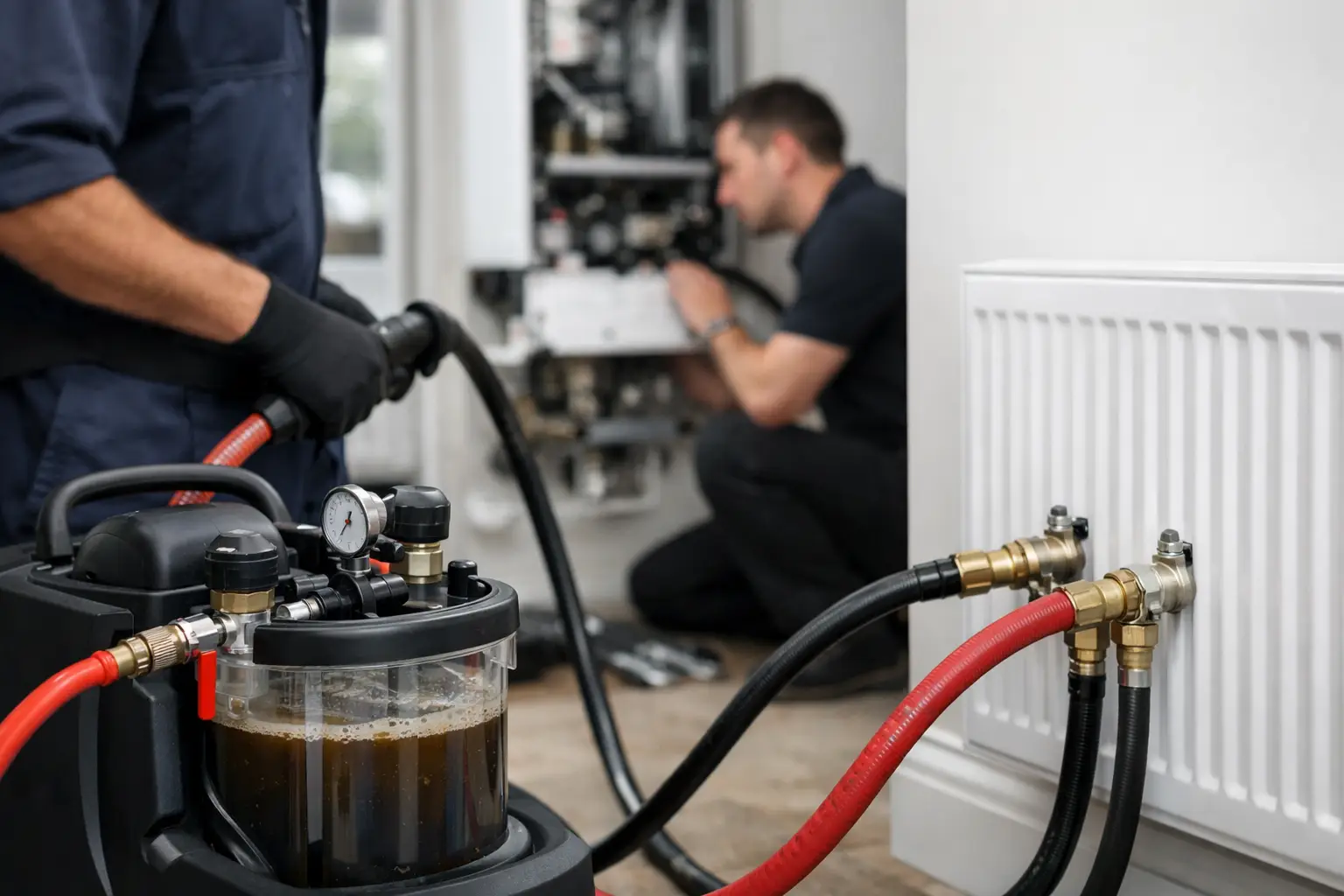
You should also expect a clear explanation of what the work includes. A professional service normally involves testing radiator performance, identifying sludge or flow restrictions, connecting specialist flushing equipment, circulating cleaning chemicals through the system, agitating radiators where needed, and removing contaminated water safely. In many cases, fresh water and an inhibitor are then added to help protect the system after the clean.
Transparent pricing matters as well. Some jobs are straightforward. Others take longer because the system is larger, older, or more heavily contaminated. A reliable company should explain how the quotation is built and whether any extra work may be needed if faults are uncovered during the process.
Response time is another practical point that often gets overlooked. For landlords, managing agents, and commercial sites, delays can quickly become expensive. If the property has no reliable heating or hot water, you need a company that can attend promptly and make decisions on site rather than dragging the problem out.
How to tell if a company is diagnosing properly
A good engineer will ask sensible questions before giving firm advice. Are some radiators cold while others heat up? Is the boiler kettling? Has the pump been noisy? Has the system needed repeated bleeding? Has there been a recent boiler replacement on an old heating circuit? These details help build a picture.
There should also be some honesty about what a power flush can and cannot do. It can remove sludge, scale, and corrosion debris that are restricting performance. It cannot repair a split heat exchanger, fix a damaged valve body, or correct every long-standing installation problem. When a contractor speaks as if power flushing is the answer to every heating issue, that is usually a sign to be careful.
The better power flush companies are usually the ones that can handle the next step too. If a flush reveals a failed pump, sticking motorised valve, leaking radiator valve, or a boiler issue, it helps to have one qualified provider who can carry out the repair rather than leaving you to start again with someone else.
Power flush companies and boiler protection
One of the most common reasons customers enquire about power flushing is after being told they need a new boiler, or shortly before fitting one. This is an area where experience really counts.
Installing a new boiler onto a dirty heating system is asking for trouble. Sludge and iron oxide already sitting in the radiators and pipework do not disappear because the appliance is new. They continue circulating, and that contamination can affect efficiency, reduce lifespan, and in some cases contribute to breakdowns. Many manufacturers expect the system to be properly cleaned as part of a compliant installation.
That does not automatically mean every system needs a full power flush before replacement. Sometimes a chemical flush or alternative cleaning method is more appropriate, depending on the boiler type and the state of the pipework. The right company will recommend the method that suits the system rather than selling the most expensive option by default.
What landlords and property managers should pay attention to
If you manage rented properties, recurring heating complaints usually come down to one issue: unresolved system condition. Tenants report cold spots, poor hot water, banging pipes, or radiators that only partly heat. A temporary repair may reduce complaints for a while, but if sludge remains in the system, the same call-backs often return.
This is where specialist power flush companies can add real value. A proper clean can improve circulation throughout the property and reduce strain on the boiler and pump. It can also help support planned maintenance, especially in older homes and converted properties where heating systems have been altered over time.
For landlords, the key is not just getting the job done, but having confidence in safety, competence, and documentation. You need engineers who are used to working in occupied properties, can communicate clearly with tenants, and can identify whether the issue is maintenance-related or a larger repair requirement.
Why local experience matters in London
London properties are rarely uniform. Victorian houses split into flats, newer developments with complex communal arrangements, small retail units, mixed-use buildings, and older pipework layouts all create different heating challenges. A contractor working across London and Greater London should be used to those variations.
Local experience also helps with access, scheduling, parking constraints, and the reality of urgent attendance in busy areas. If a company routinely handles both domestic and commercial heating across the capital, it is more likely to have the practical systems in place to respond efficiently.
That is one reason many customers prefer a specialist provider such as The Power Flush Company. When a business focuses on power flushing, boiler work, and wider heating maintenance rather than general plumbing alone, the advice tends to be sharper and the outcomes more measurable.
Questions worth asking before you book
You do not need to become a heating expert to choose well, but a few direct questions can save time and money. Ask whether the engineer is Gas Safe registered if boiler work may be involved. Ask what signs suggest your system needs a power flush rather than another type of cleaning or repair. Ask whether inhibitor is included afterwards, and what happens if they find a separate fault during the job.
It is also reasonable to ask about expected results. No honest company should guarantee miracles on a badly neglected system, especially if components are already failing. What they should do is explain the likely improvement, the limits of the process, and whether any radiators or parts may still need replacing.
Choosing value, not just the lowest quote
Cheap quotes can be tempting, especially when heating costs are already high. But with power flushing, the lowest price is not always the best value. If the process is rushed, if radiators are not properly cleared, or if the system is left without suitable protection afterwards, you may end up paying again for repairs that could have been avoided.
The better option is usually a company that combines specialist equipment with genuine heating knowledge, clear pricing, and the ability to deal with related boiler or plumbing issues at the same time. That gives you a more complete solution and far less guesswork.
If your heating system is slow, noisy, patchy, or showing signs of sludge build-up, it is worth speaking to a specialist before the problem becomes more expensive. The right contractor will not overcomplicate it. They will tell you what the system needs, carry out the work properly, and help you get dependable heat back where it belongs.