
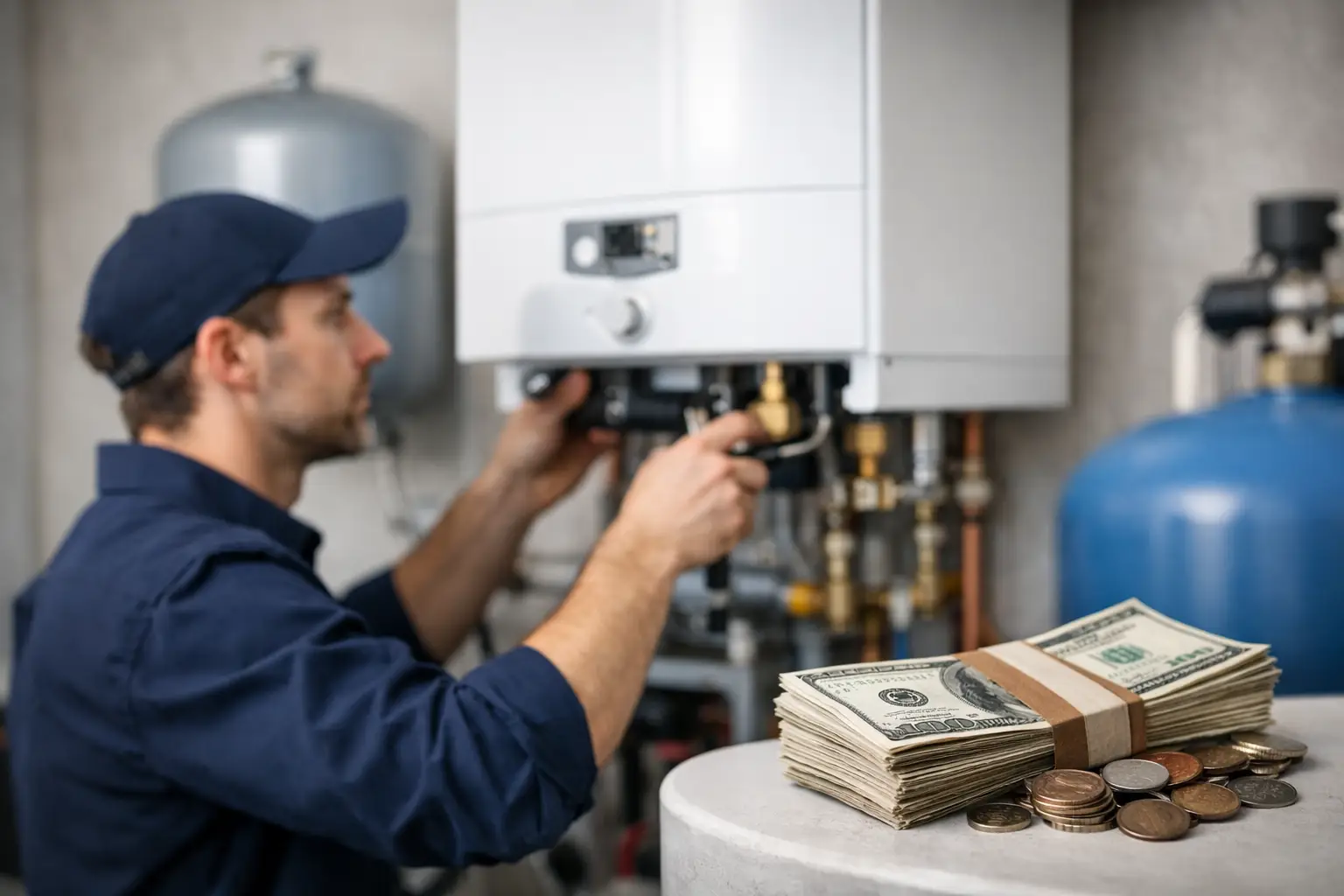

Sticker shock is common when you first price a new boiler. Many customers ask the same question: why is boiler installation so expensive when the boiler itself can look straightforward enough online? The short answer is that you are not just buying a box on the wall. You are paying for safe gas work, correct sizing, system checks, compliance, skilled labour and a heating setup that should run properly for years rather than fail after a rushed fitting.
For homeowners, landlords and property managers in London, the price can feel even steeper because labour rates, access issues and property layouts often add time to the job. The real cost sits in the work around the appliance, not just the appliance itself.
Why is boiler installation so expensive in practice?
A proper boiler installation is a technical job with legal, safety and performance requirements built into it. Any Gas Safe registered engineer fitting a boiler has to make sure the appliance is suitable for the property, the gas supply is adequate, the flue route complies with regulations, the condensate is handled correctly and the full heating system is safe to run.
That is before you get into the condition of the existing pipework, radiators and controls. If the old system is full of sludge, scale or magnetite, fitting a brand-new boiler onto it without cleaning the system is a false economy. It can reduce efficiency, cause blockages and shorten the life of the new unit. This is one reason specialist heating engineers often recommend system cleaning or a power flush before or alongside installation.
The cheapest quote is not always the cheapest job. If key steps are skipped, problems usually show up later as poor circulation, noise, uneven heating, warranty issues or repeat call-outs.
The boiler itself is only part of the bill
People often compare the internet price of a boiler with an installation quote and assume the margin is excessive. In reality, the boiler unit can be only one part of the total.
There are also components such as filters, flue extensions, valves, magnetic protection, chemical inhibitor, controls and fittings. In some homes, the installer may need to upgrade the gas pipe size to meet the boiler manufacturer’s requirements. In others, relocating the boiler means new flow and return pipework, condensate routing and alterations to the flue position.
Even a like-for-like swap is not always simple. Older systems can hide faults that only become clear once work starts. A corroded valve, weak pump, damaged isolation point or poorly installed old flue can all add time and materials.
Labour costs reflect skill, time and responsibility
Boiler fitting is not general handyman work. It must be carried out by a qualified Gas Safe registered engineer with the right competence for the appliance and system involved. That expertise matters because a boiler is connected to gas, water, electrics and combustion products. If any part is wrong, the risk is serious.
You are also paying for experience. A skilled installer does more than connect pipes. They assess heat demand, spot faults in the wider heating system, commission the boiler properly, test combustion, set up controls and make sure the system is operating as it should.
In London and Greater London, labour rates are naturally higher than in many other parts of the UK. Parking, congestion, property access and travel time all affect operational costs. That does not mean every high quote is justified, but it does explain why local installation prices can be well above what you might see in a national average.
Safety and compliance add real cost
One of the biggest reasons why boiler installation is so expensive is that there is no shortcut around safety. Gas appliances must be installed in line with current regulations and manufacturer instructions. The engineer must carry out checks on gas tightness, ventilation where relevant, flue integrity, combustion performance and system pressure.
There is paperwork too. Commissioning records, benchmark documentation and registration requirements all form part of a compliant installation. These are not admin extras. They support warranty validity, confirm the boiler has been installed correctly and create a record for future servicing and property compliance.
Landlords have even more reason to take this seriously. A badly installed boiler is not just an inconvenience. It can create legal exposure, tenant complaints, property damage and emergency repair costs.
The condition of the heating system changes the price
No two installations are quite the same because no two systems are in the same condition. One property may have clean water, sound radiators and modern controls. Another may have heavy sludge, partial blockages, cold spots and old components close to failure.
If the system is contaminated, engineers may recommend a power flush or chemical clean before the new boiler is commissioned. That is not upselling for the sake of it. A dirty system can send debris straight into the new heat exchanger and pump. On modern high-efficiency boilers, that can cause trouble quickly.
This is especially relevant in older London properties where pipework may have been altered over decades. Mixed metals, ageing radiators and historic leaks can all affect installation time and system performance.
Hidden upgrades that often catch customers out
Many quote differences come down to the extra work required to bring the full system up to standard. Common examples include upgrading the gas supply pipe, fitting a magnetic filter, replacing faulty valves, improving condensate discharge or installing new controls.
Some jobs also need remedial work around the flue. If the current flue position no longer meets regulations or the new boiler model needs a different arrangement, that can add both labour and materials. In flats, extensions or tight utility spaces, this can be more involved than customers expect.
Boiler type and location matter more than most people think
A straightforward combi-to-combi replacement in the same location is usually the most cost-effective option. Once you move into conversions, prices rise. Changing from a regular boiler to a combi, or from a system boiler to another layout, often means reworking tanks, cylinder connections, controls and pipe routes.
Relocating a boiler also adds cost. Moving it from a kitchen to a loft, garage or airing cupboard can mean longer pipe runs, electrical alterations, new flue routes and extra commissioning time. It may be the right long-term decision, but it rarely comes cheap.
Boiler output matters too. Larger properties, higher hot water demand and commercial settings may need more powerful or more specialised appliances. The equipment cost rises, and so does the complexity of the installation.
Cheap installation can be expensive later
There is always pressure to keep costs down, especially for landlords managing several properties or homeowners already dealing with an unexpected breakdown. But a cut-price installation can cost far more over time if it is poorly executed.
Common problems after bad fitting include low pressure faults, repeated lockouts, noisy operation, unbalanced heating, incorrect controls setup and invalidated warranties. In the worst cases, unsafe work can require full remedial correction by another engineer.
A proper installation should improve reliability, heating performance and running efficiency. That only happens if the boiler is matched to the property, the system is cleaned where needed and the commissioning is done thoroughly.
How to judge whether a quote is fair
The better question is often not why is boiler installation so expensive, but what exactly is included in the price. A fair quote should make clear whether it covers removal of the old boiler, system cleaning, filter installation, controls, flue parts, chemical treatment, commissioning and registration.
Ask whether the price is for a like-for-like swap or whether upgrades are expected. Check that the installer is Gas Safe registered and experienced with the type of boiler and property involved. If one quote is dramatically lower than the others, find out what has been left out.
Transparent pricing usually signals a professional contractor. So does a willingness to explain system condition, likely risks and whether any parts of the job may change once the old boiler is removed. Honest installers do not promise that every job is simple, because many are not.
For customers who want a long-lasting result, specialist heating firms such as The Power Flush Company bring an advantage. When boiler installation is combined with proper system diagnostics and cleaning expertise, you are less likely to end up fitting an efficient new boiler onto an inefficient old system.
Paying for the right job, not just the new boiler
A boiler installation is expensive because it is part appliance, part skilled engineering, part compliance work and part system restoration. The final figure reflects safety, labour, materials, system condition and the standard of workmanship behind the job.
If your quote feels high, it is worth slowing down and looking at the detail rather than the headline number. A well-installed boiler with the right protection and setup usually costs less to live with than a cheaper install that leaves faults behind.