
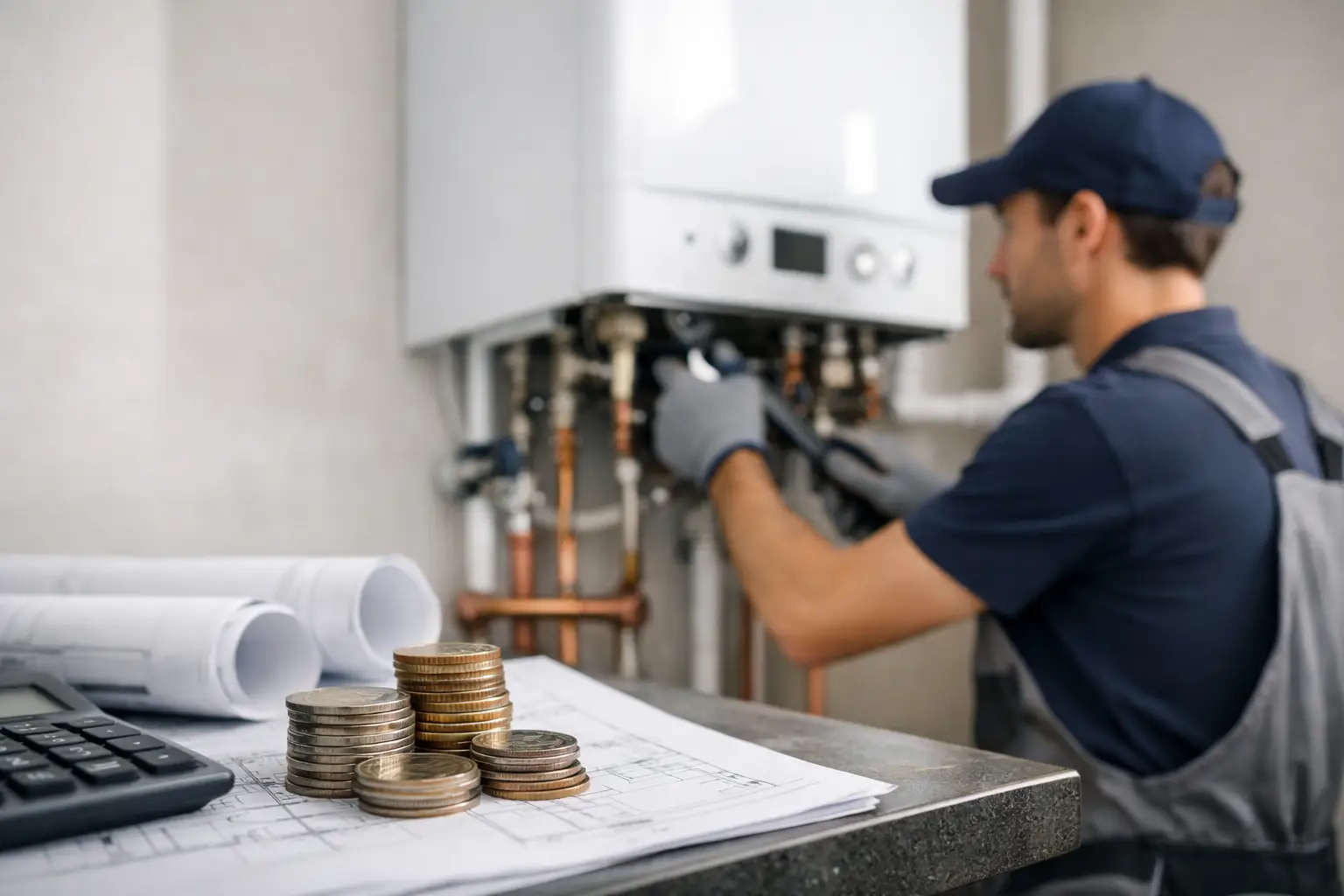

A failed boiler rarely picks a convenient time. It usually happens when the weather turns, tenants start calling, or your hot water suddenly gives up halfway through the week. If you are asking how much does it cost to install a replacement boiler, the honest answer is that most jobs fall into a broad range, and the final figure depends on the boiler, the property, and the condition of the heating system it is being fitted into.
For a straightforward like-for-like replacement in London, many homeowners can expect to pay somewhere between £2,000 and £4,500 including supply and installation. More complex jobs, premium boiler models, system upgrades, relocations, or commercial work can push the price higher. The right quote should reflect the actual work required, not just the boiler box itself.
How much does it cost to install a replacement boiler in the UK?
The cost of replacing a boiler is usually made up of two parts – the appliance and the labour. A basic combi boiler replacement in the same location is normally the most affordable option. A higher output boiler, a system boiler with unvented cylinder work, or a full conversion from one boiler type to another will usually cost more because there is more pipework, more testing, and more time on site.
As a rough guide, a standard combi-to-combi replacement often starts from around £2,000 and can rise to £3,500 or more depending on brand, warranty length, controls, and system condition. A system boiler replacement may sit between £2,200 and £4,000. A conventional or heat-only boiler replacement can also vary widely, especially where tanks, cylinders, zone valves, or ageing controls need attention.
If you are converting from a regular boiler to a combi, or moving the boiler to a new position, costs can climb to £3,500 to £5,500 or beyond. That is because the installer may need to alter petrol pipe sizing, reroute flow and return pipework, cap old feeds, change the flue position, and upgrade the condensate discharge.
What affects replacement boiler installation cost?
The biggest factor is usually the type of boiler being installed. Combi boilers are popular in many London homes because they save space and deliver hot water on demand, but they are not right for every property. Larger homes with multiple bathrooms may be better suited to a system boiler. Choosing the wrong type can create performance issues later, so the cheapest option is not always the best value.
Boiler output also matters. A small flat with one bathroom does not need the same output as a larger family home. Oversizing can be inefficient, while undersizing leads to poor hot water performance and heating complaints. A proper survey should match the boiler to the property, not just replace like for like without checking demand.
The condition of the existing central heating system has a major effect on cost too. If the system is full of sludge, iron oxide, or limescale, fitting a new boiler without cleaning the pipework can be a false economy. Manufacturers often require the system to be properly cleansed and protected. In many cases, a power flush or chemical flush is strongly recommended before or during installation to protect the new heat exchanger and improve circulation.
Controls can also change the final price. If your existing programmer, room thermostat, or thermostatic radiator valves are outdated, it may make sense to upgrade them at the same time. Better controls improve efficiency and help reduce running costs, but they do add to the installation bill.
Labour, access, and hidden extras
Not all boiler replacements are equal from a labour point of view. A modern, accessible boiler in a straightforward cupboard is much easier to replace than an ageing unit in a tight loft space or awkward kitchen corner. If floorboards need lifting, boxing needs opening, or flue access is difficult, installation time increases.
In London and Greater London, labour rates are often higher than in other parts of the UK. Parking restrictions, congestion, property access, and tighter working spaces all affect job planning. That is one reason online boiler price calculators can be misleading. They rarely account for the realities of the property.
There can also be extra works that are only obvious during a proper site visit. These may include upgrading the petrol supply pipe, replacing old valves, fitting a magnetic filter, making good around a new flue position, or bringing parts of the installation into line with current regulations. None of these are unnecessary add-ons when they are genuinely required. They are part of making sure the new boiler is safe, compliant, and built to last.
Why a cheap boiler quote can cost more later
A low headline price can look attractive, especially if the boiler has already failed and you need heat back quickly. But a replacement boiler should not be treated as a quick swap with no checks. If the installer does not assess water quality, radiator performance, petrol pressure, flue route, condensate disposal, and overall system health, problems can follow.
We often see cases where a new boiler has been fitted onto a dirty system and starts showing faults long before it should. Poor circulation, blocked plate heat exchangers, noisy operation, and uneven radiator heating are all common where system cleaning has been skipped. In those situations, the customer ends up paying twice – once for the cheap installation and again to correct the underlying heating issues.
A proper installation should include commissioning, system checks, registration, and clear advice on aftercare. That matters just as much as the boiler brand on the front panel.
Should you replace the boiler only, or improve the whole heating system?
This depends on the condition of the existing setup. If the radiators heat evenly, the pipework is sound, the controls are modern, and the old boiler has simply reached the end of its life, a straight replacement may be all you need. If the system has cold spots, noisy pipework, black water, repeated pressure problems, or poor circulation, then replacing the boiler alone may only deal with one part of the problem.
For many properties, especially older homes and rental stock, combining boiler replacement with a system clean, filter installation, and control upgrade delivers better long-term value. The upfront cost is higher, but so is the chance of getting reliable heating performance and lower fuel waste.
That is why a specialist heating engineer should look at the full system before pricing the work. The boiler is the heart of the system, but it can only perform as well as the water and pipework around it.
How to get an accurate boiler replacement quote
If you want a realistic answer to how much does it cost to install a replacement boiler, avoid any company that prices the job properly without understanding the property. A genuine quote should take into account the boiler type, size, location, flue route, petrol supply, controls, and condition of the heating system.
Ask whether the quote includes removal of the old boiler, filter installation, chemical inhibitor, commissioning, registration, and thermostat or control upgrades. Also ask whether system cleaning has been allowed for if the water quality is poor. A detailed quotation is easier to compare than a vague one, and it protects you from surprise costs later.
You should also make sure the installer is Petrol Safe registered and experienced in boiler replacements, not simply offering them as an add-on service. Where the heating system shows signs of sludge or circulation issues, it makes sense to use a company that understands both boiler installation and remedial system cleaning. That joined-up approach usually gives better results than treating each issue separately.
What is a sensible budget?
For most homeowners and landlords, a sensible budget for a replacement boiler in London is around £2,500 to £4,000 for a standard domestic installation, with room above that for conversions, premium equipment, or wider heating system works. That is not a small spend, but it is better to budget for a correct installation than chase the lowest number and inherit more faults.
A good boiler fitted properly should give you dependable heating, stronger hot water performance, and better efficiency than an ageing unit. If it is matched to the property and installed onto a clean, protected system, it should also be far less likely to suffer avoidable breakdowns.
At The Power Flush Company, we always recommend looking at the full picture before replacing a boiler. Sometimes the answer is a straightforward change. Sometimes the real issue includes sludge, poor circulation, or failing controls. The right solution is the one that restores reliable heating and keeps future costs under control.
If your boiler is nearing the end, the best next step is not guessing from an online price table. It is getting a proper assessment from a qualified heating specialist who can price the job clearly and tell you exactly what your system needs.