
A heating system rarely fails all at once. More often, you notice small warning signs first – a radiator that stays cold at the bottom, a boiler that keeps making noise, or rooms that take far too long to warm up. If you are asking what is power flushing central heating system maintenance, the simple answer is this: it is a specialist cleaning process that removes sludge, rust, scale and other debris from your pipework, radiators and boiler so the whole system can circulate properly again.
For homeowners, landlords and property managers, power flushing is not about gimmicks or unnecessary add-ons. It is a practical way to restore heating performance when contamination inside the system is causing poor circulation, higher running costs and ongoing faults. In many properties across London and Greater London, especially older homes or buildings with ageing pipework, sludge build-up is one of the most common causes of central heating inefficiency.
What is power flushing a central heating system?
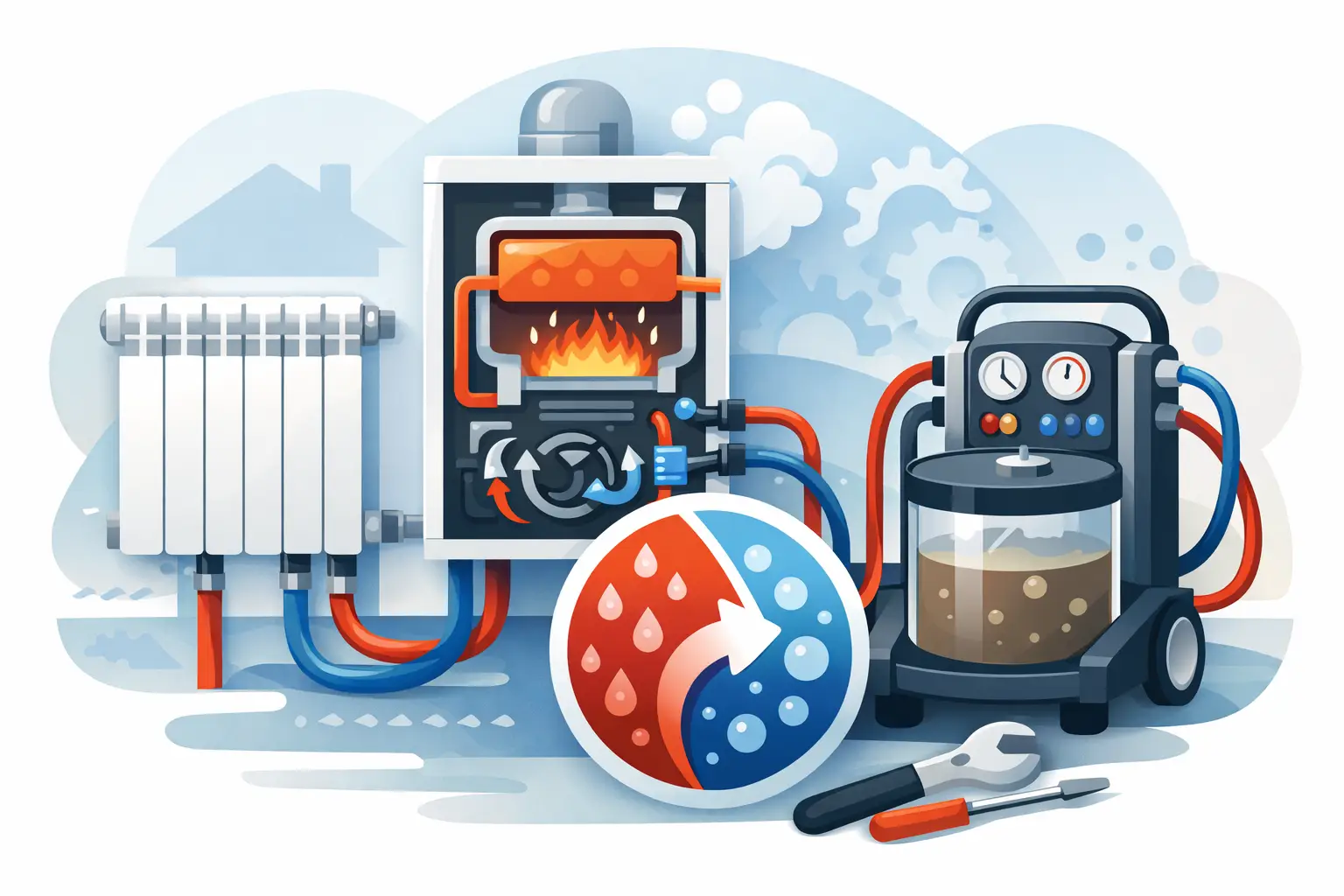
Power flushing a central heating system means connecting specialist equipment to the heating circuit and pumping water through the system at a controlled high flow rate. That flow is combined with professional cleaning chemicals designed to break down sludge, iron oxide, corrosion deposits and other build-up that standard draining simply will not remove.
The process cleans internally. That is the key point. You are not just emptying dirty water out of the boiler and radiators. You are actively shifting compacted debris that has settled in radiators, valves, bends in pipework and heat exchangers. Once those deposits are removed, water can circulate more freely, radiators heat more evenly and the boiler does not have to work as hard to push heat around the property.
A proper power flush is usually followed by fresh inhibitor being added to help protect the system against future corrosion. Depending on the condition of the heating system, magnetic filtration may also be checked or recommended to reduce repeat contamination.
Why central heating systems get clogged up
Most central heating systems contain metal components. Over time, water and metal can react inside the system, leading to corrosion. That corrosion creates magnetite sludge, which is a black iron oxide deposit. Once it starts circulating, it settles in low-flow areas, especially along the bottom of radiators.
In hard water areas, scale can also become a factor. Older systems are particularly vulnerable, but newer systems are not immune if they have not been properly protected with inhibitor or if installation standards were poor. If the system has had repeated top-ups, leaks, or repairs without chemical protection being reinstated, contamination can build up faster.
That build-up does not just sit there harmlessly. It restricts circulation, creates cold spots, puts strain on pumps and valves, and can contribute to boiler overheating or lockouts. Left too long, it can shorten the life of expensive heating components.
Signs you may need a power flush
Not every heating issue means the system needs power flushing, but there are clear symptoms that often point in that direction. Radiators cold at the bottom and hot at the top are one of the biggest indicators. So is slow warm-up across the property, even when the boiler appears to be firing correctly.
You may also notice discoloured water when bleeding radiators, banging or gurgling noises from the boiler or pipework, repeated pump or valve issues, or radiators that need frequent bleeding. Some systems suffer from uneven heating, where one room becomes hot quickly while another never quite gets there.
Landlords and commercial operators often spot the problem through complaints about unreliable heating rather than obvious breakdowns. If tenants or occupants keep reporting poor heat output, and the thermostat and boiler settings seem normal, internal system contamination should be considered.
How the process works in practice
A professional engineer will first assess the system condition. That matters because not every property needs the same level of treatment. Some systems are heavily sludged and need a full power flush with targeted work on individual radiators. Others may need a different cleaning approach depending on age, design and overall condition.
During a power flush, specialist equipment is connected to the heating circuit. Cleaning chemicals are circulated through the system while each radiator is worked through methodically to loosen and remove debris. In more stubborn cases, engineers may use vibration tools or flow reversal to help dislodge compacted sludge.
The contaminated water is then flushed out and replaced until it runs clean. Once the engineer is satisfied that circulation has improved and the system is clear, inhibitor is added for ongoing protection. The exact time involved depends on the size of the property, the number of radiators and how badly contaminated the system is.
This is why a proper quotation matters. A two-bedroom flat and a large commercial unit are not comparable jobs, and honest pricing should reflect the actual system size and condition.
What are the benefits of power flushing?
The biggest benefit is better circulation, but that is only part of the story. Once sludge and debris are removed, radiators usually heat more evenly and reach temperature faster. That can improve comfort across the property and reduce the strain on the boiler.
In many cases, customers also notice lower energy waste. If your boiler has been overworking to push water through partially blocked radiators and pipework, cleaning the system can improve efficiency. It will not turn an old boiler into a new one, but it can help the existing system perform closer to how it should.
There is also a preventative side to it. Power flushing can help protect pumps, valves and heat exchangers from damage caused by contaminated water. For newer boilers, especially where a manufacturer expects a clean heating system at installation, proper flushing can be an important part of protecting the investment.
Is power flushing always the right answer?
No, and any reliable heating specialist should say so. Sometimes a system is too badly deteriorated, with severe corrosion or persistent leaks, and a flush alone will not provide a lasting fix. In other cases, the real problem may be a faulty pump, stuck motorised valve, air lock, incorrectly balanced system or failing boiler component.
That is where experience matters. A good engineer does not recommend power flushing just because the water looks dirty. They diagnose the heating system properly and explain whether flushing is likely to solve the issue, improve it partly, or whether repair or replacement work is the better route.
This is especially important for older systems in London properties, where pipework alterations, ageing radiators and previous quick-fix repairs can all complicate the diagnosis. The right approach depends on the system, not a one-size-fits-all sales pitch.
Power flushing before a new boiler installation
One of the most common times to consider a flush is before fitting a new boiler. If a new appliance is connected to a dirty heating system, sludge from the old pipework and radiators can quickly circulate into the new boiler and affect performance. That can lead to faults, reduced efficiency and, in some cases, warranty issues.
For that reason, system cleaning is often recommended or required as part of boiler replacement work. It helps ensure the new boiler is not being asked to operate with contaminated water from day one. If the existing radiators and pipework are staying in place, cleaning them properly becomes even more important.
Choosing the right contractor
Power flushing should be carried out by a company that understands the full heating system, not just the flushing machine. Boilers, pumps, controls, radiators and valves all interact, so the engineer needs to know what they are looking at before, during and after the clean.
For domestic and commercial customers, Gas Safe registration, strong plumbing expertise, transparent quotations and real fault-finding experience all matter. If a contractor cannot explain why your system needs flushing, what condition it is in, and what result you can realistically expect, that is a warning sign.
At The Power Flush Company, this is exactly why specialist knowledge matters. When you are dealing with inefficient heating, boiler issues or recurring sludge problems, you need more than a basic clean – you need an experienced heating and plumbing team that can identify the cause, carry out the work properly and advise on what comes next.
If your radiators are cold, your boiler is noisy or your heating bills are climbing without good reason, it is worth getting the system checked before a minor circulation problem becomes a major repair job.